
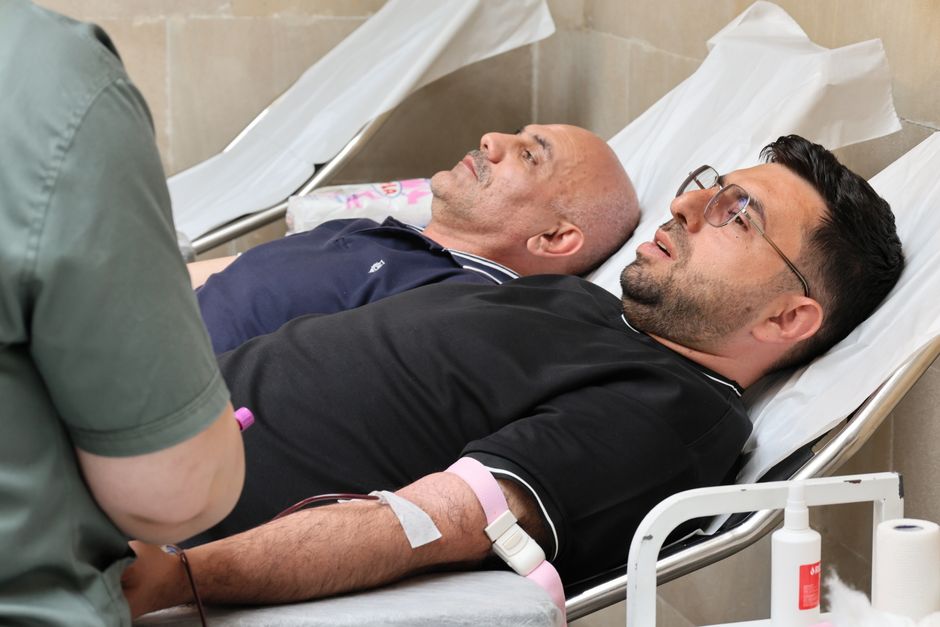
Donating bone marrow is a procedure where healthy blood-forming cells are collected from you and given to a patient whose own bone marrow is failing. You can register as a potential donor, and if you match a patient, you undergo a donation process that takes one to two days. The most common method is a non-surgical outpatient procedure called PBSC donation, where blood is drawn from your arm, stem cells are filtered out, and the rest of your blood is returned to you.
Who Can Register as a Bone Marrow Donor?
Most registries accept donors between the ages of 18 and 40. The age limit exists because research consistently shows that younger donors produce better transplant outcomes for patients. Cells from younger donors are less likely to cause complications after transplant.
You must be in general good health. People with certain medical conditions cannot donate. These include most cancers, severe heart disease, autoimmune diseases that require ongoing treatment, and some infections. The exact list varies by registry, but the screening process is thorough.
Your weight matters less than your overall health. Being overweight does not automatically disqualify you. However, some health conditions that often accompany obesity, such as uncontrolled diabetes or severe heart problems, may prevent donation.
How Do You Join the Bone Marrow Registry?
Joining the registry is simple. You order a cheek swab kit online from a donor registry like Be The Match in the United States. You swab the inside of your cheeks, mail the kit back, and your tissue type is analyzed and added to the database.
You stay on the registry until you turn 61, unless you ask to be removed sooner. Removing yourself is easy and can be done by contacting the registry directly.
There is no cost to join most registries. Some registries charge a small fee, but many waive it during recruitment drives. If you are asked to pay hundreds of dollars, that is not a standard registry practice.
Your tissue type is determined by proteins called HLA markers. These markers are inherited from your parents. A patient needs a donor whose HLA markers closely match their own. Siblings have a 25 percent chance of matching each other. Unrelated donors are found through the registry, and the odds of finding a match vary widely depending on the patient’s ethnic background.
What Happens If You Match a Patient?
If you match a patient, the registry contacts you to confirm you are still willing to donate. You go through a detailed health screening and educational session. You also meet with a medical professional who explains the process and answers your questions.
You can change your mind at any point before donation. The registry strongly encourages you to decide early. If you back out after the patient has begun preparatory treatments, the patient’s life is at serious risk. Their own bone marrow has been destroyed to make room for yours, and there is no backup plan.
Once you confirm, the registry schedules the donation. You may need to travel to a collection center. Travel and lodging costs are covered by the patient’s insurance or the registry. This is standard practice.





What Are the Two Ways to Donate Bone Marrow?
There are two donation methods. The first is called PBSC donation, which stands for peripheral blood stem cell collection. About 80 percent of donations use this method.
For PBSC donation, you receive injections of a medication called filgrastim for five days before collection. This medication stimulates your bone marrow to produce extra stem cells and release them into your bloodstream. On collection day, blood is drawn from a vein in one arm, passed through a machine that separates out the stem cells, and the remaining blood is returned through a vein in your other arm.
The procedure takes four to six hours. You are awake the entire time. Most donors report feeling fine during collection, though some experience side effects from the filgrastim injections, including bone pain, headache, or fatigue. These side effects usually resolve within a few days after donation.
The second method is called surgical marrow collection. This is a procedure done under general anesthesia. A surgeon inserts a needle into your pelvic bone and withdraws liquid marrow. The procedure takes about one to two hours. You may feel soreness in your lower back or hips for several days afterward.
Both methods are safe. Serious complications are rare. The most common side effects are temporary pain, bruising, or fatigue. Studies have found no long-term health problems associated with donating bone marrow.
How To Donate Bone Marrow: Step-by-Step Process
Here is the full sequence from registration to recovery.
- Step 1: Order a cheek swab kit and mail it back to the registry.
- Step 2: Wait until your tissue type is added to the database. This can take a few weeks.
- Step 3: If you match a patient, the registry contacts you. You confirm your willingness to donate.
- Step 4: Complete a physical exam and blood tests to confirm you are healthy enough to donate.
- Step 5: For PBSC donation, receive filgrastim injections for five days before collection.
- Step 6: Donate stem cells or marrow at a certified collection center.
- Step 7: Recover. Most donors return to normal activities within one to two days for PBSC donation, or three to five days for surgical marrow collection.
The registry arranges all logistics. You do not pay for travel, lodging, or medical expenses related to donation. You cannot sell your bone marrow. Federal law in the United States makes it illegal to receive payment for organ or tissue donation, including bone marrow.
What Are the Risks and Side Effects?
PBSC donation carries low risk. The filgrastim injections can cause bone pain, muscle aches, headache, or nausea. These symptoms are temporary. In rare cases, the medication can cause an enlarged spleen, which resolves on its own after donation stops.
Surgical marrow collection carries risks related to anesthesia and the procedure itself. These include infection, bleeding, or nerve damage at the needle site. These complications are rare. Most donors experience only soreness at the collection site for a few days.
A small number of donors report fatigue that lasts several weeks. Full recovery of your marrow and stem cell supply takes about four to six weeks. Your body completely regenerates the cells you donated. Donating does not weaken your immune system long term.
Some donors report long-term bone pain after surgical collection. Research on this is limited, and the evidence is mixed. Most donors do not experience lasting pain, but the possibility exists.
Why Are Minority Donors Especially Needed?
HLA markers are inherited, and they are more similar among people of the same ethnic background. A patient is most likely to match a donor of the same race or ethnicity. Because the registry has historically had fewer donors from minority communities, patients from those communities wait longer for matches.
Black patients have the lowest chance of finding an unrelated donor match. Hispanic, Asian, and Native American patients also face lower match rates than white patients. Increasing the number of minority donors on the registry directly improves these patients’ odds of finding a match.
Mixed-race individuals are especially valuable donors. Their HLA markers are more diverse, which means they can match a wider range of patients. If you are of mixed heritage, your registration is particularly impactful.
How Long Does It Take to Find a Match?
There is no predictable timeline. Some donors are contacted within months of registering. Others remain on the registry for decades without being called. The average wait time is not a meaningful number because it varies so widely by tissue type and patient need.
Most donors never match a patient. This is not a reflection of your health or willingness. It simply means your tissue type was not needed during your time on the registry. Staying on the registry is still valuable because patients are constantly being added.
If you do match, the entire process from first contact to donation typically takes several weeks to a few months. The timing depends on the patient’s condition and how quickly the preparatory steps are completed.
Frequently Asked Questions
Does donating bone marrow hurt?
PBSC donation is generally painless during the collection itself, though the injections before it can cause bone pain. Surgical marrow collection is done under anesthesia, so you feel no pain during the procedure, but you may have soreness afterward for several days.
Can you donate bone marrow if you are over 40?
Most registries do not accept new donors over age 40. If you are already on the registry, you can remain until age 61, but the age limit for new registrations is strict because younger donors produce better patient outcomes.
How long does it take to recover from bone marrow donation?
Most PBSC donors return to normal activities within one to two days. Surgical marrow donors typically recover in three to five days, though some people feel tired for a few weeks. Your body fully replaces the donated cells within four to six weeks.
Is donating bone marrow safe?
Serious complications are rare, and studies have found no long-term health problems from donation. The most common side effects are temporary pain, bruising, and fatigue. The risks are lower for PBSC donation than for surgical marrow collection.
