
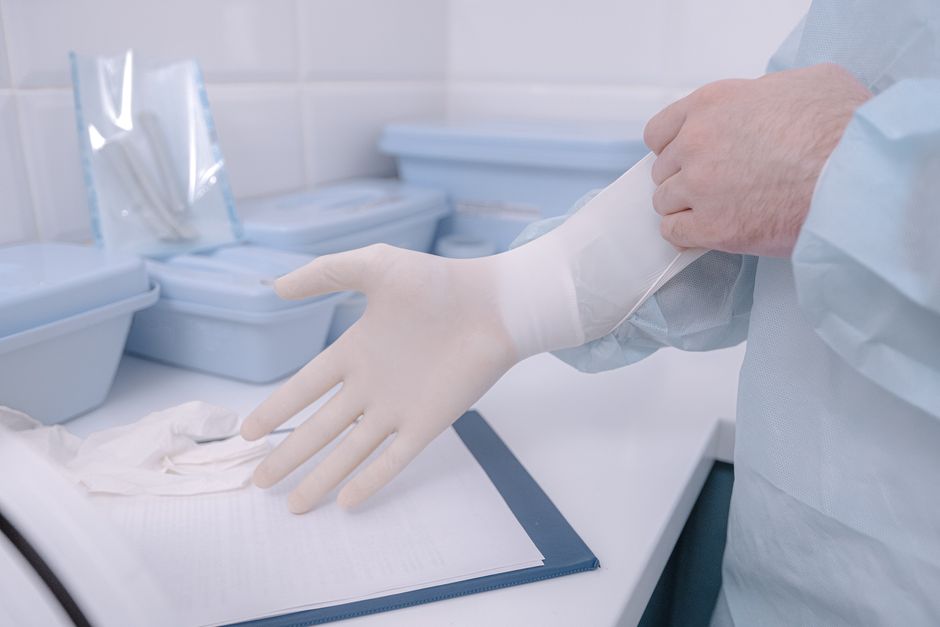
Sterile and non-sterile gloves serve different purposes, and knowing how to don them correctly is essential for safety. Sterile gloves require a specific aseptic technique to keep them free from contamination, while non-sterile gloves can be pulled on with simpler steps. Key facts: always wash your hands before donning any gloves; choose the correct size; and never touch the outside of sterile gloves or the outside of non-sterile gloves with bare skin.
What Is the Difference Between Sterile and Non-Sterile Gloves?
Sterile gloves are individually packaged and have been sterilized to kill all microorganisms. They are used for procedures that require a sterile field, such as surgery, catheter insertion, and central line placement. Non-sterile gloves come in boxes and are not guaranteed to be free of all microbes. They are used for standard precautions — protecting you and the patient from blood, body fluids, and contaminated surfaces.
Both types are made from latex, nitrile, or vinyl. Sterile gloves undergo more rigorous quality testing and are manufactured to tighter specifications. Non-sterile gloves are widely used in healthcare and everyday settings where sterility is not required.
When Should You Use Sterile Gloves?
Sterile gloves are required for any procedure that enters a sterile body site or exposes the bloodstream. This includes surgeries, wound care in a sterile field, inserting a urinary catheter, placing a central venous line, and performing lumbar punctures. Official clinical guidelines from organizations like the CDC and WHO consistently recommend sterile gloves for these situations.
Do not use sterile gloves for routine tasks such as taking blood pressure or giving a massage. They are reserved for when the risk of infection is high and a sterile field must be maintained.
When Are Non-Sterile Gloves Appropriate?
Non-sterile gloves are appropriate for most direct patient care that involves contact with mucous membranes, non-intact skin, blood, or other body fluids. Examples include drawing blood, handling lab specimens, performing wound cleaning on non-sterile skin, and cleaning up spills of body fluids.
They are also used for environmental cleaning and when handling potentially contaminated materials. Non-sterile gloves are part of standard precautions in healthcare and are also used in food service and other industries. They should never be used for sterile procedures.





How To Don Sterile Gloves Correctly
Follow these steps to don sterile gloves without contamination. Perform hand hygiene first. Open the outer wrapper without touching the inner packaging. Remove the inner wrapper and place it on a clean, dry surface.
Pick up the first glove by the folded cuff — only touch the inside that will go against your skin. Slide your hand into the glove, keeping your fingers straight. Do not let your bare fingers touch the outside of the glove. Once the glove is on, do not adjust it by pulling on the fingers.
Now pick up the second glove. Insert the fingers of your gloved hand under the cuff of the second glove. Do not touch any bare skin. Slide your other hand in. Once both gloves are on, you may adjust the fingers by interlocking gloved fingers. Keep your hands above your waist and away from your body to maintain the sterile field.
How To Don Non-Sterile Gloves Correctly
Non-sterile donning is simpler but still requires care. Wash your hands first. Select the correct size. Pick up a glove by the cuff — touch only the inside that will contact your skin. Pull the glove over your hand. Avoid touching the outside of the glove with bare skin.
Repeat for the second hand. Adjust the gloves at the fingers if needed. Non-sterile gloves are single-use and should be removed after each patient or task. Do not wash or reuse them.
How To Remove Gloves Safely (Doffing)
Removing gloves correctly prevents contamination of your hands. Use the glove-to-glove, skin-to-skin technique. Grasp the outside of one glove near the wrist and peel it off, turning it inside out. Hold the removed glove in your gloved hand.
Now slide two fingers of your bare hand under the cuff of the remaining glove — do not touch the outside. Peel that glove off, turning it inside out over the first glove. Dispose of both in a waste bin. Perform hand hygiene immediately after.
Common Mistakes When Donning Gloves
- Touching the outside of a sterile glove with bare skin.
- Reusing disposable gloves. Single-use gloves should never be reused.
- Wearing the same gloves for multiple patients or between tasks.
- Skipping hand hygiene before donning. This increases infection risk.
- Using wrong size gloves. Gloves that are too tight tear easily; loose gloves reduce dexterity.
- Wearing gloves when not needed. Overuse can waste resources and cause skin irritation.
Frequently Asked Questions
Can you reuse sterile gloves?
No. Sterile gloves are intended for single use only. Reusing them breaks the sterile barrier and raises infection risk.
Should you wash gloves between uses?
No. Washing disposable gloves can cause micro-tears that let germs through. Change gloves between tasks instead.
Can non-sterile gloves be used for sterile procedures?
No. Non-sterile gloves are not guaranteed to be free of microorganisms and should not be used where sterility is required.
What is the proper way to remove gloves?
Use the glove-to-glove, skin-to-skin technique. Peel the first glove off turning it inside out, then remove the second glove without touching its outside.
