
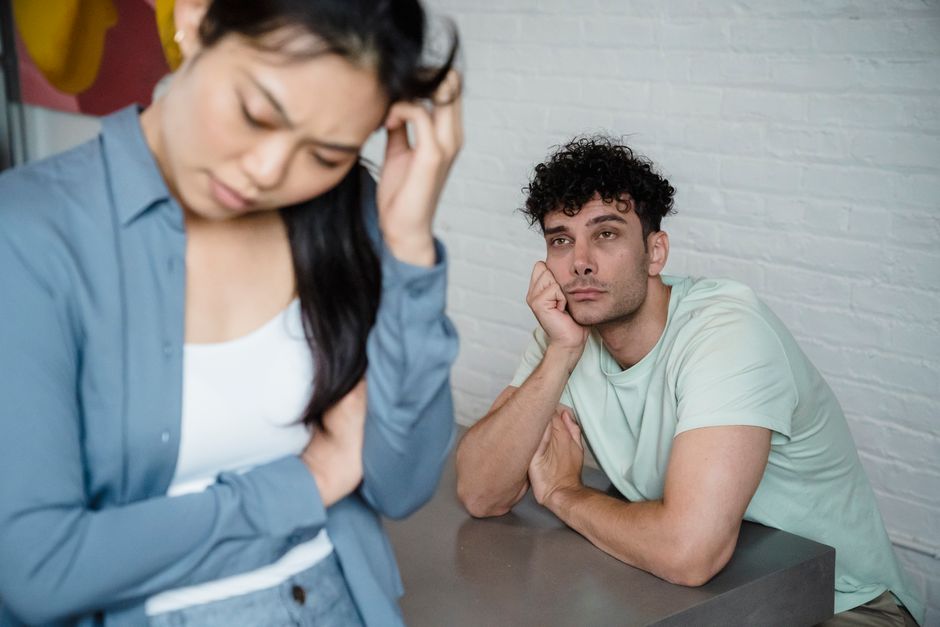
Dating someone with anxiety is not a rescue mission, and it is not a sentence to a life of tiptoeing around someone else’s feelings. It is a relationship like any other, with one specific difference: your partner’s nervous system reacts to perceived threat more intensely and more often than most people’s. You can love someone well through that without shrinking yourself. The key is learning where support ends and self-erasure begins.
What Anxiety Actually Does to a Relationship
Anxiety is not a personality flaw or a lack of willpower. It is a state of heightened threat detection. The brain’s alarm system, centered largely in the amygdala, becomes overactive. The body releases stress hormones. The person feels genuinely unsafe even when nothing dangerous is happening.
This matters for dating because anxiety does not stay inside your partner’s head. It shapes how they read your tone, your silence, your delayed text replies. A neutral face can look angry. A busy week can feel like abandonment.
Common patterns that show up in relationships include:
- Reassurance-seeking that feels endless
- Reading neutral events as negative ones
- Avoiding situations that trigger worry, which can shrink your shared life over time
- Physical symptoms like racing heart, tight chest, or trouble sleeping
- Withdrawal or irritability when overwhelmed
None of this means your partner is manipulating you. It also does not mean you have to absorb all of it. Both things are true at once.
How Do You Support Someone Without Becoming Their Therapist?
You can be a supportive partner. You cannot be a treatment provider. Those are different jobs, and confusing them hurts both of you.
Support looks like listening, staying calm, and being consistent. It does not look like diagnosing, designing exposure plans, or managing their symptoms for them. That work belongs to a licensed mental health professional.
Evidence-based treatments for anxiety disorders include cognitive behavioral therapy and, for some people, medication. These are established approaches with substantial research behind them. If your partner is not in treatment and their anxiety is disrupting daily life, encouraging them to talk to a doctor or therapist is one of the most caring things you can do.
There is a pattern clinicians sometimes call accommodation. It means adjusting your own life to prevent your partner’s anxiety from being triggered. You skip the party. You answer the text within seconds. You stop seeing a friend they worry about.
Accommodation feels kind in the moment. Over time it tends to make anxiety worse, because it teaches the brain that the feared thing really was dangerous. It also quietly erodes your independence. Some clinicians recommend limiting accommodation, but this is best done with professional guidance rather than abruptly on your own.
How To Date Someone With Anxiety Without Losing Yourself
Keeping yourself intact is not selfish. It is what makes the relationship sustainable. A partner who has disappeared into the role of caretaker eventually resents it, and resentment is harder to repair than anxiety.
Start with your own basics. Sleep, exercise, friendships, and time alone are not luxuries you earn after your partner feels better. They are the load-bearing walls of your life. Protect them.
Say what you need in plain language. “I love you and I need two hours on Saturday to see my friends” is clearer and kinder than silently going and then feeling guilty.
Notice the difference between comforting and reassuring. Comfort says, “I’m here, and I’m not going anywhere.” Reassurance tries to prove the fear wrong. Reassurance often provides relief for minutes and then the worry returns, which can pull you into a loop.
Set boundaries around behavior, not feelings. Your partner is allowed to feel anxious. They are not allowed to yell at you, track your location without agreement, or make you responsible for their calm. Boundaries stated calmly and held consistently tend to work better than ones announced in frustration.
Keep your own support system. A friend, a therapist, or a support group gives you a place to process that is not your partner. This protects the relationship from carrying weight it was never meant to carry.




What Should You Not Do When Your Partner Is Anxious?
Do not try to argue someone out of anxiety. Anxiety is not a belief you can correct with logic. Telling someone their fear is irrational usually increases their shame and does not reduce the fear.
Do not walk on eggshells. If you find yourself rehearsing conversations in advance, monitoring your tone, or hiding normal parts of your life, that is a signal, not a personality trait. It usually means the relationship needs outside help.
Do not promise outcomes you cannot control. “It will definitely be fine” sets you up to fail. “I’ll be there with you” is something you can actually deliver.
Do not use their anxiety as ammunition in a fight. Bringing up a diagnosis during an argument damages trust in a way that is hard to rebuild.
And do not assume that because your partner is struggling, your own needs are automatically smaller. They are not.
When Is It Time to Get Professional Help?
Anxiety disorders are common and treatable. Many people improve significantly with appropriate care. But treatment works best when it starts before a relationship is in crisis.
Consider involving a professional if any of these are true:
- Anxiety is interfering with work, school, sleep, or basic daily functioning
- You have become the primary regulator of your partner’s emotions
- You are avoiding more and more of your own life
- There is any threat of harm to either of you
- The same arguments repeat without change
Couples therapy can help when the anxiety has become a third party in the relationship. Individual therapy helps your partner with the anxiety itself. Your own therapy helps you stay grounded. These can happen at the same time.
If there is ever a risk of self-harm or suicide, that is a crisis. In the US, you can call or text 988 to reach the Suicide and Crisis Lifeline. Do not wait.
How Do You Know If the Relationship Is Healthy for You?
Ask yourself honest questions. Do you feel more like yourself or less? Are your friendships still alive? Can you disagree without fear? Do you look forward to seeing your partner, or do you dread the next difficult moment?
Anxiety itself is not a reason to end a relationship. Many people with anxiety are thoughtful, loyal, and deeply caring partners. What matters is whether the anxiety is being addressed and whether both people are willing to work on it.
A relationship where one person’s anxiety is managed with treatment, honesty, and mutual effort can be healthy and lasting. A relationship where anxiety is unmanaged, and one person is slowly disappearing to keep the peace, is a different situation. That one needs change, not patience alone.
You are allowed to want both things: to love someone with anxiety and to keep your own life. Those are not in conflict. They are the foundation of a relationship that can actually last.
Frequently Asked Questions
Can you have a healthy relationship with someone who has anxiety?
Yes. Many people with anxiety have stable, loving relationships, especially when the anxiety is treated and both partners communicate openly. The relationship tends to struggle most when anxiety is unmanaged and one partner carries all the weight.
How do I stop reassuring my anxious partner so much?
Shift from proving the fear wrong to simply being present, and let a therapist guide any reduction in reassurance. Cutting it out abruptly without professional support can backfire.
What is anxiety accommodation in a relationship?
It means changing your own behavior to prevent your partner’s anxiety from being triggered, such as skipping events or replying instantly. It feels kind in the moment but often makes anxiety worse over time.
When should I encourage my partner to see a therapist?
When anxiety is affecting daily functioning, work, sleep, or the relationship itself. A primary care doctor is a reasonable first step if your partner is unsure where to start.
