
A jammed finger happens when the tip of a finger gets pushed straight back toward the hand. The force stretches or tears the ligaments that support the joint. Most jammed fingers heal with home care in one to three weeks. But some cause fractures, tendon damage, or dislocations that need a doctor’s attention. Knowing the difference matters.
What Happens Inside a Finger When It Gets Jammed?
The finger joints are held together by ligaments — tough bands of tissue that connect bone to bone. When a ball hits the tip of an extended finger, the force travels down the finger and forces the joint beyond its normal range. The ligaments stretch. Sometimes they tear partially. Sometimes they tear completely.
The most commonly injured joint is the proximal interphalangeal joint, or PIP. That is the middle joint of the finger. The force also can damage the joint capsule, the cartilage surface, or the tendon that straightens the finger.
Swelling follows quickly. The joint fills with fluid as part of the inflammatory response. That swelling is why the finger feels stiff and looks larger than normal. It is also why bending the finger becomes painful.
Here is something many people do not realize: a jammed finger and a finger fracture can look almost identical in the first few hours. Swelling, pain, and bruising show up in both. X-rays are the only way to tell them apart with certainty. That is why any finger that cannot bend, looks crooked, or stays painful after a few days deserves medical evaluation.
How To Cure A Jammed Finger: First Aid To Recovery
Rest, ice, compression, and elevation — the standard first-aid approach for soft tissue injuries — is where treatment starts. These steps reduce swelling and ease pain in the first 48 hours.
Remove any rings from the injured hand right away. Swelling can make a ring impossible to remove later, and a tight ring can restrict blood flow. This is one of the most important early steps and one people often skip.
Apply ice for 15 to 20 minutes at a time, several times a day. Wrap the ice in a thin cloth. Do not put ice directly on the skin. Ice reduces blood flow to the area, which limits swelling and numbs pain.
Elevate the hand above heart level when possible. This uses gravity to help fluid drain away from the finger.
Over-the-counter pain relievers can help. Acetaminophen relieves pain. Ibuprofen and naproxen reduce both pain and inflammation. Follow the dosing instructions on the package. People with stomach ulcers, kidney disease, or who take blood thinners should check with a doctor before using anti-inflammatory drugs.
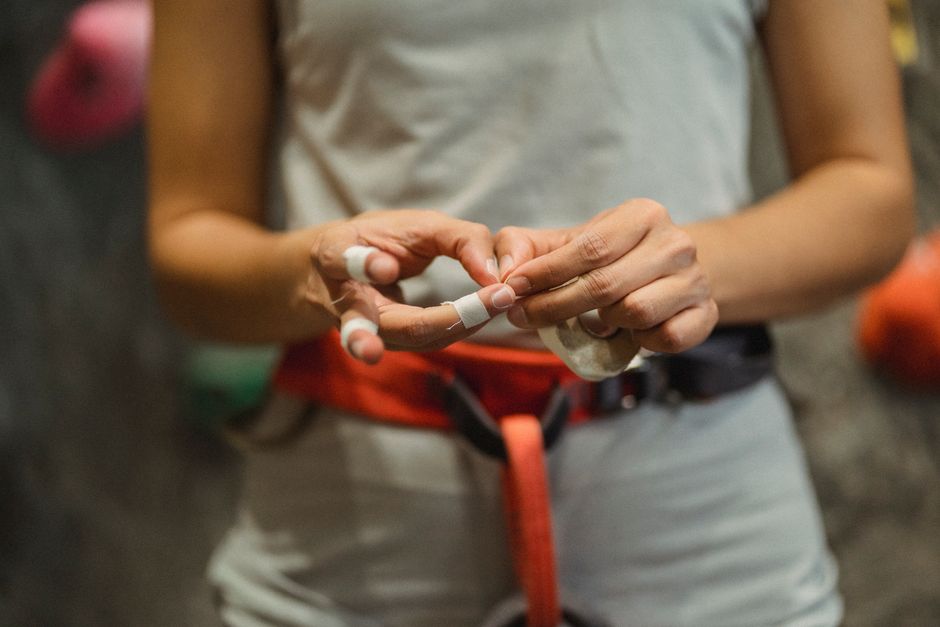
Some clinicians recommend taping the injured finger to an adjacent finger — a technique called buddy taping — to limit movement while it heals. Evidence for this specific technique in jammed fingers is not strong, but it is widely used in practice and generally considered low-risk when done correctly. Place a small piece of gauze between the fingers to prevent skin irritation.
Do not tape a finger that is crooked, cannot be straightened, or has changed color. Those signs point to a more serious injury.
When Should You See a Doctor for a Jammed Finger?
Some jammed fingers need more than home care. Get medical attention if any of these apply:
- The finger looks bent or crooked and cannot be straightened
- You cannot bend the finger at all
- There is numbness or tingling in the finger
- The finger is pale, blue, or cold compared to the others
- Bone is visible or there is an open wound near the joint
- Severe pain that does not improve with pain relievers
- Swelling or pain that gets worse after two or three days instead of better
- You cannot use the finger for normal tasks after a week
These signs can indicate a fracture, a dislocated joint, or a tendon injury. A tendon injury called a mallet finger happens when the tendon that straightens the fingertip tears. The fingertip droops and cannot be actively straightened. This injury often requires splinting for several weeks and sometimes surgery.
A doctor will examine the finger, check range of motion and blood flow, and likely order an X-ray. X-rays show fractures and dislocations clearly. If a fracture is found, treatment depends on the type and location — it may involve splinting, or in some cases surgery.





What Does Recovery From a Jammed Finger Look Like?
Most mild jammed fingers improve within a few days and heal within one to three weeks. Swelling may take longer to fully resolve. Some stiffness can linger for several weeks after the pain is gone.
Gentle movement helps once the acute pain and swelling have decreased. Start by slowly bending and straightening the finger through its comfortable range. Do not force it. Gradual motion helps prevent the joint from stiffening permanently.
If the finger still hurts or will not bend normally after three weeks, see a doctor. Persistent stiffness or pain can mean the injury was more serious than it first appeared, or that scar tissue has formed inside the joint.
Recovery timelines vary widely based on the severity of the injury. A mild sprain and a small fracture do not heal at the same pace. This is why follow-up matters if things are not improving as expected.
Can a Jammed Finger Cause Long-Term Problems?
Yes, if it is not treated properly. An untreated fracture can heal in the wrong position, leaving the finger permanently bent or misshapen. An untreated tendon injury can leave the fingertip permanently drooping.
Repeated jamming of the same finger — common in sports like basketball and volleyball — can lead to chronic joint swelling and eventually arthritis in that joint. Some research suggests that repeated joint trauma increases the risk of osteoarthritis later in life, though the exact relationship between finger injuries and long-term arthritis is still being studied.
Stiffness is the most common long-term issue. A joint that is immobilized too long without gentle movement can lose range of motion. This is why doctors often recommend starting gentle motion relatively early for mild injuries, while keeping more serious injuries protected.
Ignoring a jammed finger and continuing to play through the pain is one of the most reliable ways to turn a minor injury into a lasting problem.
How Can You Prevent a Jammed Finger?
Not all jammed fingers can be prevented. But some steps reduce the risk, especially in sports.
- Use proper technique when catching or handling a ball. Keep fingers slightly spread and relaxed rather than stiff and extended.
- Tape or buddy-tape fingers that have been injured before, if a doctor or athletic trainer recommends it.
- Wear protective gloves or splints in sports where finger injuries are common.
- Strengthen hand and finger muscles with grip exercises. Stronger muscles may offer some protection to the joints.
- Give an injured finger time to heal fully before returning to activity. Re-injury is more likely when you return too soon.
Prevention is not guaranteed. Even with good technique and protection, fingers get jammed. The goal is to reduce how often it happens and how severe the injury is when it does.
Frequently Asked Questions
How long does a jammed finger take to heal?
Most mild jammed fingers heal within one to three weeks with rest, ice, and gentle movement. Stiffness and mild swelling can last several weeks longer.
Should I tape my jammed finger?
Buddy taping is commonly used to limit movement while the finger heals, but evidence for its effectiveness in jammed fingers specifically is limited. Do not tape a finger that is crooked, numb, or discolored — see a doctor instead.
How do I know if my jammed finger is broken?
You cannot tell for certain without an X-ray. Signs that suggest a fracture include a crooked finger, inability to bend or straighten it, numbness, or severe pain that does not improve.
Can I play sports with a jammed finger?
Playing through the pain increases the risk of making the injury worse and can lead to long-term stiffness or joint damage. Wait until the finger is pain-free and can move normally before returning to play.
