
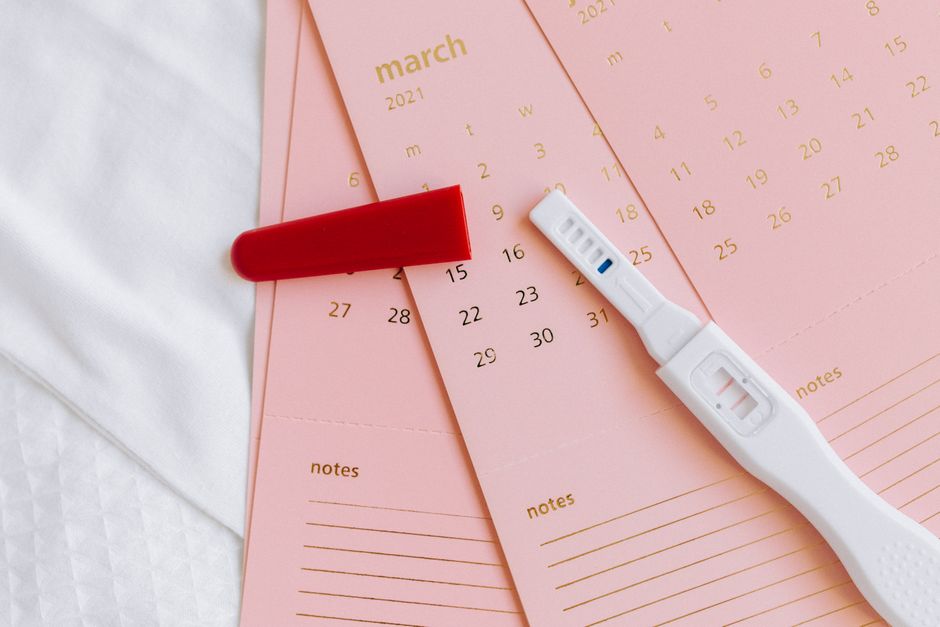
Pregnancy is measured in weeks, starting from the first day of your last menstrual period. This means you are not actually pregnant during the first two weeks of that count. The entire journey typically lasts 40 weeks, which is divided into three trimesters of roughly 13 to 14 weeks each. Understanding this timeline helps you track your baby’s development and prepare for prenatal appointments.
Why Do Doctors Count Pregnancy From Your Last Period?
Doctors use a standard method to date every pregnancy. They count from the first day of your last menstrual period, which is about two weeks before conception actually happens. This is called gestational age.
This system has been used for decades because it is reliable. Most women know when their last period started, but they cannot know the exact moment of conception. Using a fixed starting point makes it possible to estimate a due date consistently for every pregnancy.
Your due date is calculated as 40 weeks from that first day. Conception occurs around week two, and implantation happens around week three or four. So when you are 4 weeks pregnant by this count, your baby has only been developing for about two weeks.
How Many Weeks Are In Each Trimester?
The three trimesters divide the 40 weeks into three phases. Each trimester brings different changes for you and your baby.
- First trimester: Week 1 through week 13
- Second trimester: Week 14 through week 27
- Third trimester: Week 28 through week 40
These divisions are not exact across all medical sources. Some providers consider the first trimester to end at week 12, and some start the third trimester at week 27. The differences are minor and do not change your care. What matters is that your provider uses one consistent method.
Each trimester lasts about three months. The first trimester covers months one through three, the second covers months four through six, and the third covers months seven through nine. The final month includes a few extra weeks because pregnancy is counted as 40 weeks, not nine exact calendar months.
How Do Pregnancy Weeks Convert To Months?
Converting weeks to months is where most confusion happens. A month is not exactly four weeks. Most months have 30 or 31 days, which is closer to 4.3 weeks. This is why a 40-week pregnancy is described as nine months, not ten.
Here is a practical way to think about it. If you are 8 weeks pregnant, you are about two months pregnant. At 16 weeks, you are about four months. At 24 weeks, you are about six months. At 32 weeks, you are about eight months.
Your healthcare provider will almost always communicate in weeks, not months. This is because fetal development milestones are tracked in weeks. For example, a nuchal translucency scan is done between 11 and 13 weeks. Anatomy scans typically happen between 18 and 22 weeks. These windows are defined in weeks, not months.





What Happens In Each Trimester?
Each trimester has distinct developmental milestones. Knowing what to expect can help you understand why your provider schedules certain tests at certain times.
First trimester: This is when all major organs form. The heart begins beating around week 6. By the end of week 12, the baby has all of its organs, fingers, toes, and facial features. Miscarriage risk is highest during this trimester, which is why many women wait until week 12 or 13 to announce their pregnancy.
Second trimester: Most women feel their best during these weeks. Nausea often improves. The baby grows rapidly, and you may feel movement between weeks 18 and 22. The anatomy scan around week 20 checks the baby’s organs, spine, and limbs in detail.
Third trimester: The baby gains most of its weight during this time. The lungs mature, and the brain grows quickly. Your provider will see you more often, typically every two weeks from week 28 to 36, then every week until delivery. Babies born after week 37 are considered early term, and those born at 39 or 40 weeks are full term.
What If Your Due Date Changes?
Your due date is an estimate, not a promise. Only about 5 percent of babies are born on their exact due date. Most births happen within two weeks before or after the estimated date.
Your provider may adjust your due date if an early ultrasound shows a significant difference from your last period calculation. This is most common when periods are irregular or when a woman cannot remember her last period. An ultrasound in the first trimester is the most accurate way to date a pregnancy.
Later in pregnancy, ultrasound measurements become less reliable for dating. A baby’s size varies widely in the third trimester, so providers do not usually change a due date based on late scans. This is an important distinction. A large or small baby does not mean your dates are wrong.
How To Calculate Your Own Pregnancy Weeks
You can calculate your current pregnancy week if you know the first day of your last period. Count the number of days since that date and divide by seven. The result is your week of pregnancy.
For example, if your last period started 84 days ago, you are 12 weeks pregnant. If it started 90 days ago, you are 12 weeks and 6 days pregnant. The next day you would be 13 weeks.
Many pregnancy apps do this calculation automatically. They also track trimester changes and fetal size. These apps are convenient, but they rely on the date you enter. If you are unsure about your last period, ask your provider to help you determine your dates.
Pregnancy wheels and online calculators use the same formula. They all start from the first day of your last period. None of them can tell you the exact day of conception, and none should be treated as a precise prediction of delivery.
Why Weeks Matter More Than Months In Pregnancy
The medical community uses weeks because they are precise. Months are vague. Saying you are “five months pregnant” could mean anywhere from 18 to 23 weeks, depending on how you count.
Weeks also align with fetal development. A baby at 20 weeks is at a very different stage than a baby at 24 weeks, even though both might be described as “five or six months.” The viability threshold, for example, is often discussed around 23 to 24 weeks. This is a week-based milestone, not a month-based one.
Using weeks also helps with screening tests. Glucose tolerance testing for gestational diabetes usually happens between 24 and 28 weeks. Group B strep screening happens around 36 to 37 weeks. These windows are defined by weeks because the evidence shows these are the most useful times to test.
When you talk to your provider, use weeks. When you talk to friends and family, months may feel more natural. Both are fine. Just know that your medical file, your ultrasound reports, and your birth plan will all reference weeks.
Common Mistakes When Counting Pregnancy Weeks
The most common mistake is counting from the date of conception. Since conception happens about two weeks after your last period, this would make your pregnancy appear two weeks shorter than it really is.
Another mistake is assuming a month equals exactly four weeks. If you multiply 4 weeks by 9 months, you get 36 weeks. But pregnancy is 40 weeks. The extra four weeks come from the fact that most months are longer than four weeks.
Some women also expect their pregnancy to end at exactly 40 weeks. In reality, a pregnancy is considered full term at 39 weeks, and many healthy babies arrive at 41 or even 42 weeks. Your provider will discuss induction or other options if you go past 41 or 42 weeks, depending on your individual situation.
Finally, do not panic if your due date changes by a few days. This is normal. What matters is that you and your provider agree on a consistent starting point and use it throughout your care.
Frequently Asked Questions
How do I calculate my pregnancy week from my last period?
Count the number of days since the first day of your last menstrual period and divide by seven. The result is your current week of pregnancy.
Is pregnancy 9 months or 10 months?
Pregnancy is 40 weeks, which is about nine calendar months. It is not ten months, because most months are longer than four weeks.
When does the third trimester start?
The third trimester starts at week 28. Some providers use week 27, but the difference does not affect your care.
Why does my doctor say I am further along than I thought?
Doctors count from your last period, not from conception. This adds about two weeks to the timeline, which is standard practice for all pregnancies.
