
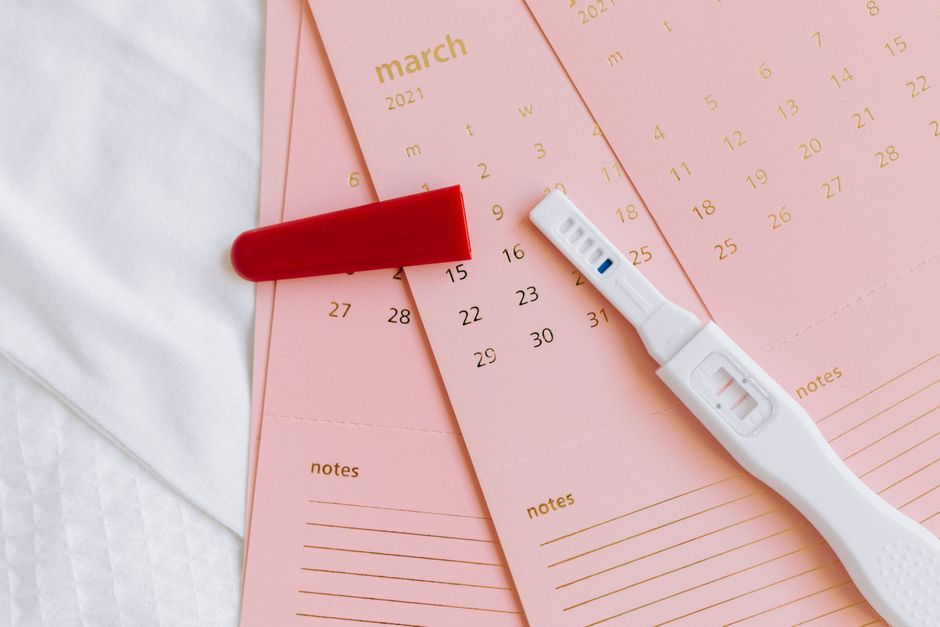
If you just missed your period and think you might be pregnant, counting your pregnancy weeks starts from a surprising place — not from conception or the missed period itself, but from the first day of your last menstrual period (LMP). This is the standard method doctors use worldwide. Pregnancy is counted as 40 weeks from that first day, even though conception happens about two weeks later. So if your last period started on March 1 and you miss your period around March 29, you are already considered about 4 weeks pregnant.
Why Do Doctors Count Pregnancy From Your Last Period Instead of Conception?
It sounds backward, but there is a clear reason. The exact date of conception is almost impossible to know unless you tracked ovulation with a test. Most women ovulate around day 14 of their cycle, but cycles vary. The first day of your period is a fixed date you can point to on a calendar. Doctors use it because it is reliable and consistent across different women. The American College of Obstetricians and Gynecologists (ACOG) confirms this as the standard dating method.
Think of it this way: your last period is the starting line. Conception is the first few steps. By the time you miss a period, you are already two weeks past that starting line in pregnancy weeks. This is why a positive pregnancy test at the time of a missed period puts you at about 4 weeks pregnant, not 2 weeks. It feels odd, but it is the universal system used in prenatal care.
How To Count Pregnancy Weeks After A Missed Period Step by Step
Here is the simple process. First, write down the exact date your last period started. That is day one. Count forward from that date. Every seven days is one week of pregnancy. So if your LMP was February 1 and today is March 1, you are four weeks pregnant (28 days after February 1). If you missed your period on February 28, you are exactly 4 weeks along.
To make it even easier, you can use the following steps:
- Find the first day of your last period on a calendar.
- Count the number of days from that date to today.
- Divide that number by 7 to get your weeks of pregnancy.
- Your due date is 40 weeks from that first day of your LMP.
This method works best for women with regular 28-day cycles. If your cycles are longer or shorter, the calculation may be slightly off. Your doctor may adjust your due date after an early ultrasound.
Does How To Count Pregnancy Weeks After A Missed Period Work for Irregular Cycles?
For women with irregular cycles, the LMP method becomes less reliable. If you ovulate on day 21 instead of day 14, conception happens a full week later. Counting from your LMP would make you appear further along than you actually are. Some studies suggest that up to 20% of women have cycles that vary by more than 7 days each month. In these cases, the LMP method can overestimate gestational age by a week or more.
If your cycles are irregular, do not panic. The best approach is to track ovulation signs — like cervical mucus changes or using an ovulation predictor kit. If you know when you ovulated, you can add 14 days to that date and use it as a surrogate LMP. However, the most accurate method for irregular cycles is an early ultrasound. Research published in Obstetrics & Gynecology found that first-trimester ultrasound dating is more accurate than LMP dating in women with irregular cycles.





What Does the Research Say About Counting Pregnancy Weeks From LMP?
Multiple large studies have examined how well LMP dating works. A 2018 study in the journal BMC Pregnancy and Childbirth looked at over 40,000 pregnancies. It found that LMP dating correctly predicted the due date within 7 days for about 85% of women with regular cycles. For women with irregular cycles, accuracy dropped to about 65%. The study concluded that LMP dating remains the standard first step, but ultrasound confirmation is recommended.
The World Health Organization also supports LMP dating as the primary method in low-resource settings where ultrasound is not available. However, they note that using LMP alone can lead to misclassification of preterm or post-term births. A 2020 analysis in The Lancet found that relying solely on LMP overestimates preterm birth rates by about 10%. This is important because it means some women are told they are overdue when they are not.
What this means for you: LMP dating is a good starting point, but it is not perfect. If your cycles are regular and you know your LMP date, trust it for now. Your doctor will confirm with an ultrasound between 8 and 12 weeks.
What Are the Common Mistakes When Counting Pregnancy Weeks?
The most common mistake is counting from the day you missed your period. If you missed your period on March 1, you might think you are 1 week pregnant. In reality, you are about 4 weeks pregnant based on LMP. Another mistake is counting from the day you had sex that led to conception. Sperm can live in the body for up to 5 days, so the date of intercourse is not the same as conception. Conception itself happens within 24 hours of ovulation, which is about 14 days after your LMP.
A third mistake is assuming every month is exactly 4 weeks. Pregnancy is 40 weeks, not 9 calendar months. A calendar month is about 4.3 weeks. So if you count by months, you will be off by several days. Stick to weeks. Finally, some people use the “due date wheel” or online calculators incorrectly by entering the date of their missed period instead of their LMP. Always enter the first day of your last period, not the day you tested positive.
Comparison of Pregnancy Dating Methods
| Method | How It Works | Accuracy | Best For |
|---|---|---|---|
| Last Menstrual Period (LMP) | Counts 40 weeks from first day of last period | Good for regular cycles (within 7 days of due date) | Women with 28-day cycles |
| First-Trimester Ultrasound | Measures embryo length to estimate gestational age | Very high (within 5-7 days) | All women, especially irregular cycles |
| Ovulation Tracking | Adds 14 days to ovulation date | Moderate (if ovulation date is known) | Women tracking ovulation |
| Conception Date | Calculates from estimated conception day | Low (conception date is rarely known) | Not recommended |
How To Count Pregnancy Weeks After A Missed Period When You Have Irregular Cycles
If your cycles are irregular, you need a different approach. Start with your LMP as a rough estimate. Then schedule an early ultrasound as soon as you confirm pregnancy. Most doctors offer dating ultrasounds between 8 and 12 weeks. The ultrasound measures the crown-rump length of the embryo, which is highly accurate for dating in the first trimester. Research in the New England Journal of Medicine showed that first-trimester ultrasound dating has an error margin of only 5 to 7 days.
If you cannot get an ultrasound right away, track your basal body temperature or use ovulation test strips to pinpoint when you ovulated. If you know your ovulation date, add 14 days to it and use that as your “adjusted LMP.” For example, if you ovulated on March 10, your adjusted LMP would be February 24. Then count 40 weeks from that date. This is not as accurate as ultrasound, but it is better than guessing.
Some women also use the “pregnancy wheel” or online calculators that allow you to enter your cycle length. If you know your average cycle is 35 days, you can adjust the calculator to account for later ovulation. Just be aware that no calculator is perfect without ultrasound confirmation.
Frequently Asked Questions
How many weeks pregnant am I if I just missed my period?
You are about 4 weeks pregnant if you have a 28-day cycle. Pregnancy is counted from the first day of your last period, not from the missed period.
Do I count from the first day of my last period or the last day?
Always count from the first day of your last period. That is day one of your pregnancy, even though conception happened about two weeks later.
What if I don’t remember the date of my last period?
An early ultrasound can date your pregnancy accurately. It measures the embryo and gives a reliable estimate within 5 to 7 days.
Can I use an online calculator to count pregnancy weeks?
Yes, but only if you enter the first day of your last period, not the day you missed your period or the day you tested positive.
