
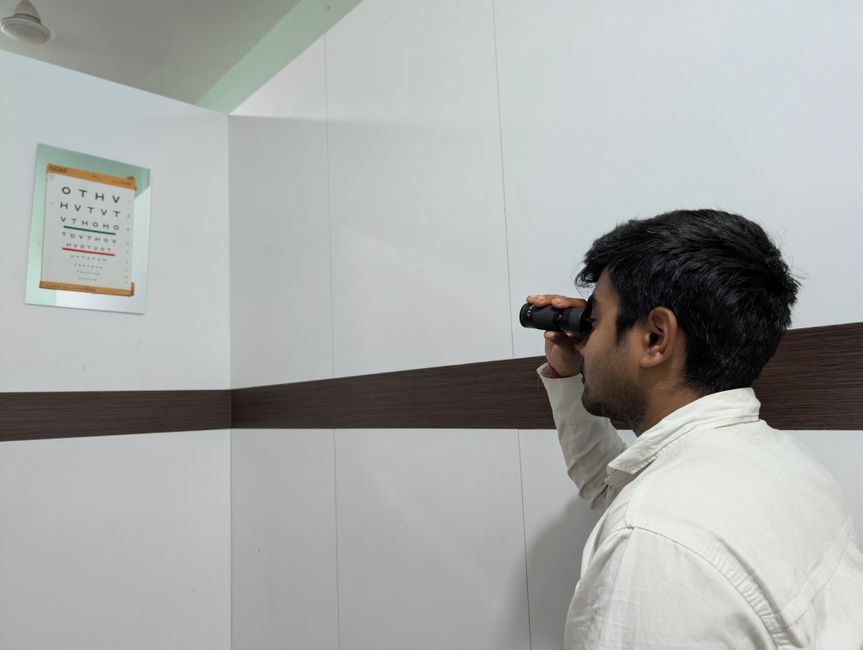
Blurry vision means the eye is not focusing light sharply on the retina, and the fix depends entirely on why. The most common causes are refractive errors — nearsightedness, farsightedness, and astigmatism — which glasses, contact lenses, and laser surgery correct well. Other causes, including cataracts, dry eye, and diabetic eye disease, need different treatment, and some are emergencies that require care within hours.
How To Correct Blurry Vision? Causes And Treatments
Correcting blurry vision starts with identifying the cause. A comprehensive eye exam does that. The exam measures how your eye focuses light and checks the health of the structures inside the eye.
Once the cause is known, treatment falls into a few broad groups:
- Refractive errors — corrected with glasses, contact lenses, or laser and other surgical procedures.
- Lens changes — a cataract is treated by removing the clouded lens and replacing it with an artificial one.
- Retina and optic nerve problems — treated with medication, injections, laser, or surgery, depending on the condition.
- Eye surface problems — dry eye and infection are treated with drops, ointments, or prescription medication.
Two things are true at the same time. Most blurry vision is not an emergency. Some blurry vision is. Sudden blurring, especially in one eye, with new floaters, flashes, or a curtain across your vision, needs immediate care. So does blurring with eye pain, redness, or a headache. So does any sudden vision change in someone with diabetes.
Getting the cause right matters more than getting a quick fix. A new pair of glasses will not help a retina that is detaching.
What Are the Most Common Causes of Blurry Vision?
Refractive error is the most common cause by a wide margin. The eyeball’s shape or the cornea’s curve keeps light from landing precisely on the retina. Nearsighted people see close objects clearly and distant ones blurry. Farsighted people strain to see near objects, and often distance too. Astigmatism blurs vision at all distances because the cornea is curved unevenly.
Presbyopia is different. It is not a disease. The lens inside the eye stiffens with age and loses its ability to change focus for close work. It typically becomes noticeable in the mid-40s and continues to progress into the 60s. Almost everyone develops it.
Other common causes include:
- Cataracts — the lens becomes cloudy, usually slowly over years.
- Dry eye — an unstable tear film scatters light and causes fluctuating blur.
- Diabetic retinopathy — high blood sugar damages retinal blood vessels.
- Macular degeneration — damage to the central retina affects detailed vision.
- Glaucoma — optic nerve damage, often with no early symptoms.
- Medications — some drugs, including certain antihistamines and antidepressants, can cause blur.
One clarification worth knowing: blur that comes and goes is often a tear film problem, not a focusing problem. If your vision clears when you blink or use lubricating drops, dry eye is a strong candidate. If it stays blurry no matter what, the cause is more likely optical or structural.
When Is Blurry Vision a Medical Emergency?
Some causes of blurry vision can cause permanent vision loss within hours. These need care right away, not a next-week appointment.
Get emergency care if blurry vision comes on suddenly, especially in one eye, or if it happens with any of these:
- New flashes of light or a sudden shower of floaters
- A dark curtain or shadow moving across your vision
- Severe eye pain, redness, or sensitivity to light
- Sudden loss of part of your visual field
- Double vision, drooping eyelid, or weakness on one side of the body
- A sudden, severe headache
Those first two symptoms can signal a retinal detachment, which is a surgical emergency. The third group can indicate acute angle-closure glaucoma, where pressure inside the eye rises fast. The last two can point to a stroke or a transient ischemic attack. In all of these, the window for saving vision or preventing further damage is short.
People with diabetes should treat any sudden change in vision as urgent. Rapid swings in blood sugar can blur vision temporarily on their own, but sudden blurring can also signal bleeding inside the eye, which needs prompt evaluation.





How Do Glasses and Contacts Correct Blurry Vision?
Glasses and contacts work by bending light before it reaches the eye so it lands correctly on the retina. They do not treat the underlying cause. They compensate for it. That is why a prescription that fits today may not fit in two years.
For most refractive errors, glasses and contacts correct vision to normal or near-normal. The choice between them comes down to lifestyle, comfort, and eye health rather than which one works better optically.
Contact lenses carry risks that glasses do not. Wearing them overnight, swimming in them, or cleaning them with tap water raises the risk of serious eye infection. Contact lens-related infections can permanently damage the cornea. Follow the wearing and cleaning schedule your eye care provider gives you.
If you notice blur, redness, or pain while wearing contacts, take them out and get seen. Do not wait to see if it settles.
Which Surgeries Can Fix Blurry Vision?
Several procedures can reduce or eliminate the need for glasses, but each has limits and risks.
Laser refractive surgery, including LASIK and PRK, reshapes the cornea to correct nearsightedness, farsightedness, and astigmatism. Most people who have it achieve good vision without glasses for distance. Results vary by prescription strength and other factors. Some people still need glasses for certain tasks, and reading glasses may still be needed later because laser surgery does not prevent presbyopia.
Cataract surgery replaces the clouded lens with an artificial one. It is one of the most commonly performed surgeries in the United States. The artificial lens can be chosen to correct distance vision, near vision, or both, depending on the type implanted. Not every option suits every eye.
Other treatments target specific causes rather than focusing:
- Anti-VEGF injections — used for certain types of macular degeneration and diabetic macular edema.
- Laser treatment — used for diabetic retinopathy and some types of glaucoma.
- Corneal cross-linking — used to slow keratoconus, a condition where the cornea thins and bulges.
These are not interchangeable. A treatment that helps one cause of blurry vision does nothing for another. This is why the diagnosis comes first.
Can Lifestyle Changes Improve Blurry Vision?
Lifestyle changes can help with some causes of blurry vision and do nothing for others. The honest breakdown is worth knowing.
Blood sugar control is the clearest example. In people with diabetes, keeping blood sugar in a stable range reduces the risk of diabetic retinopathy and slows its progression. That is well established. Blood pressure control matters for the same reason. Both are supported by strong evidence.
Dry eye responds to practical steps. Blinking fully when using screens, taking breaks, using a humidifier, and avoiding direct air from fans or vents can reduce symptoms. Lubricating drops help many people. Which type works best depends on whether the problem is low tear production or poor tear quality, and a clinician can help sort that out.
What does not work is worth naming. There is no diet, supplement, or eye exercise regimen that reverses nearsightedness, farsightedness, astigmatism, or presbyopia. Eye exercises do not change the shape of the cornea or the stiffness of the lens. No large human trials have shown that they correct refractive error. Some products marketed for “vision correction” make claims that no study has confirmed.
Nutrition does matter in one specific area. Certain nutrient formulas studied in age-related eye disease research were associated with a lower risk of progression in people who already had intermediate macular degeneration. That finding applies to that group, not to the general public, and not to blurry vision from other causes.
How Often Should You Get an Eye Exam?
Routine eye exams catch problems before they cause noticeable blur. That matters because several serious eye diseases, including glaucoma and early diabetic retinopathy, cause no symptoms at first.
General guidance from eye care organizations is roughly this:
- Adults with no risk factors and no vision problems — a comprehensive exam every few years, with frequency increasing with age.
- Adults over 40 — more frequent exams, since presbyopia and age-related eye disease become more common.
- Adults over 60 — exams at least every year or two.
- People with diabetes — at least annually, sometimes more often.
- People with a family history of glaucoma or macular degeneration — earlier and more frequent screening.
These are general ranges, not fixed rules. Your own schedule depends on your eyes and your risk factors, and your eye care provider can set it.
One point that catches people off guard: a vision screening is not the same as a comprehensive eye exam. A screening checks how well you see. An exam looks inside the eye. Only the exam can detect glaucoma, retinopathy, or a retinal problem before it affects your vision.
Frequently Asked Questions
Can blurry vision be corrected without glasses or surgery?
For refractive errors, no — glasses, contacts, or surgery are the options that correct the focus. For blur caused by dry eye, treating the tear film with lubricating drops and other measures can improve vision without changing your prescription.
Is sudden blurry vision in one eye an emergency?
Yes, sudden blurring in one eye should be evaluated right away, especially with flashes, floaters, or a curtain across your vision. Those symptoms can indicate retinal detachment, which is a surgical emergency.
Does screen time cause permanent blurry vision?
No. Screens do not permanently damage your eyes, but they reduce blink rate and cause dry eye that makes vision fluctuate. Blinking fully, taking breaks, and using lubricating drops can reduce the blur.
At what age does blurry vision from presbyopia start?
Presbyopia usually becomes noticeable in the mid-40s and keeps progressing into the 60s. It affects nearly everyone and is corrected with reading glasses, bifocals, progressive lenses, or contact lenses.
