
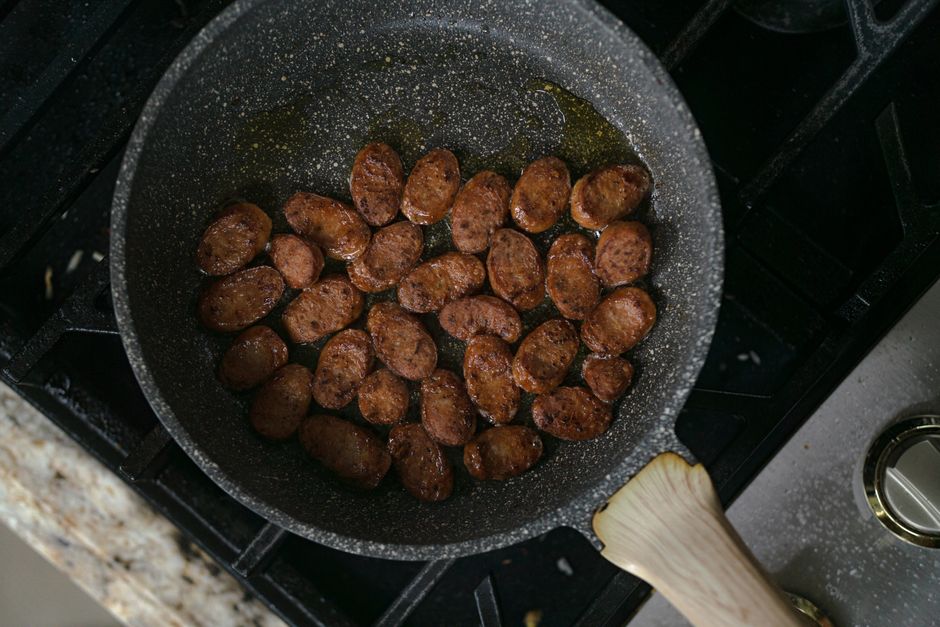
Cooking sausage in a frying pan is straightforward: use medium heat, add a small amount of oil, and cook the sausages for 10-15 minutes, turning them every 2-3 minutes until they are golden brown and reach an internal temperature of 160°F (71°C) for pork or beef, or 165°F (74°C) for poultry. The key is steady heat and frequent turning to cook them through without burning the outside. This method works for fresh, raw sausages and fully-cooked sausages alike, though cooking times differ.
What Is the Best Pan and Heat Level for Cooking Sausages?
Use a heavy-bottomed frying pan, like cast iron or stainless steel. These pans distribute heat evenly, which prevents hot spots that burn the outside of the sausage while the inside stays raw. Non-stick pans work fine too, but they may not give you the same browning.
Set your burner to medium heat. High heat is the most common mistake. It sears the casing quickly, leaving the center undercooked. Low heat takes too long and can make the sausage dry or tough. Medium heat gives you a steady cook from edge to center.
Let the pan heat up for about a minute before adding oil or butter. You want the surface hot but not smoking. A drop of water should sizzle and evaporate in a second or two.
Should You Add Oil or Water to the Pan?
Add about one tablespoon of oil with a high smoke point, such as canola, vegetable, or avocado oil. Olive oil works at medium heat but can burn if the heat creeps too high. The oil helps conduct heat and prevents sticking.
Some people add a splash of water to the pan and cover it to steam the sausages first. This is a common trick for thicker sausages, but it changes the texture. Steaming softens the casing and makes it harder to get a crispy brown exterior. If you want that snap when you bite into the sausage, skip the water and use oil only.
Butter adds flavor but burns faster than oil. A compromise is to cook in oil and add a pat of butter in the last minute or two for taste.
How Long Does It Take to Cook Sausage in a Frying Pan?
Cooking time depends on the thickness and type of sausage. For standard breakfast links or thin Italian sausages, expect about 10-12 minutes total. Thicker bratwurst or kielbasa can take 15-18 minutes. Fully-cooked sausages, like hot dogs or smoked sausage, only need 5-7 minutes to heat through and brown the surface.
The only reliable way to know a sausage is done is with a meat thermometer. Insert it into the thickest end of the sausage, avoiding the pan bottom. The USDA recommends these internal temperatures:
| Sausage Type | Safe Internal Temperature |
|---|---|
| Pork or beef (fresh) | 160°F (71°C) |
| Poultry (chicken or turkey) | 165°F (74°C) |
| Fully-cooked (any type) | 140°F (60°C) for reheating |
Cutting into a sausage to check if it is done lets juices escape and dries out the meat. Use the thermometer. It is the only honest way to be certain.



How Often Should You Turn Sausages While Cooking?
Turn the sausages every 2-3 minutes. This is not negotiable if you want even cooking. Each turn exposes a new side to the pan, building an even brown crust all around. If you leave a sausage on one side for 5 or 6 minutes, that side will darken too much and the opposite side will stay pale.
Use tongs to turn them. A fork pierces the casing and lets fat and juice leak out, which dries the sausage and can cause flare-ups in the pan. Tongs give you a firm grip without damage.
After the last turn, let the sausage rest on the pan for 30 seconds off the heat. This lets the juices settle back into the meat before you serve it.
What Is the Best Way to Know When Sausage Is Perfectly Cooked?
Temperature is the gold standard, but there are visual cues. A properly cooked sausage has an even, deep golden-brown color on all sides. The casing should be tight and slightly wrinkled in places. When you press it gently with tongs, it should feel firm but not hard. A raw sausage feels soft and squishy.
If you see dark black or burnt patches, the heat was too high or the sausage sat too long on one side. If the sausage is pale and flabby, it needs more time or higher heat next time.
Some sausages, especially chicken or turkey varieties, can look fully browned on the outside but still be undercooked inside. This is because poultry sausages have less fat and can brown faster than they cook through. Always check the temperature, even if the color looks right.
Common Mistakes People Make When Pan-Frying Sausages
- Using high heat. This burns the outside and leaves the inside raw. Medium heat is the right range for nearly all sausages.
- Pricking the sausages. Some old recipes tell you to poke holes to release fat. This dries out the sausage and causes grease splatter. Leave the casing intact.
- Overcrowding the pan. Sausages need space around them so steam can escape. If they touch each other, they steam instead of brown. Cook in batches if needed.
- Not letting them rest. Slicing into a sausage right off the heat makes juices run onto the plate. A one-minute rest keeps the meat moist.
- Using cold sausages straight from the fridge. Cold sausages take longer to cook through and brown unevenly. Let them sit at room temperature for 10-15 minutes before cooking.
Does the Type of Sausage Change the Cooking Method?
Yes, but not by much. Fresh sausages, like Italian, bratwurst, or breakfast links, need to be cooked all the way through. They start raw and require the full 10-15 minute cook time with medium heat and frequent turning.
Pre-cooked or smoked sausages, like kielbasa, hot dogs, and andouille, only need reheating. You can cook them the same way, but the time drops to 5-7 minutes. The goal is to brown the surface and warm the center without drying it out.
Thin sausages, like breakfast links or cocktail sausages, cook faster. Check them at 8 minutes. Thick sausages, like bratwurst or boudin, may need 16-18 minutes. If the outside is browning too fast and the center is still undercooked, reduce the heat to medium-low and cover the pan for the last 5 minutes. This steams the inside gently while the outside stays intact.
Chicken and turkey sausages have less fat than pork or beef. They can dry out faster. Cook them at the same medium heat but watch the time closely. Pull them off as soon as they hit 165°F. Do not let them sit in the hot pan after they are done.
What About Adding Flavor While Cooking?
You can add aromatics to the pan for extra flavor. A crushed garlic clove, a sprig of rosemary, or a few sage leaves in the oil as the sausages cook infuses the fat and coats the sausages lightly. Do this in the last 3-4 minutes so the herbs do not burn.
A splash of white wine, beer, or broth in the pan after the sausages are browned can create a quick pan sauce. Let it bubble and reduce for a minute, then spoon it over the sausages. This is common with bratwurst and Italian sausages.
Do not add sugar-based glazes or honey early in cooking. Sugar burns at medium heat and will leave a bitter, black coating. If you want a sweet glaze, brush it on in the last 2 minutes.
Frequently Asked Questions
Do I need to boil sausages before frying them?
No. Boiling is not necessary and will make the casing soft and harder to brown. Pan-frying from raw works fine with medium heat and frequent turning.
Can I cook frozen sausages in a frying pan?
Yes, but it takes longer and the outside may brown before the center is done. Thaw them in the refrigerator overnight for the best results.
Why are my sausages bursting open in the pan?
This happens when the heat is too high. The inside expands faster than the casing can stretch. Use medium heat and do not prick the sausages.
How do I keep sausages from sticking to the pan?
Use enough oil to coat the pan bottom and let the pan heat up before adding the sausages. A well-seasoned cast iron pan or a good non-stick surface also helps.
