
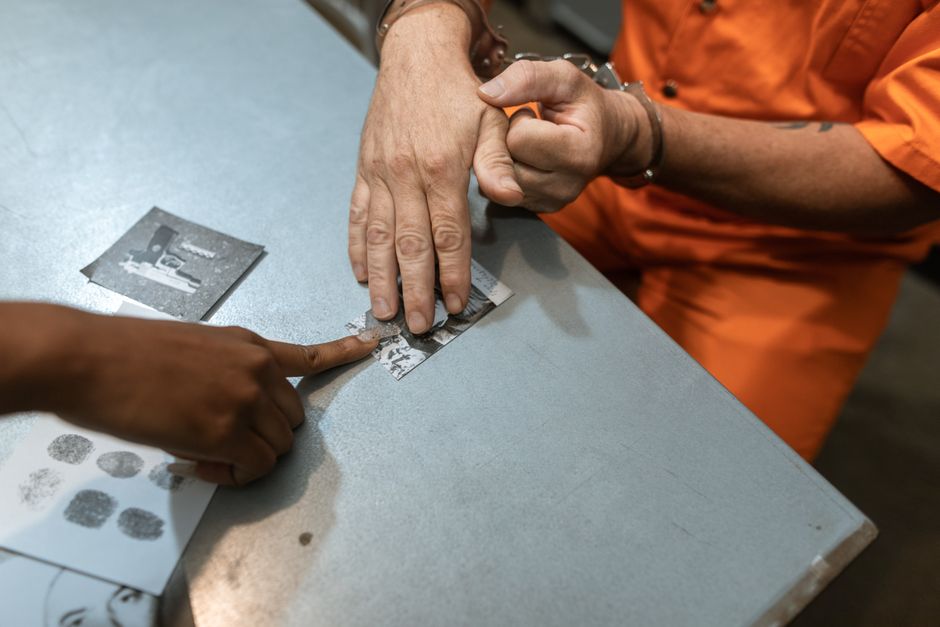
Collecting fingerprints from a deceased person is a specialized procedure that differs significantly from taking prints from a living person. It is usually performed by trained professionals such as coroners, medical examiners, forensic technicians, or law enforcement officers. The goal is to produce clear, readable prints for identification purposes, and the method chosen depends heavily on the condition of the body.
Why Fingerprint Collection From Deceased Remains Is Different
When a person is alive, their skin is elastic and filled with natural oils and moisture that help transfer ridge patterns to paper or a scanner. After death, the body undergoes changes that affect the skin. Rigor mortis can stiffen the fingers into a curled position. Postmortem drying can make the skin leathery or brittle. In some cases, the skin may begin to slip away from the underlying tissue, a process called skin slippage.
Because of these changes, standard fingerprinting techniques often fail. A police officer cannot simply roll a deceased person’s finger on an ink pad and expect a usable print. The skin may not be pliable enough, or the ridges may be too dry to leave a clear impression. Professionals must adapt their methods to the specific condition of the remains.
The Standard Method: Ink and Rolled Prints
The most common approach involves using a fingerprint kit similar to those used on living subjects, but with modifications. The technician applies fingerprint ink to the deceased person’s fingers using a small roller. Then, they carefully press each finger onto a fingerprint card, rolling it from side to side to capture the full ridge pattern.
This method works best when the body is recently deceased and the skin is still supple. If rigor mortis has set in, the technician may need to gently flex the finger joints to straighten them. This must be done carefully to avoid tearing the skin. If the fingers are too stiff, the technician may use a tool called a finger straightener, which is a small metal or plastic device that holds the finger in an extended position during printing.
For dry skin, some technicians apply a small amount of hand lotion or a specialized conditioning agent to the fingertips before inking. This restores some moisture and helps the ink transfer evenly. The goal is to get a complete, clear impression of the ridge details, including the loops, whorls, and arches that make each person’s fingerprints unique.
When Skin Slippage Occurs: The Glove Method
In cases where decomposition has progressed, the outer layer of skin may separate from the underlying tissue. This is known as skin slippage. The technician may need to remove the entire layer of skin from the finger, much like pulling off a glove. This is called “gloving” the hand.
To do this, the technician makes a small incision near the wrist or along the side of the finger and carefully peels the skin off. The skin is then placed over the technician’s own gloved finger. This allows the technician to roll the deceased person’s skin onto an ink pad and create a fingerprint card. The skin can also be placed on a flat surface and printed directly.
After printing, the skin is often preserved in a formalin solution or returned to the body if possible. This is a delicate procedure that requires training. It is not something a family member or untrained individual should attempt. The resulting prints can be of excellent quality because the ridge detail remains intact even when the skin has separated.





Using Powder and Tape for Difficult Surfaces
Sometimes the skin is too damaged or too dried to accept ink. In these cases, forensic technicians may use a powder-and-tape method. The technician applies a fine fingerprint powder, similar to the powder used to lift prints from surfaces at a crime scene, to the deceased person’s fingers. The powder adheres to the oils and moisture left in the ridge pattern.
Once the powder has developed the print, the technician presses a piece of clear lifting tape over the finger and then transfers the tape to a backing card. This preserves the print for analysis. This method is especially useful when the skin is too dry for ink or when the ridges are faint and need contrast to be visible.
This technique requires a steady hand and careful observation. The technician must determine whether enough ridge detail is present to produce a usable print before investing time in the process. If the skin is too decomposed, the ridges may be too damaged to yield any usable information.
Electronic Scanners and Live-Scan Devices
Many modern agencies use electronic fingerprint scanners, also called live-scan devices. These devices capture fingerprints digitally without ink. For deceased remains, the technician places the finger directly on the scanner glass. This works well when the skin is still moist and pliable.
However, live-scan devices have limitations. The scanner requires the finger to be flat against the glass. Rigor mortis can make this difficult. Dry skin may not register well on the optical sensor. Some agencies use a specialized scanner designed for postmortem use, which can capture prints from curved or damaged fingers.
When a direct scan is not possible, technicians may take an inked print and then scan the card into the system. This hybrid approach combines traditional methods with digital storage. The digital file can then be submitted to automated fingerprint identification systems, or AFIS, for comparison against known records.
How To Collect Fingerprints From Deceased Remains When the Body Is Burned or Mummified
Extreme conditions require specialized approaches. In cases of charring or mummification, the skin may be hardened, shrunken, or brittle. The ridges may still be present underneath the damaged outer layer.
For mummified tissue, the technician may need to rehydrate the fingers. Soaking the fingers in a solution of water and a mild agent, such as glycerin or a commercial rehydration fluid, can restore some flexibility. This must be done under controlled conditions to avoid further damage. Once the skin is softened, the technician can attempt to take prints using ink or a scanner.
For burned remains, the technician may carefully remove the charred outer layer to expose the underlying dermal ridges. These ridges are part of the deeper skin layer and may survive even when the outer epidermis is destroyed. The technician then prints the exposed layer directly. This is a highly skilled procedure that is performed only by experienced forensic professionals.
In all of these cases, the goal is the same: to capture the unique ridge pattern that allows for positive identification. The methods vary, but the underlying principle is consistent. Fingerprints do not change throughout a person’s life, and the ridge patterns remain even after death, provided the skin is preserved enough to reveal them.
Who Performs This Procedure and What Happens Next
Fingerprint collection from deceased remains is performed by professionals who have received specific training in postmortem techniques. This includes coroners, medical examiners, forensic identification specialists, and some funeral home personnel. In most jurisdictions, the legal authority to take fingerprints from a deceased person rests with the coroner or medical examiner’s office, especially when the identity of the deceased is unknown.
Once the prints are collected, they are compared against known records. This may include criminal databases, military records, employment records, or prints taken from personal items at the deceased person’s home. The comparison is often done using AFIS, which can search thousands of records in seconds. A match provides a high level of confidence in the person’s identity.
If no match is found, the prints may be kept on file and compared against future records. In cases where fingerprint comparison fails, other methods such as dental records or DNA analysis may be used. Fingerprints remain one of the most reliable methods of identification when they can be obtained.
Limitations of Postmortem Fingerprinting
Fingerprint collection is not always possible. If the skin is too decomposed, too damaged, or too degraded, the ridge detail may be lost entirely. In these cases, no amount of technique can recover a usable print. The technician must then rely on alternative identification methods.
It is also important to note that postmortem fingerprinting is a procedure with legal and ethical considerations. It is performed to establish identity, not for any other purpose. The process is handled with respect for the deceased and their family. It is a standard part of death investigation in many cases, particularly when the identity is unknown or needs to be confirmed.
Frequently Asked Questions
Can family members collect fingerprints from a deceased relative?
No, fingerprint collection from deceased remains should only be performed by trained professionals. Attempting it without proper technique can damage the skin and ruin any chance of obtaining usable prints.
How long after death can fingerprints still be collected?
There is no fixed time limit, but the condition of the skin is the deciding factor. Prints can sometimes be taken days or even weeks after death if the body is preserved or the environment is cool and dry.
Are fingerprints from deceased remains as accurate as those taken while alive?
Yes, if the prints are captured clearly, they are just as accurate. The ridge patterns on the fingers do not change after death, so a good postmortem print can be compared directly to a print taken during life.
