
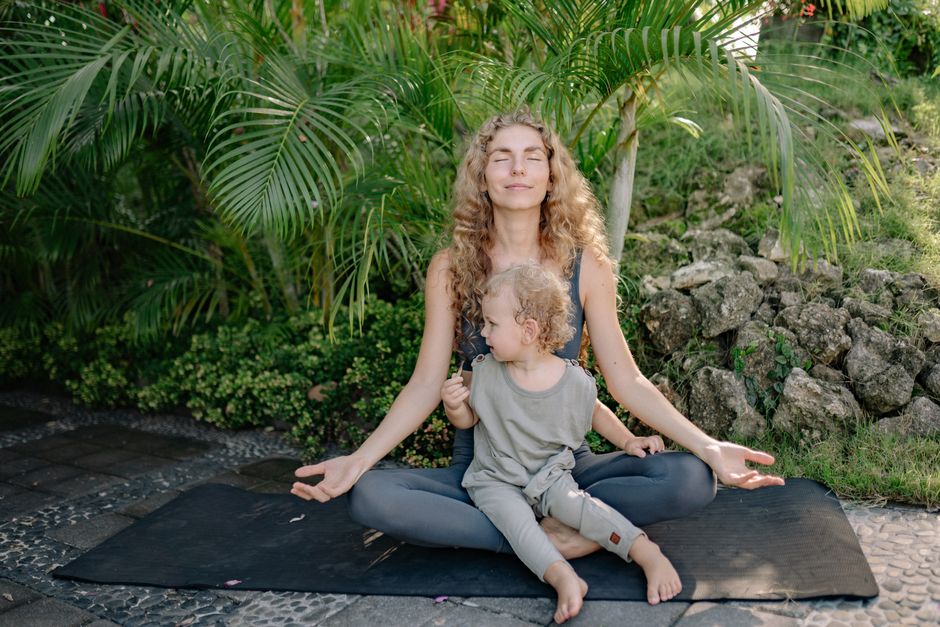
Co-regulation with a child means lending them your calm nervous system until they can manage their own. In practice, you stay steady, lower your voice, get physically close, and name what you see without judgment. You do this before trying to teach, correct, or reason. The child borrows your regulation first; the lesson comes later.
It sounds simple. It is not easy. And the order matters more than most parents realize.
How To Co Regulate With A Child Step By Step?
There is a sequence that works, and it follows the way the nervous system actually operates. A child in distress is not in a thinking state. Their stress response has activated — heart rate up, muscles tense, attention narrowed. Reasoning with them in that moment usually fails, not because they are being difficult, but because the part of the brain that handles reasoning is temporarily offline.
Here is the sequence. It is not a script. It is an order of operations.
- Regulate yourself first. Take a slow breath out. Drop your shoulders. If you are escalated, you cannot lend calm you do not have. This step is not optional.
- Move toward, not away. Get to their level. Physical proximity signals safety to a distressed child.
- Lower your voice and slow your speech. A quiet, slower voice gives the child’s nervous system something to match.
- Name the feeling without solving it. “You’re really frustrated right now.” Not “calm down” and not “you’re fine.”
- Wait. Regulation takes time. Give it 30 seconds before you say anything else.
- Offer a physical anchor if they accept it. A hand on the back, a hug, sitting close. Some children do not want touch when escalated — respect that.
- Only then move to problem-solving or limits. Once the body has settled, the thinking brain comes back online.
The most common mistake is skipping to step seven. Parents jump straight to explaining, correcting, or negotiating while the child is still in a stress state. It rarely works, and both people end up more upset.
What Is Happening In The Brain During Co-Regulation?
Human nervous systems are built to sync with each other. This is not a parenting technique invented recently — it reflects how mammals have always raised young. A distressed child’s stress response settles faster in the presence of a calm, familiar adult.
The mechanism involves several systems working together. When a child is upset, their sympathetic nervous system activates — the branch that handles fight-or-flight. A calm adult nearby provides signals the child’s nervous system reads as safety: a slower breathing rhythm, a lower vocal pitch, relaxed facial muscles, steady posture. These cues support the parasympathetic branch, which handles rest and recovery.
Over time, repeated experiences of being calmed by a caregiver help a child build their own capacity to self-regulate. The adult’s regulation is scaffolding. It gets removed gradually as the child develops the internal version.
This is why co-regulation is not the same as comforting a child until they stop crying. Comfort matters. But the goal is not just to end the distress — it is to help the child’s nervous system practice returning to baseline with support, so it can eventually do so alone.
One clarification that surprises many parents: co-regulation is not a reward for good behavior. It is not something you withdraw when a child misbehaves. A child who has just done something wrong still needs their nervous system calmed before they can understand what happened. Discipline and co-regulation are not opposites. They work in sequence.
What Does Co-Regulation Look Like At Different Ages?
The core sequence stays the same. What changes is how much language you use and how much independence the child has.
Infants and toddlers rely almost entirely on physical co-regulation. Holding, rocking, a calm voice, steady breathing. They cannot name feelings or follow reasoning. The adult’s body does nearly all the work.
Preschoolers can begin to connect feelings to words, but only after they have settled. Naming emotions during the calm period — not during the peak — helps build emotional vocabulary over time. Expect to repeat this hundreds of times. That repetition is the point.
School-age children can often use co-regulation with more verbal support. A parent might say, “Let’s take a few breaths together,” and the child can participate. They may also start to recognize their own early warning signs — tight chest, clenched fists — with adult help.
Teens still need co-regulation, though they may resist obvious forms of it. Sitting nearby without demanding conversation, staying calm during an argument, and avoiding escalation can all function as co-regulation. A teen who storms off and slams a door is still watching how the adults around them handle stress.
Age does not remove the need. It changes the delivery.





What Gets In The Way Of Co-Regulating?
The biggest obstacle is your own stress response. If your child’s distress triggers your distress, you now have two activated nervous systems instead of one calm and one activated. This is not a character flaw. It is biology.
Common barriers include:
- Being rushed. Co-regulation takes time most parents do not feel they have.
- Feeling judged by others watching. This pushes adults toward quick fixes.
- Personal history. Adults who were not co-regulated as children often find it harder to provide something they did not receive.
- Believing that calming a child “lets them off the hook.” It does not. It makes the later conversation possible.
- Fatigue. A tired adult has less capacity to stay regulated.
None of these are reasons to give up. They are reasons to be honest about what makes it hard.
How Is Co-Regulation Different From Self-Regulation?
Self-regulation is the ability to manage your own emotional and physiological state without help. Co-regulation is the process that builds it. They are not competing ideas — one leads to the other.
Children do not develop self-regulation on their own. They develop it through thousands of repeated experiences of being calmed by someone else. The adult’s regulation is external at first and becomes internal over time.
This has a practical implication. Expecting a young child to self-regulate without co-regulation is like expecting them to read before anyone has read to them. The skill has to be built, and it is built through relationship, not instruction.
For older children and teens, self-regulation is more developed, but it is not finished. The prefrontal cortex — the part of the brain involved in impulse control and planning — continues developing well into the mid-twenties. This is well established in developmental neuroscience. It means even teenagers benefit from adult co-regulation, whether or not they ask for it.
Does Co-Regulation Actually Work?
The concept is well supported by developmental psychology and neuroscience research. The idea that children develop emotional regulation through supportive relationships with caregivers is a long-standing finding in the field, not a new trend.
What is less clear is how much specific techniques matter compared to the general quality of the relationship. Most research looks at patterns over time, not at whether a particular phrase or action works in a single moment. So if you try a script and it does not work the first time, that does not mean co-regulation failed. It means one attempt in one moment did not produce a visible change.
What the evidence does not support is the idea that co-regulation prevents all future emotional difficulty. It is one important factor among many, including temperament, environment, and life experiences. No parenting approach guarantees outcomes, and anyone claiming otherwise is overstating what is known.
What can be said with confidence: children who experience consistent, calm adult support during distress tend to develop better emotional regulation over time. That finding is consistent across decades of research.
What If I Lose My Cool?
You will. Every parent does. The repair matters more than the perfect moment.
Repair means going back after everyone has settled and acknowledging what happened. “I got loud earlier. That was me being frustrated, not you doing something wrong.” This does two things. It models accountability. It also shows the child that relationships survive conflict.
Children do not need parents who never lose their temper. They need parents who come back and reconnect. That pattern — rupture and repair — is itself a form of teaching emotional regulation.
If losing your cool is frequent and intense, that is worth paying attention to. Persistent difficulty staying regulated around your child can have many causes, including your own stress load, sleep, or mental health. Talking to a doctor or therapist is a reasonable step, not an admission of failure.
Frequently Asked Questions
What is co-regulation in simple terms?
Co-regulation is when a calm adult helps a distressed child settle their nervous system. The child borrows the adult’s calm until they can manage their own.
At what age should co-regulation stop?
It does not stop at a specific age. The need continues through the teenage years, though the way it looks changes as children get older.
How long does it take for co-regulation to work?
In a single moment, calming often takes a minute or more of steady adult presence. As a skill children develop, it builds gradually over years of repeated experiences.
What if my child pushes me away during co-regulation?
Some children do not want touch or closeness when escalated, and that is normal. Staying nearby, keeping your voice calm, and not escalating yourself still counts as co-regulation.
