

A baby’s ear canal is largely self-cleaning, and the safest way to clean a baby’s ears is to wipe only the outer ear with a soft damp cloth and leave the inside of the canal alone. Never insert cotton swabs, fingers, or any object into the ear canal. See a doctor if you notice pus, blood, foul discharge, swelling, or signs of pain.
Most ear problems in babies come from doing too much, not too little. The ear canal has its own cleaning system. When parents work against it, they can cause irritation, infection, or push wax deeper.
Here is what to do, what to avoid, and which warning signs need a clinician rather than a cotton swab.
How To Clean Baby Ears Safe Steps And Red Flags
The safe routine is simple. Clean the outside of the ear only, keep the canal dry, and know what a normal ear looks like so you can spot a change.
For routine cleaning, use a soft washcloth dampened with warm water. Wipe the outer ear, the folds behind the ear, and the visible rim of the ear opening. That is the entire routine. Do this during bath time or when you notice visible dirt or milk spills around the ear.
Behind the ear deserves attention. Milk, spit-up, and moisture collect in the crease between the ear and the head. Gently wipe and then dry that area. Keeping it dry helps prevent skin irritation in the crease.
Dry the outer ear after baths and swimming. Tilt the head to let water drain, then pat the outside dry with a towel. Do not push a towel corner into the canal.
If you see wax near the opening of the canal, wipe what is visible with the cloth. Do not go looking for more. Wax you cannot see is doing its job.
Why You Should Not Use Cotton Swabs In A Baby’s Ear
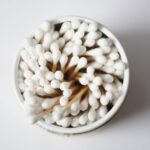
Cotton swabs are the most common cause of ear canal injuries in young children, and they serve no cleaning purpose inside the canal.
The ear canal is short and angled differently in babies than in adults. A swab can easily scratch the delicate skin lining the canal. That scratch can become infected. In worse cases, a swab pushed too far can injure the eardrum.
Swabs also work against the ear’s design. Wax forms in the outer part of the canal and slowly migrates outward, carrying trapped dirt and skin cells with it. Pushing a swab in tends to compact wax against the eardrum instead of removing it. That can lead to a blockage that causes discomfort, muffled hearing, or a reason for a clinic visit.
The same applies to fingers, rolled tissue, hairpins, and “ear candles.” Ear candles have no evidence of benefit and carry a risk of burns and wax being pushed deeper. No clinical evidence supports them for any purpose.
What Earwax Does And When It Becomes A Problem
Earwax, called cerumen, is not dirt. It is a protective substance that traps dust and small particles, repels water, and has mild antibacterial properties. A baby’s ear canal needs wax to stay healthy.
In most babies, wax never needs to be removed. It works its way out on its own. Visible wax at the ear opening can be wiped away with a cloth.
A wax blockage becomes a problem when it fully plugs the canal. Signs can include a baby tugging at the ear, seeming uncomfortable, or not responding to sound as expected. Wax blockages are far less common in babies than in adults, partly because the canal is small and partly because parents rarely need to intervene.
If you suspect a blockage, do not try to remove it at home. Do not use over-the-counter ear drops in a baby unless a clinician has examined the ear and recommended them. Some drops are not appropriate if the eardrum is ruptured or if ear tubes are present, and a parent cannot check for either at home.




Red Flags That Need A Doctor
Some ear findings in a baby need medical assessment rather than home cleaning. Call your pediatrician if you notice any of the following.
- Pus, cloudy fluid, or blood coming from the ear
- Foul-smelling discharge
- Swelling, redness, or tenderness of the outer ear or the skin behind it
- A baby who cries when the ear is touched or pulled
- Fever along with ear symptoms
- Drainage that keeps coming back after treatment
- An object or insect in the ear
- Hearing seems reduced, or the baby does not startle to sound as expected
- A visible lump, sore, or rash in or around the ear that is not improving
Ear pulling alone is not a reliable sign of an ear infection. Babies pull at their ears for many reasons, including teething, tiredness, and curiosity. The finding that matters is ear pulling combined with fever, fussiness, poor feeding, or discharge. That combination deserves a call.
Drainage is the clearest red flag. Fluid from inside the ear means something has changed in the canal or eardrum, and it should be looked at rather than cleaned at home.
Water In The Ear After Baths And Swimming
Water trapped in the outer ear after a bath or swim is usually harmless and drains on its own.
Tilt the baby’s head to the side and let gravity do the work. Pat the outer ear dry with a towel. Do not insert anything into the canal to soak up water. A cloth corner or swab does more harm than the water does.
Swimmer’s ear, an infection of the outer ear canal, is uncommon in babies who are not regularly swimming, but it can happen. Signs include itching, pain when the outer ear is moved, redness, and discharge. It is treated by a clinician, not by home cleaning.
If your baby has ear tubes, follow the guidance from the ear specialist about water exposure. Recommendations vary, and the surgeon’s instructions for your child’s specific situation take priority over general advice.
How To Tell If A Baby’s Ear Is Infected
A middle ear infection, called otitis media, happens behind the eardrum and cannot be seen or cleaned from the outside. It is diagnosed by a clinician looking at the eardrum.
Signs that suggest a middle ear infection include fever, irritability, poor sleep, pulling or rubbing the ear, and trouble feeding. These signs overlap with many other illnesses, so they cannot confirm an ear infection on their own.
Middle ear infections are common in babies and young children. Many improve without antibiotics, and some do not. Whether antibiotics are needed depends on the child’s age, the severity of symptoms, and what the clinician sees. That decision belongs with a clinician.
What parents can do is keep the outer ear clean and dry, avoid inserting anything into the canal, and get the ear checked when red flags appear. Cleaning cannot prevent or treat a middle ear infection, because the problem is behind the eardrum.
When To Ask About Ear Cleaning At A Checkup
Routine well-child visits are a good time to raise any ear questions. Ask if you are unsure whether visible wax needs attention, if your baby has had discharge, or if your child has ear tubes or a history of ear problems.
A clinician can look inside the ear and tell you whether the canal is clear, whether wax is causing a problem, and whether the eardrum looks normal. That examination is quick and settles questions that no amount of home cleaning can answer.
The bottom line is simple. Clean the outside, leave the inside alone, keep the ear dry, and let a clinician handle anything that looks unusual.
Frequently Asked Questions
Can I use cotton swabs to clean my baby’s ears?
No. Cotton swabs can scratch the ear canal, push wax deeper, and injure the eardrum, and they serve no cleaning purpose inside the canal. Wipe only the outer ear with a soft damp cloth.
How do I clean the inside of my baby’s ear?
You do not need to. The ear canal cleans itself as wax slowly moves outward, and anything inserted into the canal risks injury. Wipe visible wax at the ear opening with a cloth and leave the rest alone.
What does ear discharge in a baby mean?
Discharge from the ear means fluid is coming from the canal or through a ruptured eardrum, and it needs medical assessment. Call your pediatrician rather than trying to clean it at home.
Is ear pulling a sign of an ear infection?
Not on its own. Babies pull at their ears for many reasons, including teething and tiredness, so ear pulling matters most when it comes with fever, fussiness, poor feeding, or discharge.
