
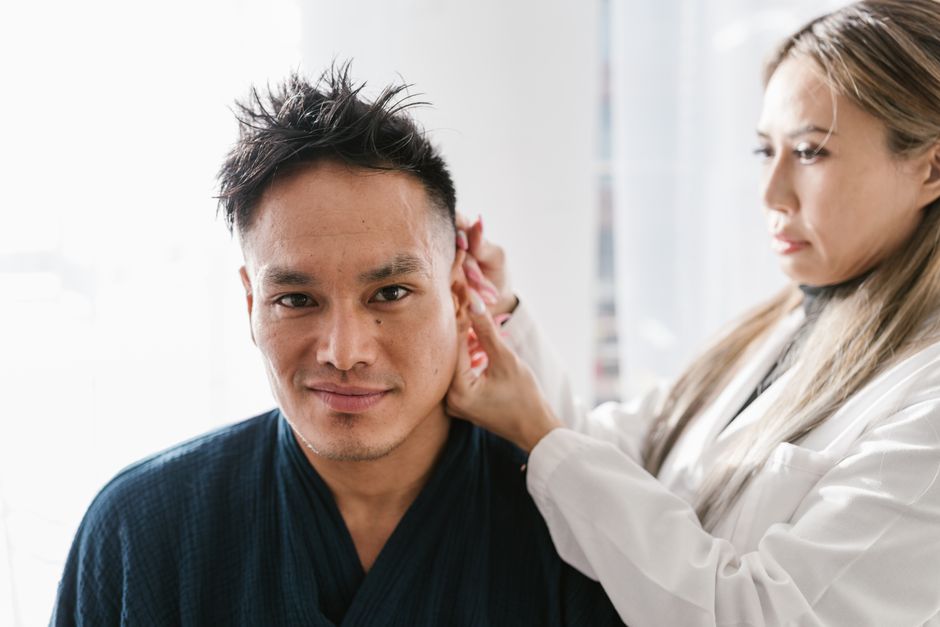
Head lice are small, wingless insects that live on the human scalp and feed on blood. Checking yourself for lice means examining your scalp in good light, parting the hair in small sections, and looking for live insects, nymphs, and nits (eggs) attached close to the scalp. A fine-tooth lice comb makes the check far more reliable than looking with your eyes alone.
You can do a thorough check at home in about 10 to 15 minutes. The key is to look in the right places, use the right tool, and know the difference between a live infestation and old, empty egg casings that can stay glued to hair for months after the lice are gone.
How To Check Yourself For Lice
Start with wet hair. Moisture makes the hair easier to separate and slows the lice down, which makes them easier to spot. Some clinicians recommend applying a plain conditioner to help the comb glide through. Either way, work under bright light — natural daylight or a strong lamp — because lice and nits are small and easy to miss in dim rooms.
You will need a fine-tooth lice comb, sometimes called a nit comb. The teeth are spaced closely enough to catch lice and nits but wide enough to let hair pass through. A regular comb or brush will not do the job.
Here is a step-by-step method:
- Comb the hair to remove tangles first.
- Part the hair into small sections, about one inch wide.
- Place the comb flat against the scalp at the top of a section.
- Pull the comb firmly from the scalp all the way to the end of the hair.
- Wipe the comb onto a white paper towel or tissue after each stroke.
- Check the towel for moving lice or small brown or tan specks.
- Work your way around the whole head, section by section.
- Pay closest attention to the scalp near the ears and the back of the neck.
Repeat the combing over the same areas a second time. Lice can move quickly, and a single pass can miss them. Looking at what comes off the comb on a white surface is often the most reliable way to confirm what you are seeing.
What Do Lice and Nits Actually Look Like?
An adult louse is about the size of a sesame seed, roughly 2 to 3 millimeters long. It has six legs and ranges in color from tan to grayish-white. Lice do not jump or fly. They crawl, and they move fast enough that a quick glance can miss them.
Nits are the eggs. They are tiny, oval, and glued to individual strands of hair. Freshly laid nits sit very close to the scalp, usually within about a quarter inch. They are tan or yellowish-brown when they still contain a live embryo. After the egg hatches, the empty casing stays attached to the hair and turns white or clear as the hair grows out.
This distinction matters. Finding nits more than about a quarter inch from the scalp usually means those eggs already hatched or are old casings. It does not by itself prove there is an active infestation right now. Finding live lice or nits close to the scalp is stronger evidence of an active case.
A common mistake is mistaking dandruff, hair casts, or residue from hair products for nits. Dandruff flakes off easily and is not stuck to the hair. Nits are cemented in place and are hard to slide off the strand. If a speck slides off easily, it is probably not a nit.
Where Should You Look First?
Lice cluster in specific areas. They prefer warmth and tend to gather close to the scalp rather than at the ends of the hair.
The most common spots are behind the ears and along the back of the neck at the hairline. These areas are warm, sheltered, and easy for lice to reach. They also show up near the crown of the head and along the part.
If you find nothing in those areas, it does not mean you are clear. Lice can be present in small numbers and spread out. A full comb-through of the entire scalp is more reliable than spot-checking.




How Often Should You Check?
There is no single official schedule for checking. The general clinical approach is to check when there is a known exposure — for example, if a household member or a close contact has lice — and to recheck over the following days if you find evidence.
Because lice take time to multiply and nits take about a week to hatch, a single clear check does not rule out a developing infestation. If you have been exposed, checking again after a few days is reasonable. Some clinicians suggest checking every few days for a couple of weeks after a known exposure, but this is based on general practice rather than a strict guideline.
Lice do not carry disease. They are a nuisance, not a health emergency. The main problems are itching, irritation, and the risk of spreading them to others.
Why Lice Spread So Easily
Head lice spread mainly through direct head-to-head contact. This is why they are common in children and spread within households. When two heads touch, a louse can crawl from one to the other.
Sharing items that touch the head can also spread lice, though this is less common than direct contact. Hats, hairbrushes, combs, pillows, and headphones are the usual suspects. Lice cannot survive long away from a human scalp. They need blood to live and will die within a day or two off a host.
Lice do not spread because of poor hygiene. Clean hair is just as likely to host lice as dirty hair. This is a persistent myth worth correcting directly.
What If You Find Lice?
Finding live lice or nits close to the scalp means you have an active infestation. The standard approach is treatment with an over-the-counter or prescription product, combined with careful combing to remove nits and lice.
Over-the-counter products typically contain permethrin or pyrethrin. These are insecticides formulated for use on the scalp. Prescription options exist for cases that do not respond to first-line treatment. Which product is appropriate depends on your situation, so it is worth checking with a pharmacist or clinician, especially if you are pregnant, breastfeeding, or treating a young child.
Manual removal with a fine-tooth comb is also part of most treatment plans. Combing every few days helps remove lice and nits that survive treatment. Some clinicians recommend combing daily during an active infestation, though the exact frequency is not firmly standardized.
If you are pregnant or breastfeeding, or treating an infant, do not assume a product is safe. No clinical guidelines currently exist for every product in these groups, and some treatments are not recommended. Talk to a clinician before using any lice treatment in these situations.
You should also check everyone in the household, since lice spread easily between people who live together. Washing bedding, hats, and recently used clothing in hot water, and vacuuming furniture, can help reduce the chance of re-infestation, though lice rarely survive long off a host.
When Self-Checking Is Not Enough
Self-checking is useful, but it is not foolproof. Lice can be hard to find, especially in thick, curly, or long hair, and in light infestations. If you have symptoms like persistent scalp itching or a rash at the back of the neck, but you cannot find lice yourself, a clinician or a trained professional can do a more thorough examination.
Itching is not a reliable early sign. It is an allergic reaction to louse saliva, and it can take weeks to develop the first time someone is infested. Many people have no itching at all early on.
If you are unsure whether what you found is a louse or a nit, a pharmacist can often help identify it. Getting the identification right matters, because treating for lice when there is no infestation exposes you to unnecessary products.
Frequently Asked Questions
Can I check myself for lice without a comb?
You can look with your eyes, but a fine-tooth lice comb is far more reliable for finding lice and nits. Without a comb, small infestations are easy to miss.
How do I tell nits from dandruff?
Nits are glued to the hair and are hard to slide off the strand, while dandruff flakes off easily. Nits close to the scalp are more likely to be live eggs.
Do lice mean someone is dirty?
No. Head lice feed on blood and do not care whether hair is clean or dirty. They spread through head-to-head contact, not poor hygiene.
How long do lice live off the head?
Head lice need human blood to survive and typically die within one to two days away from a scalp. Nits cannot hatch and survive at normal room temperatures off a host.
