
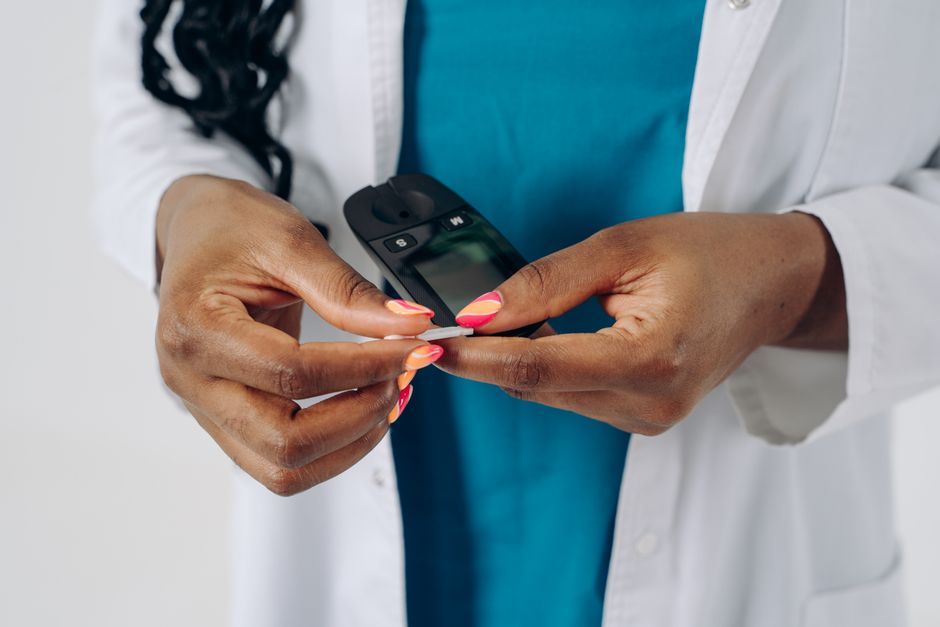
Estrogen is one of the main hormones that shapes a woman’s reproductive life, and it also plays roles in bone, heart, and brain health. If you want to know where your levels stand, the only reliable way to check estrogen is through a blood test ordered by a clinician. Home saliva and urine kits exist, but they are not a substitute for a properly interpreted blood test.
There is no single “estrogen level” that applies to everyone. What counts as normal depends on your age, whether you still have menstrual cycles, where you are in a cycle, whether you take hormones, and why you are testing in the first place. That context is why a doctor’s interpretation matters as much as the number on the lab report.
What Does an Estrogen Test Actually Measure?
“Estrogen” is not one substance. It is a family of hormones, and a standard panel usually measures one or more of them separately.
- Estradiol (E2) is the most potent form and the main estrogen in women of reproductive age. It is the one most often tested.
- Estrone (E1) is the main estrogen after menopause, produced largely in body fat from other hormones.
- Estriol (E3) is produced mainly during pregnancy and is not a routine test outside that context.
When people say “estrogen levels,” they almost always mean estradiol. A clinician ordering a test will specify which one. A result labeled simply “estrogen” without specifying the type is not very useful.
How To Check Estrogen Levels: Blood Tests and Other Options
A blood draw is the standard method. It directly measures the hormone circulating in your bloodstream and is the method used in the research that established normal ranges.
Blood can be drawn from a vein in your arm. Some clinics also offer finger-prick testing, but results can vary more and are not the standard for diagnosis.
Other methods exist, and each has limits:
- Saliva testing measures free hormone, but results vary between labs and are not standardized against blood levels. Many clinicians do not use it for diagnosis.
- Urine testing measures hormone breakdown products over a period of hours. It is used in some fertility monitoring, but it does not tell you the level in your blood at a given moment.
- Home kits sold online often use saliva or dried blood spots. The evidence that these accurately reflect clinical estrogen status is limited.
If you are trying to answer a medical question, a blood test interpreted by a clinician is the approach with the strongest evidence behind it. A home kit may be convenient, but convenience is not accuracy.
When Should You Get Tested?
Estrogen testing is not a routine screening test for healthy women. It is ordered when there is a specific reason to check.
Common reasons a clinician might order an estradiol level include:
- Irregular or absent periods
- Signs of early menopause or premature ovarian insufficiency
- Difficulty getting pregnant, as part of a fertility workup
- Monitoring while taking fertility medications
- Evaluating symptoms that could relate to hormone imbalance
- Monitoring hormone therapy in some situations
- In men, investigating certain symptoms such as breast enlargement
Testing without a clear question often creates confusion. A single number, pulled out of context, can raise worry or false reassurance that does not match what is actually happening in your body.



Timing Matters More Than Most People Realize
In women who still have menstrual cycles, estradiol rises and falls in a predictable pattern across the month. A level that is normal on one day can be abnormal on another.
For this reason, the day of your cycle when blood is drawn changes how the result should be read. Clinicians often order estradiol testing on a specific cycle day depending on what they are looking for. If you are having a fertility workup, the timing is especially important.
If you are not having cycles — because of menopause, a hormonal contraceptive, or another reason — timing is less of an issue, but the reference range shifts. Estradiol is generally much lower after menopause than during reproductive years.
Tell your clinician the first day of your last period, any hormonal birth control you use, and any hormone therapy you take. This information changes how the result is interpreted.
What Do the Numbers Mean?
Reference ranges vary by lab, by the type of estrogen measured, and by your age and cycle stage. There is no universal cutoff.
As a general guide, estradiol in women of reproductive age is measured in picograms per milliliter (pg/mL), and levels change substantially across the cycle. After menopause, levels are considerably lower. In men, estradiol is normally present at low levels.
Because ranges differ between labs and depend so heavily on context, it is not useful to compare your number to one you found online. The reference range printed on your own lab report is the one your clinician will use.
One clarification worth knowing: a “normal” range is a statistical range, not a target. It describes where most healthy people fall, not where any individual should aim to be. A result inside the range does not automatically mean everything is fine, and a result slightly outside it does not automatically mean something is wrong.
Signs That Might Prompt Testing
Symptoms alone cannot tell you your estrogen level. Many conditions share the same symptoms, and the only way to know is to test.
Low estrogen can be associated with:
- Hot flashes and night sweats
- Vaginal dryness
- Irregular or missed periods
- Difficulty sleeping
- Mood changes
High estrogen, or estrogen that is out of balance with other hormones, can be associated with:
- Breast tenderness
- Bloating
- Heavy or irregular periods
- Mood changes
Notice that several symptoms appear on both lists. That overlap is exactly why self-diagnosis from symptoms is unreliable. If symptoms are affecting your daily life, see a clinician rather than guessing at your levels.
Can You Check Estrogen at Home?
You can buy home test kits, but you should understand what they can and cannot do.
Most home kits measure hormones in saliva, urine, or a dried blood spot. The accuracy of these methods varies, and results are not always comparable to standard blood tests. Some kits are marketed with claims about “hormone balance” that go beyond what the evidence supports.
No clinical guidelines currently recommend home estrogen kits as a replacement for a clinician-ordered blood test. If you use one, treat the result as information to discuss with a doctor, not as a diagnosis.
What to Expect at a Doctor’s Visit
If you ask your clinician about estrogen testing, expect a conversation before a lab order.
They will likely ask about your symptoms, your menstrual history, any medications or hormonal contraceptives, and whether you are trying to conceive. Based on that, they will decide whether a test is useful and, if so, which one and when to draw it.
If you are already seeing a clinician for a related concern, ask specifically what is being measured and why. A good question is: “What will this result change about my care?” If there is no clear answer, the test may not be necessary.
Estrogen does not act alone. It works alongside progesterone, testosterone, thyroid hormones, and others. A clinician often checks several hormones together, because a single value rarely tells the full story.
Frequently Asked Questions
What is the best way to check estrogen levels?
A blood test ordered by a clinician is the standard and most reliable method. Saliva and urine tests are available but are not standardized against blood levels and are not recommended as a replacement for diagnosis.
Can I check my estrogen levels at home?
Home kits exist, but their accuracy varies and no clinical guidelines recommend them in place of a clinician-ordered blood test. If you use one, bring the result to a doctor for interpretation.
When should estrogen be tested during my cycle?
Timing depends on what your clinician is looking for, and estradiol changes substantially across the cycle. Your doctor will tell you which cycle day to schedule the test.
Do I need to fast for an estrogen test?
Fasting is not typically required for estrogen testing. Follow whatever instructions your specific lab provides.
