
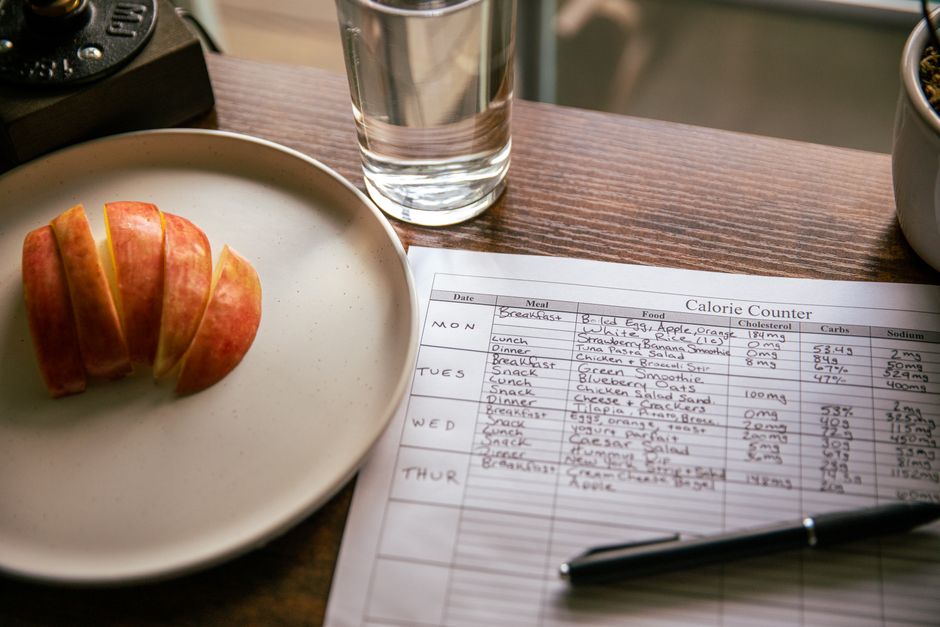
To lose weight, you need to eat fewer calories than your body burns. This is called a calorie deficit. You calculate this by finding your maintenance calories (the number you eat to stay the same weight) and subtracting 300 to 500 calories per day. This math is not perfect for everyone, but it is the most reliable starting point. The real work is in finding your actual number and adjusting from there.
How Do I Find My Maintenance Calories?
Your maintenance calories are what you burn in a day. This includes your resting metabolism plus all movement. The most accurate way to find this number is to track what you eat for two weeks while your weight stays the same. If you eat 2,000 calories daily and your weight does not change, that is your maintenance number.
Most people do not want to wait two weeks. So researchers created formulas. The Mifflin-St Jeor equation is the most studied and accurate one for most people. It uses your weight, height, age, and sex to estimate your resting metabolic rate. Then you multiply by an activity factor based on how much you move.
For a woman who is 5’5″, 150 pounds, and 40 years old, the math looks like this: (10 × weight in kg) + (6.25 × height in cm) – (5 × age) – 161. That gives about 1,350 calories for resting metabolism. If she exercises three times a week, multiply by 1.375. Her estimated maintenance is about 1,850 calories per day.
These formulas are estimates. They can be off by 200 to 400 calories for some people. A 2016 study in the Journal of the Academy of Nutrition and Dietetics found that the Mifflin-St Jeor equation was within 10 percent of measured values for most people, but not everyone. Use the formula as a starting guess. Track your weight for two weeks and adjust.
How Many Calories Should I Cut for Weight Loss?
A deficit of 300 to 500 calories per day is standard. This should lead to about one pound of weight loss per week. A larger deficit of 500 to 1,000 calories can lead to two pounds per week. But bigger cuts are harder to maintain and can backfire.
The problem with large deficits is that your body adapts. When you cut calories too fast, your metabolism slows down. Your body burns fewer calories at rest. You also lose muscle along with fat. A 2018 study in the American Journal of Clinical Nutrition found that people who lost weight slowly kept more muscle and had a higher resting metabolism afterward.
Most people should start with a 300-calorie deficit. See how you feel after two weeks. If you are hungry all the time, the deficit is too large. If you are not losing weight, cut another 100 calories. Slow and steady wins this race.
Do not go below 1,200 calories per day if you are a woman, or 1,500 if you are a man, without medical supervision. These are general minimums. Some people need more. Your body needs enough fuel to function properly.
What Factors Affect How Many Calories I Burn?
Your metabolism is not fixed. It changes based on several things you can control and some you cannot. Muscle mass is the biggest factor you can change. Muscle burns more calories at rest than fat does. Every pound of muscle burns about six calories per day at rest. That does not sound like much, but it adds up across your whole body.
Age matters. After age 30, your metabolism slows by about 1 to 2 percent per decade. This is partly due to muscle loss. Strength training can slow this decline. A 2020 study in the Journal of Applied Physiology found that older adults who did resistance training maintained their resting metabolism better than those who did not.
Your daily movement matters more than your workouts. Non-exercise activity thermogenesis (NEAT) is the calories you burn from fidgeting, walking around the house, standing, and general movement. This can vary by up to 2,000 calories per day between a very sedentary person and a very active one. Walking more is one of the most effective ways to increase your calorie burn without feeling like you are exercising.
Sleep and stress also play a role. Poor sleep lowers your metabolism and increases hunger hormones. A 2019 study in the Journal of Clinical Endocrinology and Metabolism found that people who slept less than six hours burned about 100 fewer calories per day than those who slept eight hours. That adds up to about 10 pounds over a year.





How Do I Track Calories Accurately?
Tracking calories is simple in theory but tricky in practice. The most common mistake is underestimating portion sizes. People tend to think they eat less than they actually do. A 2017 study in the Journal of the Academy of Nutrition and Dietetics found that people underreported their calorie intake by an average of 400 calories per day.
A food scale is your best tool. Weighing your food is far more accurate than using measuring cups or estimating. A cup of cooked rice can vary by 100 calories depending on how tightly it is packed. A food scale removes that guesswork. They cost about $15 and last for years.
Use a tracking app like MyFitnessPal or Cronometer. These apps have large databases of foods. But be careful with entries that users added themselves. They can be wrong. Stick to verified entries or scan barcodes. Log your food before you eat it, not after. This helps you make better choices in the moment.
Track everything for at least two weeks. This includes drinks, cooking oils, sauces, and snacks. A tablespoon of olive oil is 120 calories. A latte with whole milk is about 200 calories. These small additions add up fast. After two weeks, you will have a clear picture of your actual intake.
Do not track forever. Once you understand your portions and patterns, you can stop. Many people track for a few weeks to learn, then use that knowledge to eat intuitively. If your weight stalls later, you can track again for a week to recalibrate.
What Should I Eat to Stay Full on Fewer Calories?
Protein and fiber are your best friends when cutting calories. They keep you full longer. Protein also helps preserve muscle while you lose weight. Aim for about 25 to 30 grams of protein per meal. That is roughly the amount in four ounces of chicken, a cup of Greek yogurt, or a scoop of protein powder.
Fiber comes from vegetables, fruits, beans, and whole grains. It adds bulk to your meals without many calories. A cup of broccoli has about 30 calories and a lot of fiber. It takes up space in your stomach and signals fullness. Vegetables should fill half your plate at most meals.
Volume eating is a strategy that works well. Eat large portions of low-calorie foods like vegetables, salads, and broth-based soups. You get the feeling of eating a big meal without the calories. A 2018 study in the journal Nutrients found that people who ate a large salad before a meal consumed 12 percent fewer calories overall.
Avoid liquid calories. Soda, juice, sweetened coffee drinks, and alcohol add calories without making you full. A 16-ounce soda has about 200 calories. A glass of wine has about 125. These calories add up fast and do nothing for hunger. Stick to water, black coffee, and unsweetened tea.
| Food | Calories | Protein (g) | Fiber (g) |
|---|---|---|---|
| Chicken breast (4 oz) | 187 | 35 | 0 |
| Greek yogurt (1 cup) | 130 | 22 | 0 |
| Broccoli (1 cup) | 30 | 2.5 | 2.4 |
| Brown rice (1 cup cooked) | 216 | 5 | 3.5 |
| Apple (medium) | 95 | 0.5 | 4.4 |
Common Misconceptions About Calorie Counting
Many people think that all calories are the same. This is not entirely true. A calorie is a unit of energy, but your body processes different foods differently. Protein requires more energy to digest than carbohydrates or fat. This is called the thermic effect of food. About 20 to 30 percent of protein calories are burned just digesting it, compared to 5 to 10 percent for carbs and 0 to 3 percent for fat.
Another myth is that you can out-exercise a bad diet. It is very hard to burn enough calories through exercise to offset overeating. A 30-minute run burns about 300 calories for a 150-pound person. That is the same as two cookies or a small bag of chips. Exercise is important for health and muscle preservation, but diet is the main driver of weight loss.
Some people believe that eating very low calories speeds up weight loss permanently. This is dangerous. As of 2026, current research suggests that severe restriction leads to metabolic adaptation. Your body slows down to conserve energy. When you go back to eating normally, you gain weight back quickly. This is why crash diets almost never work long-term.
Finally, many people think calorie counting is obsessive or unhealthy. For some people, it can be. If tracking makes you anxious or leads to disordered eating, stop. The goal is not perfect tracking. The goal is understanding your body’s needs. Some people do better with portion control methods like using smaller plates or eating slowly. Find what works for you without causing stress.
Frequently Asked Questions About calculate calories for weight loss
How many calories should I eat to lose weight?
Subtract 300 to 500 calories from your maintenance level. Most women need 1,200 to 1,500 calories per day for weight loss, and most men need 1,500 to 1,800.
Do I need to count calories forever?
No. Track for two to four weeks to learn portion sizes and patterns. After that, many people maintain weight loss using intuitive eating and occasional check-ins.
Can I lose weight without counting calories?
Yes. Focus on whole foods, protein, vegetables, and smaller portions. Many people succeed with methods like intermittent fasting or the plate method without exact tracking.
Why am I not losing weight even though I am in a calorie deficit?
You might be underestimating portions, not tracking drinks or oils, or your maintenance estimate could be wrong. Try tracking more carefully for one week or reducing your intake by 100 more calories.
