
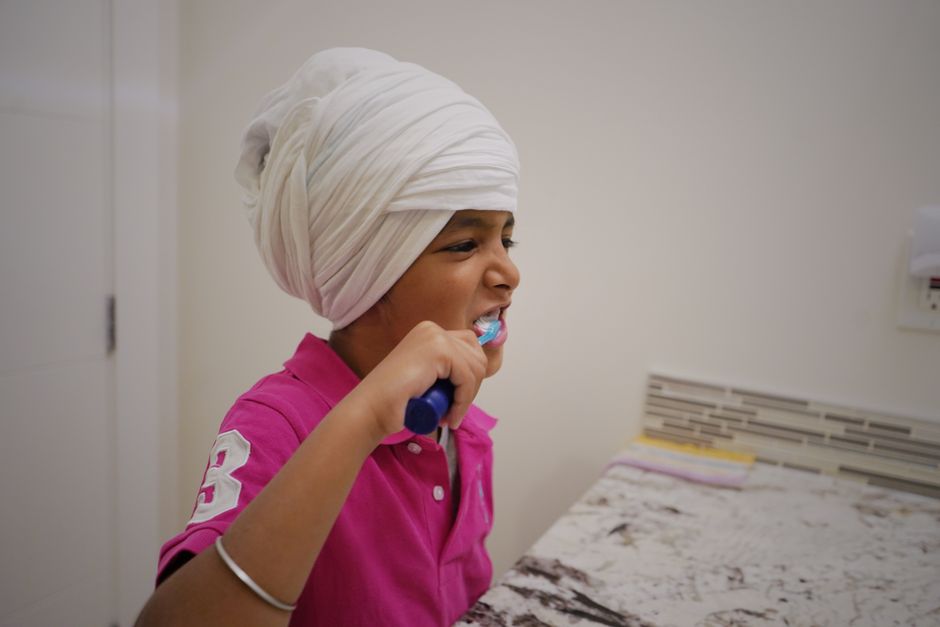
Brushing a 7-month-old’s teeth is simpler than many parents expect. You need a soft-bristled baby toothbrush, a smear of fluoride toothpaste the size of a grain of rice, and about two minutes of your time twice a day. The goal is not just cleaning the teeth that have erupted, but also massaging the gums and building a habit your child will carry into toddlerhood.
Why Start Brushing at 7 Months?
Most babies have their first teeth erupt between 6 and 10 months. By 7 months, many have at least one or two lower front teeth. Those teeth need cleaning from the moment they appear.
Tooth decay in baby teeth is common and can happen quickly. The enamel on primary teeth is thinner than on permanent teeth, which makes them more vulnerable to cavities. Early brushing also prevents the buildup of bacteria that can lead to gum inflammation.
There is another reason to start now. A 7-month-old is forming routines. Introducing brushing as a normal part of the day makes it far easier to continue as more teeth arrive. Waiting until your child has a mouth full of teeth often means fighting a toddler who has already decided brushing is a battle.
What You Need to Brush a 7-Month-Old’s Teeth
You do not need fancy equipment. A basic kit works perfectly.
- A soft-bristled baby toothbrush with a small head. Look for one designed for infants, with a handle you can grip comfortably.
- Fluoride toothpaste with the American Dental Association seal. Use a smear the size of a grain of rice.
- A clean, damp washcloth as a backup for wiping gums and teeth if your baby resists the brush.
- A cup of water for rinsing the brush afterward. You do not need to rinse your baby’s mouth.
Avoid teething gels or numbing products during brushing. They are not needed for cleaning and can interfere with your baby’s gag reflex.
How To Brush 7 Month Old Teeth The Right Way: Step by Step
Position matters. Sit on a chair or couch with your baby facing away from you, cradled in your arm. This gives you a clear view of their mouth and keeps their head steady. Some parents prefer lying the baby on a changing table or bed. Choose whatever is comfortable and safe.
Hold the toothbrush like a pencil. Gently lift your baby’s lip with your other hand so you can see the gum line and any erupted teeth.
Use small, circular motions along the teeth and gum line. Brush the front surfaces, the back surfaces, and the chewing surfaces of any teeth that are present. Do not scrub. Gentle pressure is all that is needed.
Spend about two minutes total. That may feel long for a wiggly baby, and that is fine. Even one minute of thorough brushing is better than a rushed two. If your baby only tolerates 30 seconds, do what you can and increase the time gradually.
After brushing, let your baby spit out any excess toothpaste. At 7 months, they cannot rinse and spit effectively, so do not try to make them. Just wipe their mouth with a damp cloth if needed. Do not give them water to rinse with, as they may swallow it along with the toothpaste.





How Much Toothpaste Should a 7-Month-Old Use?
Use a smear of fluoride toothpaste the size of a grain of rice. This is the official recommendation from major dental and pediatric health organizations.
This tiny amount is safe if swallowed. Babies at this age cannot spit reliably, so some swallowing is inevitable. A grain-of-rice amount contains so little fluoride that it poses no risk of fluorosis, the condition that causes white spots on developing permanent teeth.
Do not skip fluoride. Some parents worry about fluoride and choose fluoride-free toothpaste for their babies. The evidence does not support this choice. Fluoride is the ingredient proven to prevent cavities. For a 7-month-old with emerging teeth, fluoride toothpaste at the recommended amount is both safe and effective.
What If Your Baby Bites the Brush or Refuses?
Biting is normal. Babies explore with their mouths, and a toothbrush is a new sensation. Let them bite down for a moment, then gently continue. Do not pull the brush away quickly, as this can startle them and make them clamp down harder.
Refusal is also common. A 7-month-old does not understand why a brush is in their mouth. Strategies that help:
- Brush your own teeth at the same time. Babies imitate, and watching you can make the activity less strange.
- Let your baby hold a second toothbrush while you brush with the first. This gives them a sense of control.
- Sing a short song or make a silly sound while brushing. Distraction works remarkably well at this age.
- Try different positions. Some babies prefer lying down. Others do better sitting upright in a high chair.
- Be consistent. Even if every brushing session is a struggle, keep doing it twice daily. Familiarity reduces resistance over time.
If your baby is teething and their gums are sore, brushing may hurt. Offer a chilled (not frozen) teething ring before brushing to numb the gums slightly. If brushing causes real distress, focus on wiping the teeth with a damp cloth for a few days until the teething flare passes.
When Should You See a Dentist?
The American Academy of Pediatric Dentistry recommends that children see a dentist by their first birthday, or within six months of their first tooth erupting, whichever comes first. For most babies, that means a dental visit between 12 and 14 months.
If your 7-month-old already has several teeth, you do not need to rush to the dentist yet. The first birthday visit is the standard. However, if you notice white spots, brown spots, or any discoloration on their teeth, call a pediatric dentist sooner. White spots can be an early sign of decay.
Your baby’s first dental visit is mostly about education. The dentist will check for early signs of cavities, review your brushing technique, and discuss diet and fluoride needs. It is a low-stress appointment designed to set you up for success.
Common Mistakes Parents Make
Several errors are easy to make without realizing it.
Skipping the gum line. Brushing only the visible tooth surface misses the most important area. Cavities in babies often start right at the gum line, where plaque accumulates.
Using too much toothpaste. A pea-sized amount is the adult standard. For a 7-month-old, that is far too much. Stick with the rice-grain smear.
Brushing too hard. Baby gums are delicate. Firm pressure can cause bleeding and make your baby associate brushing with pain. Gentle circles are all you need.
Giving up too quickly. If your baby cries or squirms, it is tempting to skip brushing “just this once.” Consistency matters more than perfection. Even a 20-second brush twice a day is better than nothing.
Forgetting the bedtime brush. The most important brushing session of the day is the last one before bed. Saliva production drops during sleep, which means less natural protection against acid and bacteria. Brushing right before bed removes the day’s plaque and food debris.
Feeding and Teeth: What to Know at 7 Months
Diet affects tooth health as much as brushing does. At 7 months, many babies are eating purees and starting finger foods. Sugars from fruit, crackers, and even breast milk or formula can feed cavity-causing bacteria.
Do not let your baby fall asleep with a bottle of milk, formula, or juice. This is a well-established cause of early childhood cavities. The liquid pools around the teeth during sleep, and the sugar feeds bacteria for hours. If your baby needs a bottle to fall asleep, fill it with water instead.
Wipe your baby’s gums and teeth with a damp cloth after meals if you cannot brush right away. This removes visible food and reduces the acid attack on enamel. It is not a substitute for brushing, but it helps.
Frequently Asked Questions
Can I use regular toothpaste for my 7-month-old?
No, use a baby toothpaste with fluoride in a rice-grain-sized smear. Regular adult toothpaste contains higher fluoride levels and is not appropriate for infants.
How many times a day should I brush my baby’s teeth?
Brush twice a day, once in the morning and once before bed. The bedtime brushing is the most important one.
What if my baby swallows the toothpaste?
Swallowing a rice-grain-sized smear of fluoride toothpaste is safe. This amount is too small to cause any harm, which is why the recommendation is so specific.
When should I take my baby to the dentist for the first time?
Take your baby to the dentist by their first birthday, or within six months of their first tooth appearing. For most babies, this means a visit between 12 and 14 months.
