
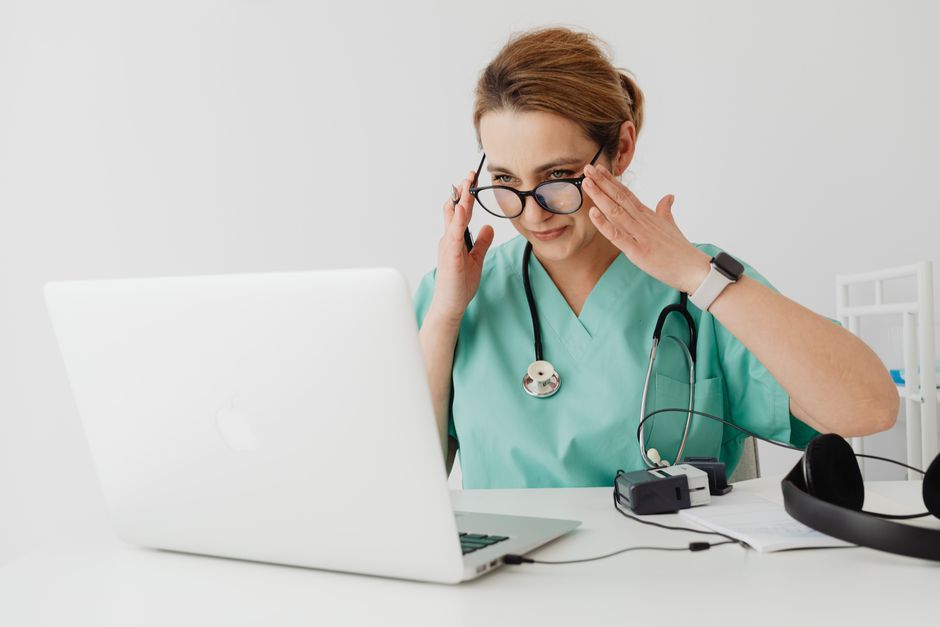
Telehealth nursing is one of the fastest-growing areas in healthcare. Becoming a telehealth nurse means you can provide patient care from a home office or a clinical call center instead of a hospital floor. The core steps are earning your RN license, gaining at least two years of bedside experience, and then pursuing a certification like the Ambulatory Care Nursing Certification (RN-BC) or the Telehealth Nursing Certification (TNC). The essential skills include strong clinical judgment, clear written and verbal communication, and comfort with technology platforms. It is a real career path with clear requirements, not a side gig anyone can jump into overnight.
What Exactly Does a Telehealth Nurse Do?
A telehealth nurse provides nursing care remotely. This is not just answering phones. You assess symptoms, triage patients, provide health education, and coordinate follow-up care — all through phone, video, or secure messaging. You work under the same scope of practice as a bedside nurse but without hands-on contact.
Common tasks include reviewing patient histories, determining if someone needs urgent care versus a same-day appointment, and teaching patients how to manage chronic conditions like diabetes or hypertension. Some telehealth nurses work for hospital systems managing post-discharge calls. Others work for insurance companies doing care coordination. A growing number work for direct-to-consumer telehealth companies handling acute visits for things like sinus infections or urinary tract infections.
The American Academy of Ambulatory Care Nursing (AAACN) reports that telehealth nursing has been a recognized specialty since the 1990s. It is not new. What has changed is the technology and the volume. The pandemic pushed more patients and providers to accept remote care, and the trend has stuck.
What Are the Steps to Become a Telehealth Nurse?
The path is straightforward but requires patience. You cannot skip the bedside experience. Here are the steps in order.
Step 1: Become a Registered Nurse (RN). You need either an Associate Degree in Nursing (ADN) or a Bachelor of Science in Nursing (BSN). Most employers prefer a BSN, and some telehealth companies require it. Pass the NCLEX-RN exam to get your license.
Step 2: Gain clinical experience. This is the non-negotiable part. Most telehealth employers require at least two years of bedside nursing. Some want five. The best experience comes from medical-surgical units, emergency departments, intensive care, or ambulatory care settings. You need to have seen a wide range of patient presentations to make safe triage decisions without seeing the patient in person.
Step 3: Get certified. The two main certifications are the Ambulatory Care Nursing Certification (RN-BC) offered by the American Nurses Credentialing Center (ANCC) and the Telehealth Nursing Certification (TNC) offered by the AAACN. Certification is not always required to start, but it makes you a stronger candidate and is often required for advancement.
Step 4: Build your technology skills. You need to be comfortable with electronic health records (EHRs), video platforms, and secure messaging systems. Some employers test your typing speed and ability to navigate multiple screens simultaneously during the interview.
Step 5: Apply for telehealth positions. Look for job titles like “telehealth nurse,” “triage nurse,” “remote care coordinator,” or “virtual nurse.” Many positions are remote, but some require you to live in a specific state because of licensing laws.
What Skills Are Essential for Telehealth Nursing?
The skills overlap with bedside nursing but have different emphasis. Clinical judgment is the most important. You have to make decisions based on what a patient tells you, not what you can see or touch. That takes practice and confidence.
Communication skills are critical. You need to ask the right questions in the right order. You need to explain complex medical information in plain language. And you need to document everything clearly because your notes are the only record of the encounter. The American Nurses Association (ANA) emphasizes that telehealth nursing requires active listening and the ability to pick up on verbal cues that might signal distress or confusion.
Technical literacy is mandatory. You will use multiple software platforms simultaneously. You need to troubleshoot basic connection issues. Some employers provide training on their specific systems, but you should already be comfortable with general computer use and typing.
Time management matters more than you might think. Telehealth nurses often handle back-to-back calls or video visits. You need to stay on schedule without rushing patients. That means knowing when to move the conversation along and when to slow down.
Empathy without physical presence is a learned skill. Patients cannot see your body language. They cannot feel your reassuring hand on their shoulder. You have to convey warmth and concern through your voice and word choice alone. Some nurses find this harder than bedside care.





How Much Do Telehealth Nurses Earn?
Salaries vary by location, experience, and employer type. According to data from the U.S. Bureau of Labor Statistics (BLS), registered nurses overall earn a median annual wage of around $81,000 as of 2024. Telehealth nurses typically fall in a similar range, though some earn more depending on specialization.
Nurses working for large hospital systems or insurance companies often earn between $65,000 and $95,000 per year. Those working for high-volume telehealth startups may earn on the lower end, especially if the role includes productivity metrics. Travel nurses who transition to telehealth sometimes take a pay cut because they lose shift differentials and overtime.
Certification can increase earning potential. The ANCC reports that nurses with board certification often earn higher salaries than those without. The difference is not huge — typically a few thousand dollars per year — but it adds up over a career.
| Employer Type | Typical Salary Range | Common Requirements |
|---|---|---|
| Hospital System | $70,000 – $95,000 | BSN, 3-5 years experience, certification preferred |
| Insurance Company | $65,000 – $90,000 | ADN or BSN, 2-3 years experience, case management skills |
| Telehealth Startup | $60,000 – $85,000 | ADN or BSN, 2 years experience, high typing speed |
| Government/VA | $75,000 – $100,000 | BSN, 5+ years experience, multiple certifications |
Do You Need a Special License to Practice Telehealth Nursing?
This is where many nurses get confused. You do not need a separate telehealth license. But you do need to follow state licensing laws. The Nurse Licensure Compact (NLC) allows nurses to practice across state lines if they hold a multi-state license. As of 2025, 41 states participate in the compact. If you live in a compact state and your employer is in a compact state, you can treat patients in other compact states without additional licenses.
If you live in a non-compact state like California or New York, you need a separate license for each state where your patients are located. Some employers handle this for you by paying for multi-state licensure. Others require you to obtain and pay for your own licenses. This can become expensive and time-consuming.
The rules are evolving. The National Council of State Boards of Nursing (NCSBN) continues to push for broader interstate practice. But as of now, licensing remains one of the biggest barriers to telehealth nursing. Always check your specific state board of nursing requirements before applying for out-of-state positions.
What Are Common Misconceptions About Telehealth Nursing?
The biggest misconception is that telehealth nursing is easier than bedside nursing. It is not. It is different. You deal with the same complexity of patient problems but without visual or tactile cues. The mental load is high because you have to anticipate what you cannot see.
Another misconception is that you can start telehealth nursing right after nursing school. Almost no employer will hire a new graduate for a remote triage role. You need the clinical foundation that only comes from direct patient care. Trying to skip this step is dangerous for patients and for your career.
Some people think telehealth nursing means less interaction with patients. The opposite is often true. You may have more frequent contact with some patients, especially those managing chronic conditions. You build relationships over time in a way that is harder to do in a busy emergency department.
There is also a belief that telehealth nursing pays less than hospital nursing. As the table above shows, the ranges overlap significantly. The difference is often about benefits and shift differentials rather than base pay. Many telehealth positions offer better work-life balance and no night shifts, which some nurses value more than a few extra dollars per hour.
Frequently Asked Questions
Can I become a telehealth nurse without bedside experience?
No. Almost all employers require at least two years of direct patient care experience before considering you for a telehealth role.
Do I need a BSN to work as a telehealth nurse?
Not always, but many employers prefer or require a BSN, especially for hospital-based or insurance company positions.
Is telehealth nursing a good career for introverts?
It can be, because you work independently and interact with patients one-on-one rather than in a busy team environment.
How long does it take to become a telehealth nurse from scratch?
Plan on at least four to six years total — two to four years for nursing school, plus two to three years of bedside experience before applying.
