
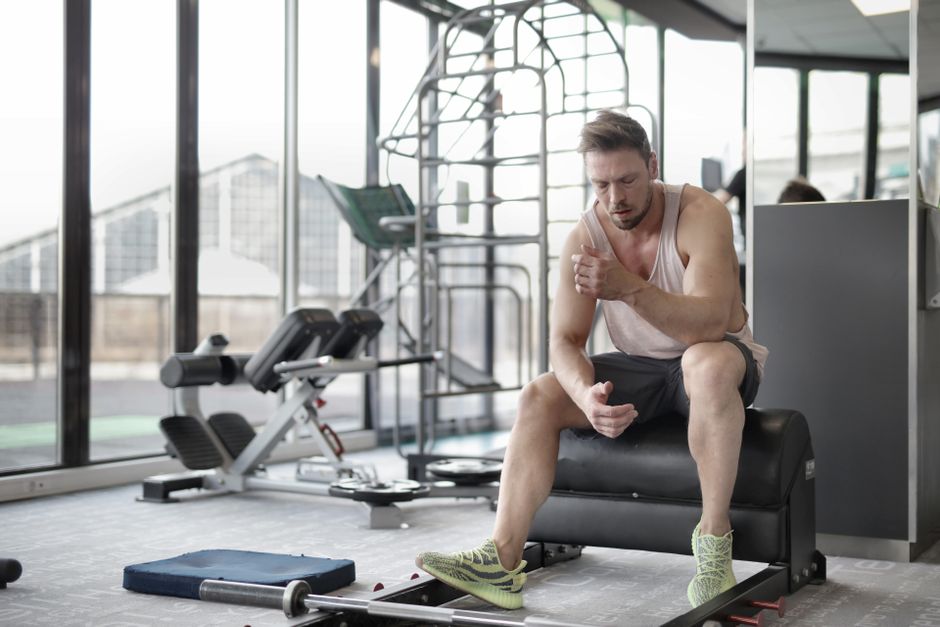
You finish a hard workout feeling strong. Then the next day hits, and walking down stairs feels like a project. That soreness is called delayed onset muscle soreness, or DOMS, and it usually peaks 24 to 72 hours after exercise. You cannot erase it completely, but you can reduce how bad it gets and help it clear faster.
What Actually Causes Soreness After a Workout?
Soreness is not caused by lactic acid. That idea is outdated and wrong. Lactate clears from your muscles within about an hour of finishing exercise, long before soreness peaks.
The soreness you feel a day or two later comes from microscopic damage to muscle fibers, especially where the muscle attaches to tendon tissue. This happens most with movements that lengthen a muscle under load, like lowering a weight slowly or running downhill. Your immune system responds by sending in inflammatory cells to clean up and repair the damaged tissue. That repair process is what you feel.
This is why soreness is worst when you do something new or much harder than usual. Familiar exercise damages less because your muscle has adapted.
Why the Second Day Is Usually Worse Than the First
DOMS builds gradually. Right after a workout, you may feel fine. The inflammatory response ramps up over the following hours and peaks somewhere between one and three days later. By then the tissue is swollen, tender, and less willing to produce force.
One clarification worth knowing: soreness is not a reliable sign of a good workout. You can build real strength and muscle with almost no soreness, and you can get very sore from a session that does little for your fitness. Do not chase it.
How To Be Less Sore After Your Workout
You can cut down soreness, but no method erases it. The most effective approach is to control how much new stress you place on your muscles at one time.
Start with the training itself. Increase volume, intensity, or new movements gradually rather than all at once. If you are returning after a break, ease back in over a couple of weeks. This single habit prevents more soreness than any recovery gadget.
Warm up before you train. A proper warmup raises muscle temperature and prepares tissue for load. It will not eliminate DOMS, but it supports better performance and may reduce strain on unprepared muscle.
Cool down and keep moving afterward. Light activity, like an easy walk, increases blood flow to working muscles. This does not have a strong track record for preventing soreness in studies, but it is gentle and generally harmless.
Stay hydrated and eat enough protein. Your body needs raw material to repair muscle. General guidance for active adults is roughly 1.4 to 2.0 grams of protein per kilogram of body weight per day, though individual needs vary. This supports recovery, not just soreness.
Sleep is the most underrated recovery tool. Most adults need seven or more hours. Poor sleep is linked with slower recovery and higher perceived soreness. No supplement replaces it.
Do Ice Baths and Massage Really Help?
Some recovery methods have decent evidence. Others are mostly marketing. Here is where things stand.
Massage has the most consistent support. Studies show it can reduce perceived soreness and improve how your muscles feel in the days after hard exercise. It does not appear to speed up actual muscle repair much, but feeling better matters.
Cold water immersion, or ice baths, can take the edge off soreness. The evidence shows a modest reduction in how sore people feel. One important caution: regularly using cold water right after strength training may blunt some of the muscle-building response. If your goal is muscle growth, use it sparingly.
Compression garments show mixed results. Some studies find a small benefit for soreness, others find none. Results vary by person and by how the garment is used.
Foam rolling is popular and often feels good. Evidence for reducing soreness is limited and inconsistent. It is unlikely to hurt, and many people find it helps them feel looser.
Active recovery, like easy cycling or swimming, is widely used. The evidence for reducing DOMS specifically is weak. It may help you feel better and stay in the habit of moving.




What About Supplements and Pain Relievers?
This is where people spend the most money for the least reliable payoff.
No supplement has strong, consistent evidence for preventing or treating DOMS. Some small studies suggest certain nutrients may help, but results are mixed and often low quality. Be skeptical of any product promising to erase soreness.
Over-the-counter pain relievers like ibuprofen can reduce soreness because they lower inflammation. But that same inflammation is part of how muscle adapts and gets stronger. Regular use around training may work against your goals. Occasional use for real discomfort is a different matter. If you take these often, talk to a clinician.
Topical creams with menthol or capsaicin create a cooling or warming sensation that distracts from soreness. They do not repair anything. The relief is temporary and mostly in your perception.
How Long Should Soreness Last?
Typical DOMS starts within a day, peaks around 24 to 72 hours, and fades over the following days. Most episodes settle within about three to five days. It should improve steadily, not get worse.
If soreness lasts much longer, keeps getting worse, or comes with swelling, dark urine, or severe weakness, that is not normal DOMS. Seek medical care. Dark or cola-colored urine after intense exercise can signal a rare but serious condition called rhabdomyolysis, where muscle breaks down faster than the body can handle. It is a medical emergency.
Mild soreness is not a reason to skip all movement. Light activity often helps you feel better. But if a muscle is genuinely painful or weak, give it time before loading it hard again.
Should You Train Through Soreness?
Light soreness is fine to work around. Train different muscle groups, keep the intensity moderate, and pay attention to how your body responds.
Sharp pain, joint pain, or a muscle that feels weak or swollen is different from soreness. That is a signal to rest that area and, if it does not improve, get it checked.
Repeatedly training hard through heavy soreness raises injury risk and can stall progress. Your muscles adapt during recovery, not during the workout itself. Rest is part of the plan, not a break from it.
The takeaway is simple. Build up gradually, sleep well, eat enough protein, and use massage or cold therapy if they help you feel better. Skip the products that promise miracles. Soreness is a normal part of adapting to new demands, and it fades on its own.
Frequently Asked Questions
How long does workout soreness usually last?
Most soreness peaks 24 to 72 hours after exercise and fades within three to five days. It should improve steadily rather than get worse.
Does stretching prevent soreness?
Stretching before or after exercise does not reliably prevent or reduce DOMS. It can improve flexibility, but it is not an effective soreness fix.
Is it better to rest or stay active when sore?
Light activity like walking or easy cycling is usually fine and may help you feel better. Avoid heavy loading of a muscle that is very sore, weak, or swollen.
When should I worry about soreness?
Seek medical care if soreness keeps worsening, lasts much longer than a few days, or comes with swelling, severe weakness, or dark urine. Those are not normal DOMS.
