
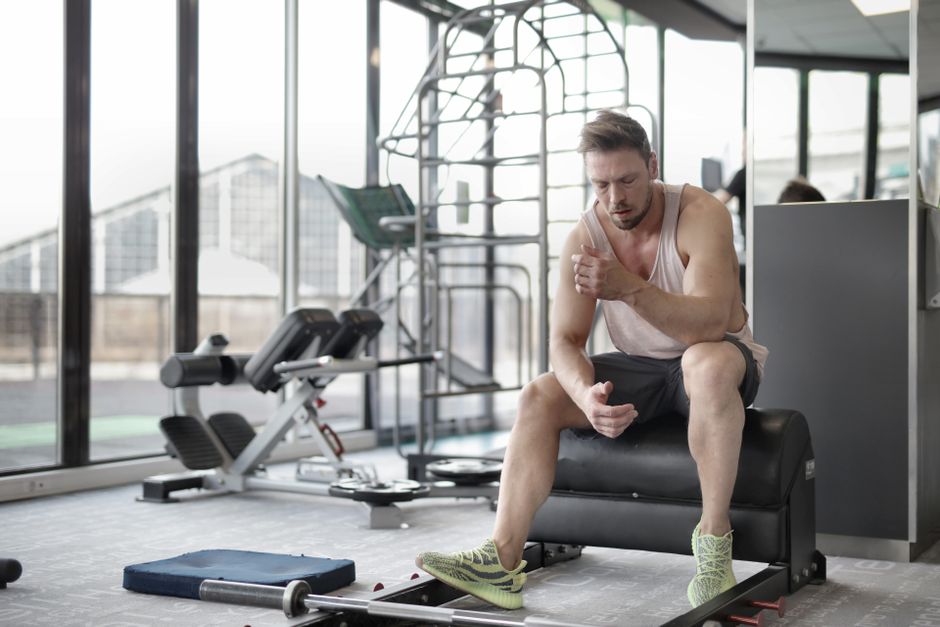
Working out with sore muscles is generally safe, and for most people it does not cause harm. The soreness you feel — doctors call it delayed onset muscle soreness, or DOMS — is the result of microscopic damage to muscle fibers from exercise you are not used to. Training through mild soreness is common and usually fine. Training through severe soreness, or soreness that limits how you move, is where problems start.
The key word is “mild.” Soreness that fades as you warm up is different from soreness that makes you limp, guard a limb, or change your form. The first is normal recovery. The second is a signal to back off.
What Actually Causes Muscle Soreness After a Workout?
DOMS is not caused by lactic acid. That idea has been repeated for decades and it is wrong. Lactic acid clears from your muscles within about an hour of finishing exercise. Soreness typically peaks 24 to 72 hours later, which rules lactic acid out entirely.
The soreness comes from mechanical damage to muscle fibers, especially during the “lowering” phase of a movement — what exercise scientists call eccentric contraction. Think of lowering a dumbbell slowly, running downhill, or the descent phase of a squat. The muscle lengthens under tension, and tiny structural disruptions occur at the level of the sarcomere, the basic contractile unit of muscle.
That damage triggers an inflammatory response. Immune cells move in to clear debris and start repair. The soreness you feel is largely a byproduct of that process, not the damage itself. This is why soreness lags behind the workout and why it fades as repair completes.
Two things make soreness worse: novelty and eccentric load. A workout you have never done before will make you sorer than the same workout done a week later. Your muscles adapt to repeated stress — a phenomenon called the repeated bout effect. The second session of the same exercise typically produces far less soreness than the first.
What Happens If I Workout With Sore Muscles?
If the soreness is mild, working out does not make it worse in any meaningful way. Research on DOMS has found that light to moderate activity during recovery does not increase muscle damage markers or delay repair. In some studies, it actually reduces perceived soreness temporarily.
What happens physiologically is straightforward. Warm-up increases blood flow and muscle temperature, which reduces stiffness and can dull the soreness signal for a while. Movement also stimulates the nervous system, which changes how you perceive the discomfort.
What does not happen is faster healing. Exercise during DOMS does not speed up the repair process in any proven way. The soreness will follow its own timeline regardless of whether you train or rest. The relief you feel during a workout is temporary and typically returns a few hours later.
Where it goes wrong is intensity. If you train the same sore muscle group hard while it is still repairing, you can add new damage on top of old damage. That does not mean injury in most cases, but it can prolong soreness and reduce the quality of your training. Your strength output is also lower during peak soreness, so you will likely lift less or perform worse regardless of effort.
There is one genuinely non-obvious point here. Soreness is a poor measure of whether a workout was effective. You can build strength and muscle with almost no soreness, and you can be extremely sore after a workout that did little for your fitness. Chasing soreness is not a training strategy.
When Should You Not Work Out With Sore Muscles?
Some soreness is a clear stop signal. The distinction between DOMS and something more serious matters.
- Sharp or localized pain in one specific spot rather than a broad, symmetrical ache
- Swelling, bruising, or visible discoloration near the sore area
- Dark or cola-colored urine after intense exercise — this can indicate rhabdomyolysis, a medical emergency
- Weakness that does not improve after a warm-up
- Soreness lasting more than about a week without improvement
- Joint pain rather than muscle pain
Rhabdomyolysis deserves a direct mention. It is a breakdown of muscle tissue that releases contents into the bloodstream and can damage the kidneys. It is rare, but it happens most often after extreme or unaccustomed exertion, sometimes in people who are dehydrated or taking certain medications. Dark urine, severe muscle pain, and swelling after a hard session warrant urgent medical care, not another workout.
DOMS is symmetrical and diffuse. It affects both sides of the body similarly if both sides did the same work. It feels like a deep ache and stiffness, not a sharp catch. If what you have does not match that pattern, treat it as something else until a clinician says otherwise.




Should You Train the Same Muscles or Different Ones?
Training different muscle groups is the practical answer for most people. If your legs are sore from a heavy squat session, an upper body workout is fine and does not interfere with leg recovery.
Training the same sore muscle group is where judgment matters. Light movement — walking, easy cycling, bodyweight mobility work — is generally well tolerated and often feels better than sitting still. Hard training of the same group during peak soreness is not recommended. It adds stress to tissue that is already repairing.
For most people, the soreness peaks somewhere between 24 and 72 hours after the workout. Training the same group again before that window closes is usually counterproductive. Once soreness has faded to mild stiffness, you can return to normal training.
Does Working Out While Sore Help You Recover Faster?
No. The evidence does not support exercise as a recovery accelerator for DOMS. Light activity can reduce how sore you feel in the moment, but it does not shorten the underlying recovery timeline.
Things that do have some evidence behind them for reducing soreness include:
- Gradual progression when starting a new program, which reduces the novelty that drives soreness
- Repeating the same exercises consistently, which triggers the repeated bout effect
- Adequate sleep, which supports the hormonal and cellular environment for repair
- Enough protein and total calories to support muscle repair
Things that are widely marketed for soreness but have weak or inconsistent evidence include most recovery gadgets, compression garments, ice baths, and many supplements. Some show small effects in some studies. None reliably eliminate DOMS. If a product claims to prevent or cure soreness, that claim is not supported by strong clinical evidence.
How Do You Know When Soreness Is Normal?
Normal DOMS has a predictable pattern. It starts several hours after exercise, peaks in the first day or two, and gradually fades. It feels like a broad ache and stiffness across the muscle belly. It improves with gentle movement and worsens with prolonged stillness.
It also resolves. If soreness is not improving day by day, or if it is getting worse instead of better, that is not typical DOMS. Persistent or worsening symptoms after exercise should be evaluated by a clinician.
One more practical point. Soreness is not a required part of getting fitter. Beginners get sore because everything is new. Experienced lifters often get very little soreness even after hard sessions because their muscles have adapted. If your goal is progress, track your strength, your endurance, and how you feel over weeks — not how sore you are the day after.
Frequently Asked Questions
Is it OK to workout with sore muscles?
Yes, for mild soreness it is generally safe to train, especially if you work different muscle groups or keep intensity light. Skip hard training of the same sore muscle group until the soreness fades.
Should I workout if my muscles are still sore from yesterday?
If the soreness is mild and improves as you warm up, light training is usually fine. If it is severe, limits your movement, or involves sharp or one-sided pain, rest that area instead.
Does working out with sore muscles make them heal faster?
No. Exercise does not speed up muscle repair after DOMS. It can temporarily reduce how sore you feel, but it does not shorten the recovery timeline.
When should I worry about muscle soreness after a workout?
Worry if you have dark or cola-colored urine, severe swelling, bruising, or soreness that keeps getting worse instead of better. Those signs need urgent medical evaluation.
