
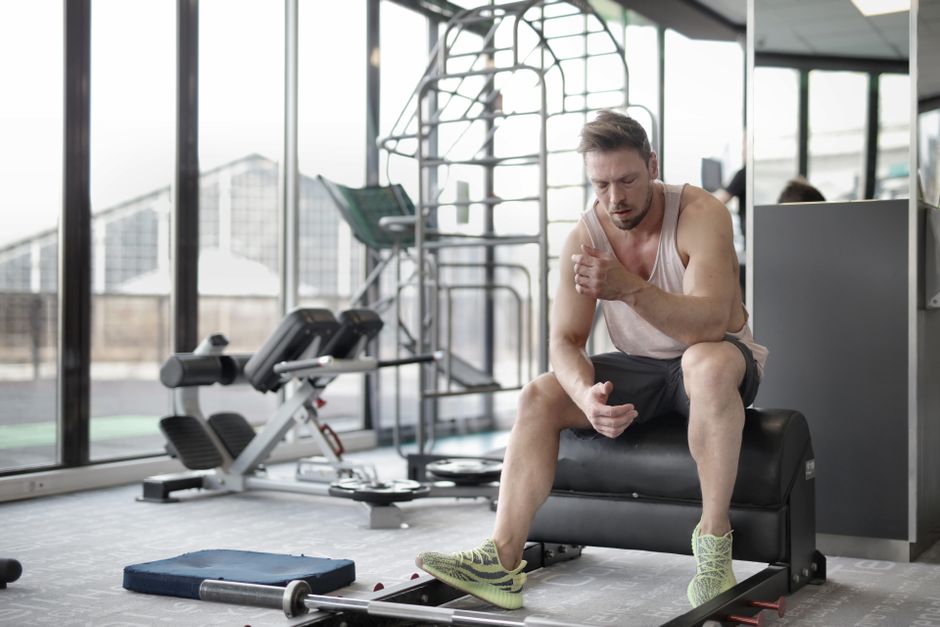
Sore muscles after a workout are usually a sign that your body is repairing itself, not a sign that something went wrong. The soreness has a name — delayed onset muscle soreness, or DOMS — and it typically peaks a day or two after exercise and fades within a few days. You cannot erase it with one trick, but you can manage it well with movement, sleep, hydration, and a few evidence-backed habits, and you can reduce how often it hits hard in the first place.
What Actually Causes Sore Muscles After a Workout?
The soreness you feel a day later is not caused by lactic acid. That idea has been repeated for decades, but it is wrong. Lactic acid clears from your muscles within roughly an hour of finishing exercise. It cannot be responsible for pain you feel the next morning.
What is happening is microscopic damage to muscle fibers, especially from movements that lengthen the muscle under load — think lowering a weight slowly, running downhill, or doing a new exercise your body is not used to. This mechanical stress triggers a repair response. Your immune system sends in cells to clean up damaged tissue and rebuild it, and that process causes inflammation, swelling, and the tenderness you feel.
This is why DOMS behaves the way it does. It rarely shows up immediately. It builds over 24 to 48 hours, peaks somewhere in that window, and then fades as the repair finishes. The exact timing varies from person to person and depends on how hard and how unfamiliar the workout was.
It is also why soreness is not a reliable scoreboard. A workout can build real strength and fitness without leaving you sore, and a workout can leave you very sore without much benefit. Chasing soreness as proof of a good session leads people to overtrain.
How To Get Rid Of Sore Muscles After A Workout
There is no single switch that turns soreness off. What works is a combination of things that support recovery and take the edge off the discomfort while your body does its job. None of these are cures. They are ways to feel better and heal faster.
Keep moving gently. Light activity — a walk, easy cycling, gentle swimming — increases blood flow to the sore area and often reduces stiffness. Rest completely and you may feel worse when you start moving again. The key word is gentle. Hard training on sore muscles can deepen the damage and extend your recovery.
Prioritize sleep. This is the most underrated recovery tool there is. Growth hormone release, tissue repair, and the clearing of metabolic waste all happen largely during sleep. If you are training hard and sleeping poorly, no supplement or gadget will make up the difference. Most adults need seven or more hours, and athletes often need more.
Stay hydrated and eat enough protein. Muscle repair requires raw material. Protein provides the amino acids your body uses to rebuild fibers. There is no single magic number that fits everyone, and needs depend on body size, training load, and goals, so general guidance is more useful than a fixed gram target. Water matters too — dehydration makes soreness feel worse and slows recovery.
Try heat for relaxation and cold for fresh inflammation. A warm shower or bath can relax tight, sore muscles and feels good. Cold — an ice pack on a specific spot or a cold plunge — is often used right after hard exercise. The evidence on whether cold actually speeds recovery is mixed, and some research suggests regular cold immersion right after strength training may blunt some of the muscle-building signal. It is reasonable for managing soreness; it is not clearly a way to build more muscle.
Consider over-the-counter pain relief sparingly. NSAIDs like ibuprofen can reduce soreness and inflammation. But there is a real trade-off: some evidence suggests that routinely blocking inflammation after training may interfere with the very adaptation you are training for. Using them occasionally for significant discomfort is one thing. Making them a daily recovery habit is another, and it is worth discussing with a clinician or pharmacist if you find yourself reaching for them often.
Does Stretching or Foam Rolling Help Sore Muscles?
Stretching before or after a workout does not prevent DOMS, and the evidence that it meaningfully reduces soreness is weak. It can feel good and improve your range of motion, which has value on its own, but do not expect it to be the fix.
Foam rolling has a bit more going for it. Some studies suggest it can reduce soreness and improve how muscles feel in the days after exercise. The effect is modest and short-lived, and the research is not uniform, but many people find it helpful and the risk is low. If it feels good and helps you move, use it.
Massage falls in a similar category. It can reduce the perception of soreness and help you relax. Whether it speeds actual tissue repair is less clear. Treat it as comfort and circulation, not as a repair mechanism.




What Does Not Work (Or Is Overhyped)
A lot of products are sold on the promise of faster recovery. It helps to know which claims hold up.
- Lactic acid removal products. Lactic acid is not the cause of DOMS, so products claiming to “flush” it are solving a problem that does not exist.
- Most recovery gadgets. Compression boots, massage guns, and similar tools may feel good, but the evidence that they meaningfully speed recovery is limited. That does not mean they are useless — comfort has value — but the marketing usually outruns the science.
- Anti-inflammatory routines after every session. As noted, routinely suppressing inflammation may work against the adaptations you are training for. Occasional use is different from a daily habit.
- Training through severe soreness. This is not toughness. It is a fast track to injury and stalled progress.
The honest position is that recovery is mostly boring. Sleep, food, water, and sensible training load do the heavy lifting. Everything else is a smaller lever.
How to Prevent Sore Muscles in the First Place
You cannot eliminate DOMS entirely, and you probably do not want to — some soreness is a normal part of adapting to new demands. But you can keep it from wrecking your week.
Increase training gradually. The biggest driver of severe soreness is doing far more than your body is ready for. Adding volume or intensity in small steps gives your muscles time to adapt without overwhelming them.
Repeat movements regularly. The body adapts to familiar exercise. The same workout that left you wrecked the first time will cause far less soreness the next time you do it. This is called the repeated bout effect, and it is one of the more reliable findings in exercise science.
Warm up properly. A gradual warm-up raises muscle temperature and prepares tissue for load. It will not prevent all soreness, but it helps you move better and may reduce strain.
Build a base before you push. If you are returning after time off, or trying a brand-new activity, start easier than your ego suggests. Your fitness may remember what you used to do; your connective tissue and muscle fibers need time to catch up.
When Soreness Might Be Something More Serious
Normal DOMS is symmetrical, comes on gradually, and improves within a few days. Certain signs mean you should stop and get medical attention.
Seek care if you have severe pain that gets worse instead of better, dark or cola-colored urine, extreme swelling, weakness you cannot explain, or pain that lasts well beyond a week. Dark urine after intense exercise can be a sign of a rare but serious condition called rhabdomyolysis, in which muscle breaks down rapidly and can damage the kidneys. It is uncommon, but it is a medical emergency when it happens, and it is more likely after extreme exertion, especially in heat or when returning to hard training after a long break.
If something feels wrong rather than just sore, trust that instinct and get it checked.
Frequently Asked Questions
How long do sore muscles last after a workout?
DOMS usually peaks about 24 to 48 hours after exercise and fades within a few days. If soreness lasts beyond a week or keeps getting worse, that is a signal to get it checked.
Should I work out with sore muscles?
Light movement is usually fine and can help you feel better, but avoid hard training on very sore muscles. Give the sore area time to recover and train other muscle groups instead.
Does stretching get rid of sore muscles?
Stretching does not prevent or reliably cure DOMS, though it can improve how your muscles feel and your range of motion. Do not count on it as your main recovery strategy.
Is it bad to be sore after every workout?
Being sore after every session is not a sign of progress and often means you are pushing too hard or not recovering enough. Consistent soreness is a reason to look at your training load and sleep.
