
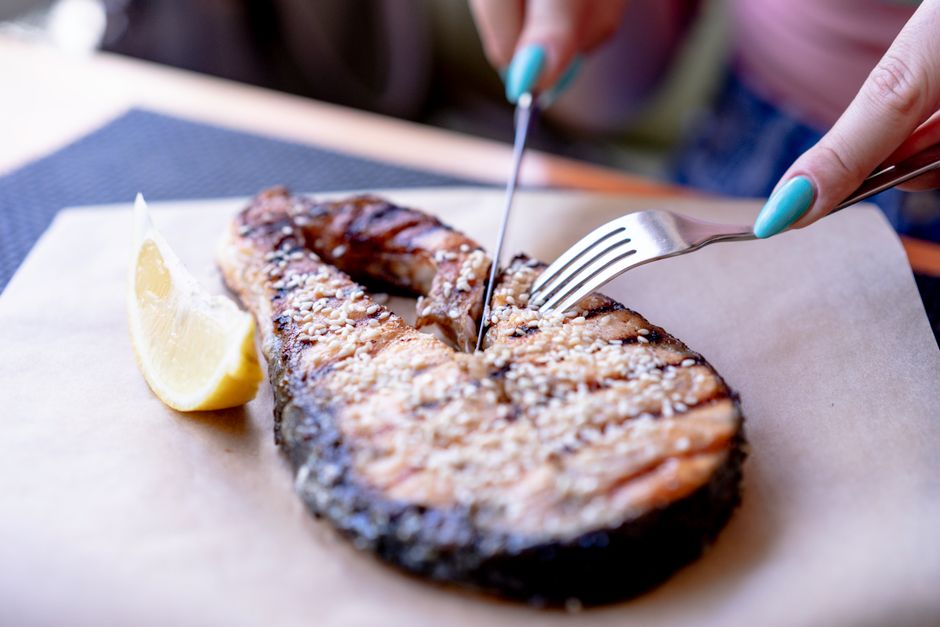
Cooking salmon with the skin on a barbecue gives you crisp, flavorful skin and moist flesh underneath — provided you set up the grill correctly and handle the fish gently. The skin protects the delicate meat during cooking and holds the fillet together. The key steps are a hot, clean, well-oiled grate, a fillet patted completely dry, and a spatula used only once the skin has released on its own.
How To Barbecue Salmon With Skin
A salmon fillet cooks through on a covered grill in roughly 8 to 12 minutes, depending on thickness and how hot your grill runs. The skin side goes down first and stays down for most of the cook. That single decision — skin down, and left alone — is what separates crisp skin from a torn, stuck mess.
Salmon is a firm-fleshed fish, which makes it one of the easier fish to grill. But it still flakes apart when overcooked. The goal is flaky and moist, not dry and chalky. Skin-on fillets give you more margin for error because the skin insulates the flesh from the direct heat of the grate.
You do not need a marinade or a sauce to make this work. Salt, pepper, and a clean grill are enough. Everything else is preference.
Should You Start Salmon Skin Side Down or Skin Side Up?
Start skin side down. Almost always.
When the skin makes direct contact with a hot grate, it dehydrates and crisps. The flesh above it cooks gently through the skin, which acts as a barrier against the harshest heat. This is the same principle behind cooking fish in a hot skillet skin-first.
There is one situation where some cooks start skin side up: very thick fillets on a cooler grill, where they want the flesh to begin cooking before flipping. This is a technique choice, not a rule. For most home grilling, skin down from the start is simpler and more reliable.
If you flip at all, do it once, near the end, and only if you want a little color on the flesh side. Many cooks never flip a skin-on fillet and get excellent results.
How Do You Keep Salmon Skin From Sticking to the Grill?
Sticking is the most common failure, and it is almost always preventable. The cause is nearly always one of three things: a dirty grate, a cold grate, or a wet fillet.
Work through these before the fish ever touches the grill:
- Clean the grate thoroughly. Burn off residue on high heat, then scrape it down with a wire brush.
- Oil the grate, not the fish, if you can. Fold a paper towel, dip it in a high-smoke-point oil like canola or grapeseed, and wipe it across the hot bars using tongs. Oiling the fish itself also works and is often easier.
- Pat the fillet completely dry. Moisture on the skin turns to steam and prevents crisping. It also encourages sticking.
- Let the grill come fully up to temperature. A properly hot grate creates a quick sear that releases on its own.
Here is the part most people get wrong: do not try to move the fish too early. A protein that is ready to release will release cleanly. If it resists your spatula, it needs more time. This is the same principle as cooking a steak or a pancake.




What Temperature Should You Grill Salmon At?
Medium-high heat is the standard for skin-on salmon on a gas or charcoal grill. That translates to a grate temperature of roughly 400°F to 450°F for a covered grill, though exact readings vary by setup.
You want enough heat to crisp the skin and sear the surface, but not so much that the outside burns before the inside cooks. Direct heat works well for fillets up to about an inch thick.
For thicker fillets — say an inch and a half or more — consider indirect heat. Cook the fish over a cooler part of the grill with the lid closed, then finish it skin-side down over direct heat for the last couple of minutes to crisp the skin. This two-zone approach is common in grilling and gives you more control.
How Do You Know When Salmon Is Done?
The most reliable way to check doneness is an instant-read thermometer inserted into the thickest part of the fillet. The USDA recommends a minimum internal temperature of 145°F for safety.
That said, many cooks pull salmon earlier — around 125°F to 130°F — because the fish continues to carryover-cook after it leaves the grill. At 145°F, salmon is fully cooked but can read as dry to some palates. This is a genuine trade-off between food safety guidance and texture preference, and it is worth knowing both numbers exist.
If you are cooking for anyone in a higher-risk group — young children, older adults, pregnant women, or people with weakened immune systems — follow the 145°F guidance. Food safety recommendations exist for good reasons.
Without a thermometer, look for these signs:
- The flesh turns opaque and flakes when nudged with a fork.
- The white fat (albumin) begins to surface — a sign it is at least close to done.
- The skin lifts easily from the grate when tested with a thin spatula.
Albumin is that white ooze you sometimes see on cooked salmon. It is a protein that coagulates as the fish heats. Seeing some is normal. Seeing a lot usually means the fish was cooked hard or long.
Should You Flip Salmon on the Grill?
You do not have to. A skin-on fillet can cook entirely skin-side down on a covered grill.
If you want a little sear on the flesh side, flip once, and only after the skin has released cleanly — usually after most of the cooking time has passed. Use a thin, wide spatula and support the fillet as you turn it. A pair of tongs alone can tear the fish.
Flipping more than once adds risk without adding much. Fish is more fragile than meat, and every turn is a chance to break the fillet apart.
How Do You Get the Skin Really Crisp?
Crisp skin comes down to three things: dryness, heat, and time on the grate.
Dry the skin thoroughly with paper towels before it goes on. Some cooks leave the fillet uncovered in the refrigerator for a short while to dry the surface further, though this is a technique, not a requirement. A dry surface browns and crisps; a wet one steams.
Cook skin-side down over direct heat and resist the urge to move it. The longer it sits undisturbed on a hot, oiled grate, the crisper it gets.
If your skin is not crisping, the usual culprits are a grill that is not hot enough, a fillet that went on wet, or too much oil pooling underneath. Fix those and the skin will do its job.
One clarification worth making: crisp skin is a texture goal, not a health one. The skin of salmon is nutritious and contains omega-3 fats, but grilling it crisp does not make the fish healthier or less healthy in any meaningful way. It is simply a matter of whether you enjoy eating it.
What About Marinades, Sauces, and Seasoning?
Salt and pepper are enough. Salmon has a distinct flavor that does not need much help.
If you use a marinade or glaze, keep two things in mind. First, sugary sauces burn quickly over direct heat. Apply them near the end of cooking, or move the fish to indirect heat. Second, acidic marinades like citrus or vinegar can start to “cook” the surface of the fish if left on too long, turning it opaque and slightly firm before it ever hits the grill.
A dry rub works well and does not add moisture that could interfere with crisping. Pat the rub on a dry fillet and let it sit briefly before grilling.
Whatever you choose, avoid drowning the fish. The point of grilling skin-on salmon is the contrast between crisp skin and tender flesh. Heavy sauce obscures both.
Common Mistakes to Avoid
Most grilled salmon problems trace back to a handful of avoidable errors.
- Cooking on a dirty or cold grate. This is the top cause of sticking.
- Putting a wet fillet on the grill. Dry the skin first.
- Moving the fish too soon. Let it release on its own.
- Overcooking. Salmon dries out fast past its ideal temperature.
- Using a thin spatula or tongs alone. Support the fillet when you move it.
- Slathering on sugary sauce at the start. It burns before the fish cooks.
Get these right and skin-on salmon becomes one of the more forgiving things you can cook on a grill.
Frequently Asked Questions
Do you cook salmon skin side down on a barbecue?
Yes, skin side down is the standard approach for skin-on salmon on a grill. The skin protects the flesh and crisps against the hot grate.
How long does salmon take to cook on a barbecue?
A typical fillet cooks in about 8 to 12 minutes on a covered grill, depending on thickness and heat. Use an instant-read thermometer to confirm doneness rather than relying on time alone.
What internal temperature should grilled salmon reach?
The USDA recommends a minimum internal temperature of 145°F. Some cooks pull the fish earlier for texture, but higher-risk groups should follow the 145°F guidance.
Why is my salmon skin sticking to the grill?
Sticking usually comes from a dirty grate, a grate that is not hot enough, or a wet fillet. Clean and oil the grate, dry the skin, and wait for the fish to release on its own before moving it.
