
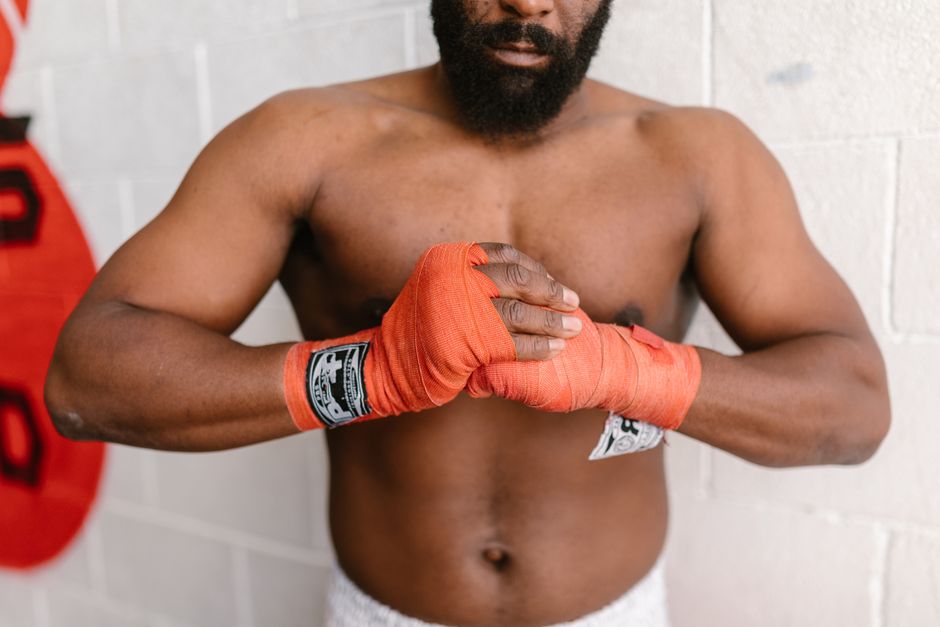
Wrapping your hands before boxing is not optional. It is the single most important step you take to protect the small bones and fragile joints in your hand before you throw a punch. A proper wrap stabilizes your knuckles, supports your wrist, and keeps your hand compact inside the glove. Without it, the risk of a boxer’s fracture, wrist sprain, or torn knuckle ligament rises significantly. The goal is a snug, firm wrap that locks your hand in place without cutting off circulation.
Why Do You Need To Bandage Your Hands For Boxing?
Your hand is built for gripping, not for impact. When you punch, the force travels through your knuckles and into your wrist. The small bones in your hand, called metacarpals, are thin and vulnerable to breaking under direct force. The wrist is also unstable on its own.
Hand wraps compress these structures together. This turns your loose collection of bones and tendons into a single, solid unit. The compression distributes the force of the punch across the entire hand and wrist. It does not make your punch stronger, but it makes the impact safer for your own body.
Think of it like this: a loose hand is a broken hand. A wrapped hand is a solid block. The wrap also absorbs sweat, which keeps the leather lining of your gloves from deteriorating quickly.
How To Bandage Hands For Boxing: Step-By-Step Method
There are several accepted wrapping styles, but the standard “cross” method is the most reliable for everyday training. This method covers the wrist, the knuckles, and the thumb, with extra support across the back of the hand. You need a standard 180-inch (4.5 meter) wrap. Most wraps have a loop at one end for the thumb and a Velcro strap at the other.
Follow these steps in order. Do not skip the thumb or the wrist. Each layer has a specific purpose.
- Place the loop over your thumb. The wrap should run across the back of your hand and down to the outside of your wrist.
- Wrap the wrist three times. Pull the wrap around your wrist firmly. These initial layers stabilize the joint. Keep it snug—firm enough that you feel supported, but not so tight that your fingers tingle.
- Wrap the thumb. Bring the wrap across the back of your hand and around the base of your thumb. Do not wrap the thumb joint itself. You want to anchor the thumb to the hand, not restrict its movement. Complete this once or twice.
- Cross the back of the hand. Bring the wrap down from the thumb, across the back of your hand, and under your palm. Repeat this crossing motion three to four times. This creates the “X” pattern that locks the hand together.
- Wrap the knuckles. Bring the wrap across your knuckles, covering them completely. Do three to four full passes. Your fingers should still be able to curl fully, but the wrap should feel tight when you make a fist.
- Finish on the wrist. Bring the wrap back down to the wrist. Use the remaining length to wrap the wrist again. Secure the Velcro strap firmly.
When you are done, make a fist. The wrap should feel tight but comfortable. You should be able to fully open your hand and spread your fingers. If you cannot, the wrap is too tight.
Common Mistakes To Avoid When Wrapping Your Hands
Most people make the same errors when they start boxing. These mistakes can reduce the protection of the wrap or cause injury directly.
Wrapping too tightly. This is the most frequent mistake. A wrap that is too tight cuts off circulation and can cause numbness or hand cramps mid-session. If your fingers turn white or tingle, unwrap and start over. The wrap should be firm, never painful.
Leaving the thumb loose. A loose thumb wrap does nothing. The thumb needs to be anchored to the hand. If the wrap slips off during a round, your thumb is at risk of being jammed or bent backward.
Not covering the knuckles fully. The padding across the knuckles is your main impact absorber. If the wrap slips down during training, stop and rewrap. Punching with exposed knuckles inside a glove causes skin damage and bruising.
Wrapping the fingers. Some beginners wrap each finger individually. This is wrong for boxing. It restricts finger movement and prevents you from making a proper fist. The wrap should cover the knuckles as a block, not separate the fingers.
Using damaged wraps. Check your wraps for tears or fraying before every session. A torn wrap will not hold tension and offers no real protection.





How Tight Should Boxing Hand Wraps Be?
The correct tightness is often described as a “comfortable squeeze.” You want the wrap to feel like a firm handshake, not a tourniquet. When you make a fist, the wrap should tighten naturally across your knuckles. When you open your hand, it should feel loose.
If you can slide a finger underneath the wrap easily, it is too loose. If your skin is pinched or your fingers are cold, it is too tight. The wrist wrap should be the firmest part, as the wrist takes significant impact during punching.
Over time, the wrap will stretch slightly. A new wrap that is snug may feel loose after a few weeks. Replace wraps when they lose their elasticity.
Do You Need Hand Wraps Under Boxing Gloves?
Yes. Boxing gloves protect the surface of your hand and provide weight for training, but they do not stabilize your wrist or knuckles. The glove is a padded shell. The hand wrap is the internal support structure.
Punching a heavy bag or a partner without wraps, even with gloves on, leaves your wrist free to bend at awkward angles. This is how sprains and fractures happen. The glove keeps the skin safe, but the bones and joints are still vulnerable.
Some modern gloves have built-in wrist support or integrated wraps. These are convenient for light pad work but are not a substitute for proper hand wraps during heavy bag sessions or sparring.
What Is The Difference Between Hand Wraps and Boxing Gloves?
Hand wraps and gloves serve completely different purposes. They are not interchangeable. You need both for safe training.
Hand wraps are the internal layer. They stabilize the bones, support the wrist, and keep the hand compact. They are made of cotton or synthetic material and are usually 120 to 180 inches long.
Boxing gloves are the external layer. They provide cushioning for your hand and for your opponent. They also add weight to build shoulder strength. Gloves come in sizes from 8 oz to 20 oz, with 12 oz to 16 oz being standard for training and sparring.
Using only gloves leaves your wrist unsupported. Using only wraps leaves your knuckles exposed to friction and direct impact. The two work as a system.
How Often Should You Replace Boxing Hand Wraps?
Hand wraps are not expensive, but they are not meant to last forever. A typical cotton wrap lasts about six months with regular training. Synthetic wraps may last longer.
Inspect your wraps before each use. Look for thinning fabric, loose threads, or a stretched-out shape. If the wrap no longer holds tension when you pull it, replace it. A stretched wrap will not provide the compression your hand needs.
Wash your wraps regularly. They absorb sweat and can develop a strong odor and bacteria. Most wraps can be machine washed in cold water and air dried. Do not put them in the dryer, as heat can shrink and damage the fabric.
Can You Use Elastic Bandages Instead of Boxing Hand Wraps?
No. Elastic bandages, like the ACE bandages used for sprains, are not a safe substitute for boxing hand wraps. They are stretchy and compress unevenly. They also do not have the length or structure needed to wrap the hand and wrist properly.
Boxing hand wraps are designed to be wrapped in specific patterns that create a stable support structure. Elastic bandages slide around inside a glove and can bunch up, creating pressure points that cause injury.
If you are in an emergency and have nothing else, an elastic bandage is better than nothing. But you must rewrap it frequently and check for numbness. For regular training, use proper wraps.
Frequently Asked Questions
Should I wrap my hands for every boxing session?
Yes. Wrap your hands for any session that involves punching, including heavy bag work, pad work, and sparring. Even light technical sessions should include wraps to protect your wrists from accidental misalignment.
How long should boxing hand wraps be?
Standard boxing hand wraps are 180 inches (4.5 meters) long. This length is required to properly cover the wrist, thumb, knuckles, and back of the hand. Shorter wraps do not provide adequate coverage.
Can hand wraps break my fingers if wrapped too tight?
Yes. A wrap that is too tight can restrict blood flow and cause nerve compression, leading to numbness and tingling. If your fingers go numb, remove the wrap immediately and reapply it more loosely.
Do professional boxers use hand wraps?
Yes. Professional boxers always use hand wraps, and in sanctioned fights, wraps are applied in the dressing room under the supervision of a commission official. The wrap is a mandatory piece of safety equipment at every level of the sport.
