
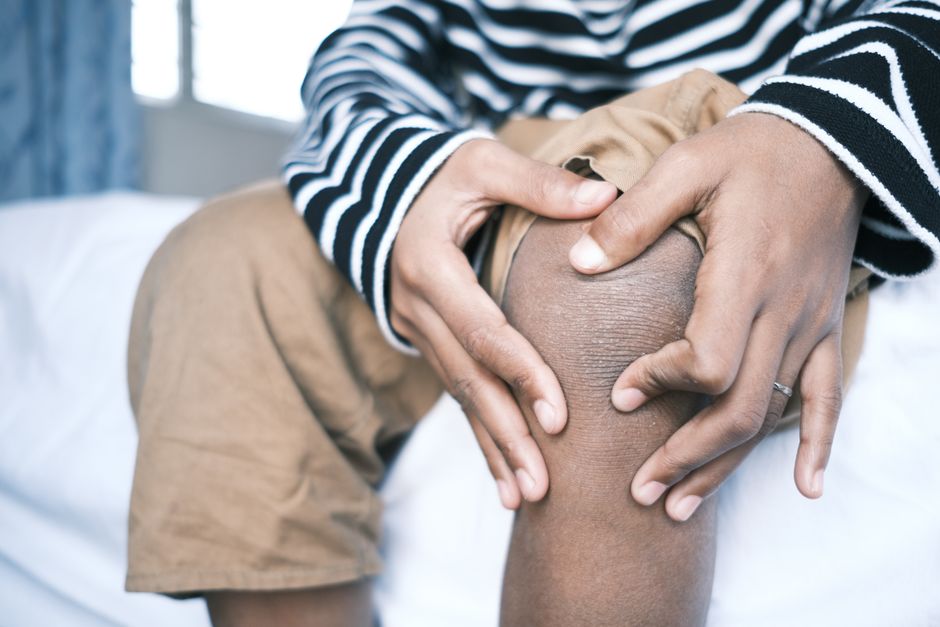
Running is one of the most effective forms of exercise for cardiovascular health, but it puts real load through your knees with every stride. The honest answer to how to avoid knee injury when running is not one trick — it is a combination of smart training progression, adequate recovery, strength work, and paying attention to early warning signs. Most running knee problems are not sudden accidents; they develop gradually from doing too much, too soon, or from weaknesses elsewhere in the leg that the knee has to compensate for.
Why Do Runners Get Knee Injuries?
Running is a repetitive load activity. Each foot strike sends a force through the leg that the muscles, tendons, and joints must absorb. When that load stays within what your tissues can handle, they adapt and get stronger. When it exceeds that capacity — even slightly, over weeks — tissue breaks down faster than it repairs.
Most running knee pain falls into a category clinicians call “overuse injuries.” These are not caused by a single bad step. They build up over time. The knee itself is often the victim rather than the culprit. Weak hips, weak glutes, poor ankle mobility, and sudden jumps in mileage all change how force travels up the leg, and the knee ends up absorbing more than it should.
One clarification worth making: knee pain in runners is not automatically arthritis or a sign the knee is “worn out.” Many running-related knee issues involve the soft tissues around the joint — the tendons, the iliotibial band, or the cartilage under the kneecap. These are different problems with different management, which is why a proper assessment matters.
What Is the Single Biggest Risk Factor for Running Knee Pain?
Doing too much too soon is the most consistent risk factor identified in running injury research. Sudden increases in weekly mileage, pace, or hill work give your tissues no time to adapt.
Your body adapts to training stress during recovery, not during the run itself. Tendons and bone respond more slowly than muscle. A jump in mileage that your muscles tolerate easily can still overwhelm a tendon that needs more time to remodel. This is why many injuries appear during a training block when everything feels fine — the damage is accumulating silently.
Other factors that research links to higher injury risk include:
- Previous injury to the same area, which is one of the strongest predictors of future injury
- Low hip and glute strength, which changes how the leg moves under load
- Sudden changes in running surface or footwear
- Running through pain instead of adjusting
- Insufficient sleep and high life stress, which affect tissue repair
Notice that “bad knees” is not on that list. Most people who develop running knee pain do not have structurally abnormal knees. They have a training load problem or a strength imbalance.
How Should You Increase Running Mileage Safely?
The widely used guideline among running clinicians is to increase weekly mileage gradually rather than in big jumps. A common rule of thumb is to add no more than about 10 percent per week, though this specific number is a general coaching convention rather than a figure proven in controlled trials.
What matters more than the exact percentage is the principle: give tissues time to adapt, and change only one variable at a time. If you increase mileage this week, do not also add speed work or a new hill route. Stacking multiple increases at once is how many injuries start.
Practical habits that help:
- Follow a hard training day with an easy one
- Take at least one full rest day most weeks
- Every few weeks, ease back slightly instead of pushing forward
- Build in a taper before races rather than peaking right up to race day
If you are returning from time off, start lower than where you left off. Fitness fades more slowly than tendon and bone tolerance, so your lungs may feel ready before your knees are.





Does Strength Training Prevent Knee Injuries?
Strength training is one of the most supported ways to reduce running injury risk. Research on running injuries consistently points to hip and glute weakness as a contributor to knee pain, particularly pain around the kneecap and the outside of the knee.
The logic is mechanical. Your glutes control how your thigh rotates and how your knee tracks during each stride. When they are weak, the knee absorbs forces it was not designed to handle repeatedly. Strengthening the hips, glutes, and core gives the knee a more stable platform.
Exercises commonly used for this purpose include:
- Single-leg squats and step-downs
- Hip bridges and single-leg bridges
- Side-lying leg raises and banded lateral walks
- Calf raises, which support ankle stiffness and push-off
Two or three sessions a week is a common recommendation. The specific exercises matter less than consistency and progressive difficulty. A physical therapist can tailor a program if you have a specific problem.
What Role Do Shoes and Running Form Play?
Shoes and form get a lot of attention, but the evidence here is more mixed than marketing suggests. No specific shoe has been proven to prevent running knee injuries in large trials.
What is reasonable: replace worn-out shoes, since midsole cushioning degrades over time, and choose footwear that feels comfortable for your foot and running style. Comfort appears to matter more than any particular category of shoe in the research that exists.
On running form, some evidence suggests that a higher cadence — taking more, shorter steps — can reduce load on the knee. Increasing step rate slightly is a low-risk change many runners can try. But dramatic form overhauls are not clearly proven to prevent injury and can themselves cause problems if changed abruptly.
If you decide to change your stride, do it gradually. A sudden switch to forefoot striking, for example, shifts load to the calf and Achilles and has been linked to new injuries in runners who change too fast.
What Are the Warning Signs You Should Not Ignore?
Pain that changes your stride is the clearest signal to pay attention. If you are limping, favoring one leg, or altering how you run to avoid pain, that is your body telling you something is wrong.
Other signs that warrant attention:
- Pain that persists after you stop running
- Swelling around the knee
- Pain that worsens over consecutive runs rather than easing
- A knee that locks, gives way, or catches
- Pain following a specific twist or impact
Mild soreness that eases as you warm up and is gone by the next day is generally not a red flag. Pain that is sharp, localized to one spot, or getting worse week over week is different and deserves assessment.
If you have significant swelling, cannot bear weight, or heard a pop at the moment of injury, seek medical care rather than trying to run through it. Those features can point to structural damage that needs proper evaluation.
Can You Run With Knee Pain?
Some runners can continue with reduced mileage or intensity while a mild issue settles, but this depends entirely on what is causing the pain. There is no single answer that applies to everyone.
A common clinical approach is to reduce load — cut mileage, avoid hills, slow the pace — rather than stop completely, as long as pain stays mild and does not worsen. But this is a judgment call best made with a clinician, especially if the pain is sharp, persistent, or affecting daily walking.
Cross-training that keeps you fit without loading the knee, such as swimming or cycling, is often used during recovery. The key is not to let a minor issue become a major one by pushing through clear warning signs.
What Else Reduces Running Knee Injury Risk?
Recovery habits matter more than most runners realize. Sleep, nutrition, and stress all affect how well tissue repairs. Chronic poor sleep and high stress are associated with slower healing and higher injury rates in athletes.
Warming up before running helps prepare muscles and joints for load. A few minutes of easy jogging followed by dynamic movement, such as leg swings and walking lunges, is a reasonable routine. Static stretching before running has not been shown to prevent injury.
Finally, listen to your body over any plan. Training plans are guides, not contracts. If something feels wrong, adjusting early is almost always easier than recovering from an injury that was ignored.
Frequently Asked Questions
What is the most common cause of knee pain in runners?
Overuse from training too much too soon is the most common cause. Weak hip and glute muscles often contribute by changing how the knee absorbs force.
Should I stop running if my knee hurts?
Not always — mild pain that eases and does not worsen may allow reduced running, but sharp or persistent pain should be assessed. This decision depends on the specific cause and is best made with a clinician.
Do knee braces or compression sleeves prevent running injuries?
No strong evidence shows that braces or sleeves prevent running knee injuries. Some runners find them comfortable, but comfort is not the same as proven protection.
How long does running knee pain usually take to heal?
Recovery time varies widely depending on the cause and how early it is addressed. Some mild issues settle within a few weeks with load reduction, while others take longer, so no single timeline applies to everyone.
