
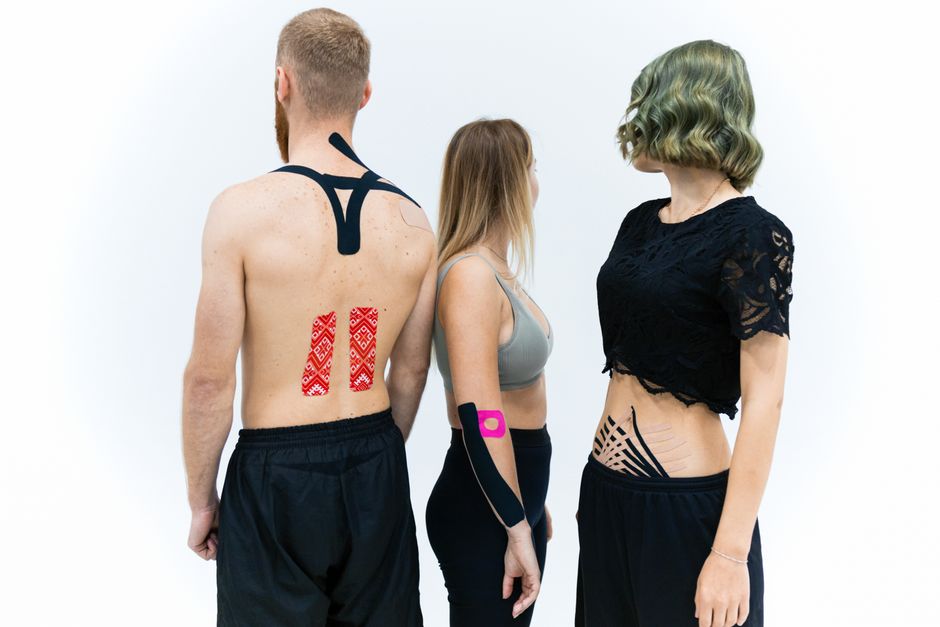
Kinesiology tape is the stretchy, colorful tape you see on athletes. For lower back pain, it works by gently lifting the skin to improve circulation and reduce pressure on pain receptors. Applying it correctly matters more than the brand you buy. Here is the practical method for taping your own lower back, plus what the evidence actually shows.
What Does Kinesiology Tape Actually Do for Lower Back Pain?
Kinesiology tape does not splint your back or force your spine into alignment. It is an elastic cotton tape that mimics the thickness of skin. When applied with the right tension, it creates a small lifting effect on the skin.
That lift increases the space between the skin and the muscle beneath it. This can improve local blood flow and lymphatic drainage. It also reduces pressure on sensory receptors in the skin, which may lessen the pain signals reaching your brain.
Research on kinesiology tape for lower back pain shows mixed results. Some studies report modest short-term pain relief. Others find it performs about the same as a sham tape application. What is consistent is that it is not a cure. It is a support tool that may help you move more comfortably while you address the underlying issue.
How To Apply Kinesiology Tape For Lower Back Pain: Step-by-Step
You need two strips of tape. Each strip should be long enough to run vertically along one side of your spine, from just above your belt line to just below your ribcage. For most adults, that is roughly 8 to 10 inches.
Follow these steps exactly. The order matters.
- Clean and dry your lower back. Do not use lotion or oil. Shave the area if you have heavy hair so the tape sticks properly.
- Sit with a slight forward bend. This puts your back in a gently flexed position, which makes it easier to reach and apply the tape.
- Cut two strips of tape. Round the corners with scissors. Rounded corners prevent the tape from peeling off early.
- Peel the first inch of the backing paper off one strip. Apply this anchor piece to your skin just above the top of your buttocks, on one side of your spine. Do not stretch this anchor section.
- Peel the rest of the backing paper off. Keep the tape at about 25 to 50 percent stretch as you lay it upward along the side of your spine. Do not stretch the last two inches at the top. Lay those down without tension.
- Repeat on the other side of your spine with the second strip. The two strips should run parallel, roughly one to two inches from your spine on each side.
- Rub the tape firmly with your palm. The heat from your hand activates the adhesive.
You can wear the tape for two to three days. Showering is fine. Pat it dry with a towel afterward. Do not rub it.
What Tension Should You Use?
Tension is where most people make mistakes. Too much tension causes the tape to pull painfully on the skin. Too little tension does nothing.
For lower back pain, the standard approach is 25 to 50 percent stretch. That means the tape is stretched about a quarter to halfway beyond its resting length. The anchors at both ends should have zero stretch.
A common error is stretching the tape at the ends. This creates a tight band that can blister or irritate the skin. Keep the first and last two inches of each strip completely unstretched.
If you feel the tape pulling or pinching when you stand up straight, it is too tight. Remove it and start over. Pain from the tape itself is never acceptable.





Different Application Patterns: Which One Should You Use?
There are several taping patterns for the lower back. The vertical strip method described above is the most common. It is also the easiest to do by yourself.
Some clinicians recommend a cross pattern. This uses one horizontal strip across the lower back at the level of the pain, with two vertical strips on either side. The horizontal strip acts like a support band, while the vertical strips provide the lifting effect.
Another option is the muscle inhibition technique. This involves applying the tape from the muscle’s insertion point to its origin with strong tension. This pattern is meant to reduce muscle overactivity. It is harder to apply correctly on your own back and is typically better done by a therapist.
For home use, the vertical strip method is the strongest choice. It covers the most common source of lower back pain — the erector spinae muscles that run along your spine. If you have pain that is clearly on one side only, you can apply just one strip on that side.
When Should You Not Use Kinesiology Tape?
Kinesiology tape is not appropriate for every type of back pain. Do not use it if you have an open wound, a skin infection, or an allergic reaction to adhesive tape. If your skin is fragile or you have a condition that affects skin integrity, skip the tape entirely.
If your back pain is accompanied by numbness in the groin area, loss of bladder or bowel control, or weakness in both legs, do not tape. These are signs of a possible medical emergency. Seek immediate medical attention instead.
If your pain came on after a fall or an injury, or if it has lasted more than two weeks without improvement, see a clinician before taping. Kinesiology tape can mask pain. It does not treat the cause.
Pregnant women should avoid taping the lower back in the later stages. The tape can cause skin irritation, and the abdominal changes during pregnancy alter how the lower back muscles respond to external support.
What Does Kinesiology Tape Not Do?
Kinesiology tape does not fix a herniated disc. It does not correct posture. It does not strengthen weak muscles. These are structural and muscular issues that require specific treatment.
Some manufacturers claim the tape can improve muscle function or enhance athletic performance. The evidence for these claims is weak. Studies show that any performance benefit is likely small and may come from the placebo effect.
The honest position is that kinesiology tape is a comfort measure. It may reduce your pain enough to allow you to move and exercise. Movement and exercise are what actually improve lower back pain in most cases.
If you use tape and your pain does not change, that is not a failure of the tape or a sign that something is wrong with you. It simply means the tape is not the right tool for your specific pain. Many people with lower back pain find relief through physical therapy, strength training, and improved movement patterns.
How Long Should You Wear Kinesiology Tape?
Most manufacturers recommend leaving the tape on for two to three days. Some people wear it for up to five days. The adhesive degrades with showering, sweating, and normal movement.
If the tape starts to peel at the edges, trim the loose parts with scissors. Do not pull the tape off forcefully. To remove it, apply baby oil or a similar oil-based product to the tape and let it soak in for a few minutes. Then peel it off slowly in the direction of hair growth.
Skin irritation is the most common side effect. If you notice redness, itching, or a rash under the tape, remove it immediately. Do not reapply tape to the same area until the skin has fully healed.
There is no clinical guideline for how many days in a row you can use kinesiology tape. Most therapists recommend taking a day off between applications to let the skin recover.
Does Kinesiology Tape Work Better Than Other Options?
Compared to doing nothing, kinesiology tape may provide short-term relief. Compared to other treatments, the evidence is less clear.
Some research suggests that kinesiology tape is roughly as effective as traditional athletic tape for reducing pain. Other studies find that a back brace provides more structural support. The difference is that a brace limits movement, while kinesiology tape allows full range of motion.
For acute lower back pain, heat therapy and gentle movement are often more effective than tape alone. For chronic pain, exercise and cognitive behavioral therapy have the strongest evidence base. Kinesiology tape is best used as an addition to these approaches, not a replacement.
If you are using tape to get through a workout or a busy day, that is a reasonable use. If you are using tape instead of seeing a healthcare provider for persistent pain, that is a problem.
Frequently Asked Questions
Can I apply kinesiology tape to my lower back by myself?
Yes, the vertical strip method is designed for self-application. Sitting with a slight forward bend makes it easier to reach your lower back.
How long does kinesiology tape stay on?
Most brands hold for two to three days of normal wear. Showers are fine, but pat the tape dry rather than rubbing it.
Will kinesiology tape hurt when I remove it?
It should not hurt if removed slowly. Apply baby oil to the tape and wait a few minutes to loosen the adhesive before peeling.
Can I sleep with kinesiology tape on my back?
Yes, you can sleep with the tape on. If it feels too tight when you lie down, remove it and reapply with less tension.
