
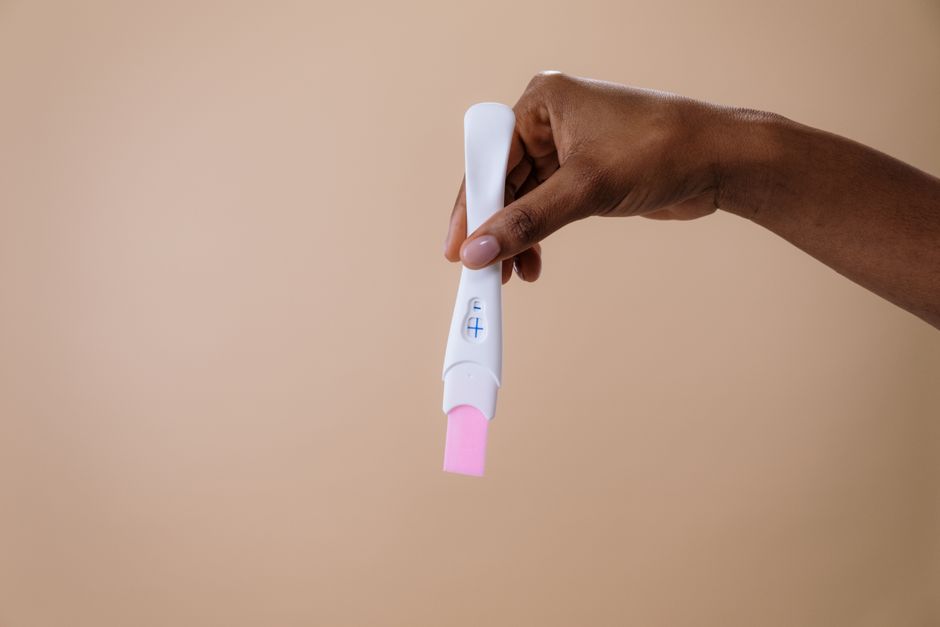
If you think you might be pregnant, waiting for an answer is hard. Most home pregnancy tests can give you a reliable result as early as the first day of a missed period. Some sensitive tests claim to work up to 6 days before your missed period, but that comes with a much higher chance of a false negative. The best time to test is after you have already missed your period for the most accurate result.
How Do Home Pregnancy Tests Actually Work?
Home pregnancy tests detect a hormone called human chorionic gonadotropin, or hCG. Your body starts making hCG only after a fertilized egg implants in your uterus. This implantation usually happens about 6 to 12 days after ovulation.
The test strip has antibodies that bind to hCG in your urine. When enough hCG is present, a line or a digital symbol appears. Each test has a sensitivity threshold, which is the lowest amount of hCG it can detect. This is measured in milli-international units per milliliter, or mIU/mL.
Tests labeled “early result” or “early detection” typically have a lower threshold, around 6 to 10 mIU/mL. Standard tests often have a threshold of 20 to 25 mIU/mL. The lower the number, the sooner the test can potentially detect a pregnancy. But lower sensitivity also means a higher chance of seeing a faint line that might not mean pregnancy at all.
How Soon Can Pregnancy Tests Work Before a Missed Period?
Some tests claim to detect pregnancy up to 6 days before your missed period. Research shows this is possible, but only in a narrow window. A study published in the Journal of the American Medical Association found that early detection tests could identify about 76 percent of pregnancies when used 6 days before the expected period. That means one in four pregnancies was missed at that point.
The closer you are to your missed period, the better the test works. The same study found that by the day of the missed period, the detection rate rose to over 90 percent. By one week after the missed period, it was close to 99 percent.
If you test early and get a negative result, do not assume you are not pregnant. Your hCG levels may simply be too low to detect. Test again in a few days or wait until after your missed period.
What Time of Day Should You Take a Pregnancy Test?
First morning urine is the most concentrated. Your hCG levels build up in your bladder overnight, so the first pee of the day gives you the highest chance of detecting low levels of the hormone. This matters most when testing early, before your period is due.
If you wait until after your missed period, the time of day matters less. Your hCG levels are high enough by then that even diluted urine should give an accurate result. Some studies suggest that testing later in the day after a four-hour urine hold without drinking too much water is also acceptable.
The key is to avoid drinking large amounts of fluid before the test. Too much water can dilute your urine and lower the hCG concentration, which might cause a false negative. Follow the instructions on your specific test brand for the best timing.





How Accurate Are Early Pregnancy Tests?
Accuracy depends on when you test and which brand you use. The U.S. Food and Drug Administration (FDA) requires home pregnancy tests to be at least 99 percent accurate when used correctly. But that accuracy rate applies to testing on the day of your missed period or later.
Testing before the missed period drops accuracy significantly. A 2017 study in Obstetrics & Gynecology tested several early detection brands and found that only one detected 100 percent of pregnancies by the day of the missed period. Others missed between 5 and 15 percent. Before the missed period, the range was much wider.
False negatives are more common than false positives with early testing. A false positive is rare, but can happen if you have a chemical pregnancy, which is a very early miscarriage, or if you are taking certain fertility medications that contain hCG. If you get a positive result, it is very likely correct. If you get a negative result but still think you might be pregnant, test again in a few days.
What Causes a False Negative Pregnancy Test?
A false negative means the test says you are not pregnant but you actually are. The most common cause is testing too early. Your hCG levels may not be high enough yet for the test to detect. Even with a sensitive test, implantation can happen later than average, pushing back the time when hCG becomes detectable.
Other causes include diluted urine, expired test kits, or not following the instructions exactly. Some tests require a specific wait time to read the result. Looking too early or too late can give a wrong reading. Also, certain medical conditions like ectopic pregnancy or ovarian cysts can affect hCG production, though this is less common.
The American College of Obstetricians and Gynecologists recommends waiting until the first day of a missed period to test. This gives your body enough time to produce detectable hCG levels and reduces the chance of a false negative. If you get a negative result but your period does not start within a week, test again.
| Timing of Test | Detection Rate | False Negative Risk |
|---|---|---|
| 6 days before missed period | 76% | High |
| 4 days before missed period | 80-85% | Moderate |
| 2 days before missed period | 90-95% | Low |
| Day of missed period | 99% | Very low |
| 1 week after missed period | 99%+ | Minimal |
What to Avoid When Using a Pregnancy Test
Do not drink too much water before the test. This dilutes your urine and can lower hCG concentration. Stick to your normal fluid intake and test with first morning urine for the best chance of an accurate result.
Do not read the test result after the recommended window. Most tests say to read the result within 3 to 10 minutes. If you look at it hours later, an evaporation line can appear that looks like a faint positive. This is not a real positive and can cause confusion.
Do not assume a faint line means nothing. Even a very faint second line usually indicates hCG is present. It might mean you are very early in pregnancy. If the line is faint, test again in 48 hours. Your hCG levels should roughly double every 48 to 72 hours in early pregnancy. A line that gets darker over a couple of days is a strong sign of a progressing pregnancy.
Do not use an expired test. The chemicals on the test strip can degrade over time, making the test less sensitive or giving inaccurate results. Check the expiration date on the box before using it.
- Test with first morning urine for highest accuracy
- Wait until the day of your missed period if possible
- Read the result within the time window on the instructions
- Test again if you get a negative but still think you are pregnant
- Contact your healthcare provider for a blood test if you need confirmation
Do Digital and Early Detection Tests Work Better?
Digital tests work the same way as line tests. They detect hCG in your urine and display the result as words like “Pregnant” or “Not Pregnant.” The advantage is that you do not have to interpret faint lines. The disadvantage is that they are often less sensitive than the best early detection line tests.
Early detection tests with a sensitivity of 6 mIU/mL can detect pregnancy a day or two before digital tests, which often have a threshold of 20 mIU/mL. If you are testing before your missed period, a sensitive line test might give you a result sooner than a digital one. But the trade-off is a higher chance of a faint line that is hard to read.
Some people report seeing a faint positive on a line test but getting a negative on a digital test the same day. This is normal. The digital test just needs more hCG to trigger. If this happens, wait 48 hours and test again with the digital test. It should show positive by then if the pregnancy is progressing.
Frequently Asked Questions
Can a pregnancy test be positive 5 days before a missed period?
Yes, it is possible but not guaranteed. Only about half of pregnancies will show a positive result that early because hCG levels may still be too low.
How long after implantation can I test positive?
Most tests can detect hCG about 7 to 10 days after implantation. This usually falls around the time of your missed period.
Is first morning urine really necessary for a pregnancy test?
It is most important when testing early. After your missed period, any urine sample usually works because hCG levels are higher.
Can a negative test turn positive later if I wait?
No. A test result is only valid within the time window stated in the instructions. A line that appears hours later is an evaporation line, not a positive.
