
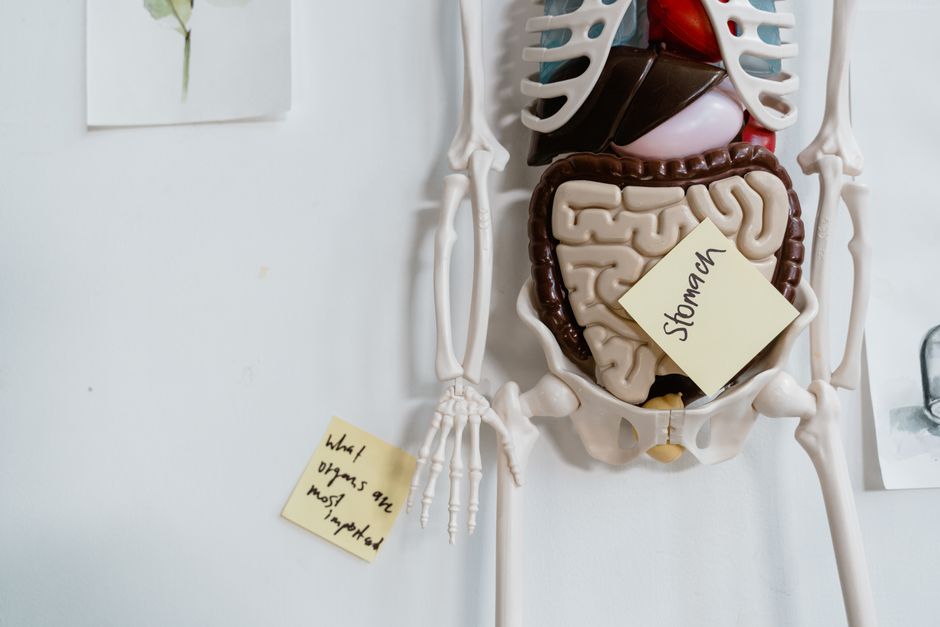
Probiotics are live bacteria and yeasts that survive your stomach acid and reach your colon where they interact with the trillions of microbes already living there. Once they arrive, they compete for space and food with harmful bacteria, produce substances that lower the pH of your gut, and send signals to your immune cells lining the intestinal wall. The key fact is that probiotics do not permanently colonize your gut in most people — they pass through in about one to three weeks while temporarily shifting the balance of your gut ecosystem.
What Exactly Happens to Probiotics After You Swallow Them?
The journey from your mouth to your colon is harsh. Stomach acid kills many probiotic bacteria before they even reach the small intestine. Bile salts in the small intestine break down others. Only the strains that are naturally resistant to acid and bile — like certain Lactobacillus and Bifidobacterium species — survive in meaningful numbers.
Once they reach the colon, probiotics do not settle in permanently. Research published in Cell Host & Microbe found that most probiotic strains are gone from stool samples within two to three weeks after people stop taking them. This means you need to keep taking them regularly if you want a consistent effect.
While they are in your gut, probiotics do three main things. They produce short-chain fatty acids like butyrate that feed your colon cells. They lower the pH of the colon, which makes it harder for harmful bacteria to grow. And they interact directly with immune cells in the gut lining through pattern recognition receptors.
How Do Probiotics Actually Change Your Gut Bacteria?
Probiotics do not dramatically reshape your entire gut microbiome the way antibiotics do. Instead, they create subtle shifts. A 2018 study in Nature tracked people taking a multi-strain probiotic and found that the gut microbiome changed only modestly — and the changes varied from person to person.
One way probiotics work is by competing for resources. Harmful bacteria need certain sugars and nutrients to thrive. Probiotics consume those same resources, starving the bad bacteria. This is called competitive exclusion.
Another mechanism is cross-feeding. Some probiotic strains produce lactate, which other beneficial bacteria in your gut use as fuel. So even if the probiotic itself does not stick around, it may feed native good bacteria that do.
Key insight: The effects depend heavily on your starting microbiome. Someone with a diverse, healthy gut may see almost no change from probiotics. Someone with disrupted gut bacteria — after antibiotics, for example — may see a much larger effect.
Does How Probiotics Work What Happens In Your Gut Actually Work for Digestive Issues?
For some conditions, the evidence is strong. For others, it is weak or nonexistent. Here is what the research actually shows.
| Condition | What Evidence Shows |
|---|---|
| Antibiotic-associated diarrhea | Strong evidence. The CDC and IDSA recommend specific strains like Lactobacillus rhamnosus GG and Saccharomyces boulardii. |
| Irritable bowel syndrome (IBS) | Moderate evidence. Some strains reduce bloating and pain in about 40-50% of people, but no single strain works for everyone. |
| Infectious diarrhea | Good evidence. Lactobacillus rhamnosus GG and Saccharomyces boulardii shorten the duration by about one day in children. |
| Constipation | Weak evidence. Some small studies show modest improvement with Bifidobacterium lactis, but the effect is small. |
| Inflammatory bowel disease (Crohn’s, UC) | Mixed evidence. Ulcerative colitis shows some benefit. Crohn’s disease does not respond consistently. |
The table makes one thing clear: probiotics are not a magic bullet. They help specific conditions using specific strains at specific doses. Taking a random probiotic off the shelf for general digestive health is unlikely to do much.


What Are the Side Effects of Probiotics and Who Should Avoid Them?
Most healthy adults tolerate probiotics without problems. The most common side effects are mild gas and bloating during the first few days. This usually goes away as your gut adjusts.
Serious side effects are rare but real. A 2020 review in Clinical Infectious Diseases documented cases of probiotic-related infections in people with compromised immune systems. This includes people on chemotherapy, organ transplant recipients, and premature infants.
People who should be cautious include:
- Anyone with a central venous catheter — probiotics can cause bloodstream infections
- People with short bowel syndrome
- Those with severe pancreatitis — a major trial found higher death rates in patients given probiotics
- Anyone with an immune system weakened by medication or illness
If you fall into any of these groups, talk to your doctor before taking probiotics. The risk is low for healthy people, but it is not zero.
How Long Should You Take Probiotics to See Results?
Most studies show benefits appearing after one to four weeks of daily use. For antibiotic-associated diarrhea, the effect starts within a few days. For IBS, it usually takes two to four weeks before people notice reduced bloating or pain.
There is no standard answer for how long to stay on them. Some people take them for a few weeks after antibiotics and stop. Others with chronic issues like IBS take them for months at a time. The bacteria do not build up in your system over time — if you stop, the effects fade within a few weeks.
One thing the research does not support is cycling probiotics. There is no evidence that taking a week off and then restarting gives better results than continuous use. If a probiotic is helping, keep taking it. If it is not helping after four weeks, it probably will not help at all.
Practical note: Look for products that list the specific strain name (like Lactobacillus rhamnosus GG) and the dose in colony-forming units (CFU). A typical effective dose is 1 to 10 billion CFU per day. Higher is not necessarily better — some studies show that 100 billion CFU is no more effective than 10 billion.
What Common Mistakes Do People Make With Probiotics?
The biggest mistake is assuming all probiotics are the same. Different strains do different things. Lactobacillus rhamnosus GG helps with diarrhea. Bifidobacterium infantis 35624 helps with IBS pain. Saccharomyces boulardii is a yeast that survives antibiotics well. Using the wrong strain for your problem is like taking painkillers for an infection — it misses the target.
Another mistake is ignoring how you store them. Many probiotics need refrigeration. If you leave them in a hot car or a warm cabinet, the bacteria die before you take them. Some newer strains are shelf-stable, but check the label.
Taking probiotics at the wrong time matters too. Stomach acid is lowest when your stomach is empty, so probiotics have a better survival rate if taken 30 minutes before a meal. Some research suggests taking them with a small amount of fat — like yogurt or milk — also improves survival because fat protects the bacteria from acid.
Finally, people often expect probiotics to fix a bad diet. Probiotics cannot undo the damage of a diet high in processed foods and low in fiber. They work best alongside prebiotics — the fiber that feeds good bacteria. Foods like onions, garlic, bananas, and oats are good sources of prebiotics.
Frequently Asked Questions
Do probiotics survive stomach acid?
Some strains survive better than others. Lactobacillus and Bifidobacterium species have moderate acid resistance, but many bacteria in a probiotic capsule die before reaching the colon.
How long does it take for probiotics to start working?
Most people notice effects within one to four weeks of daily use. Antibiotic-related diarrhea may improve within a few days.
Can you take probiotics on an empty stomach?
Yes. Taking them 30 minutes before a meal when stomach acid is lowest improves survival. Some research suggests taking them with a small amount of fat also helps.
Are probiotics safe for everyone?
No. People with weakened immune systems, central venous catheters, or severe pancreatitis should avoid probiotics unless their doctor approves.
