
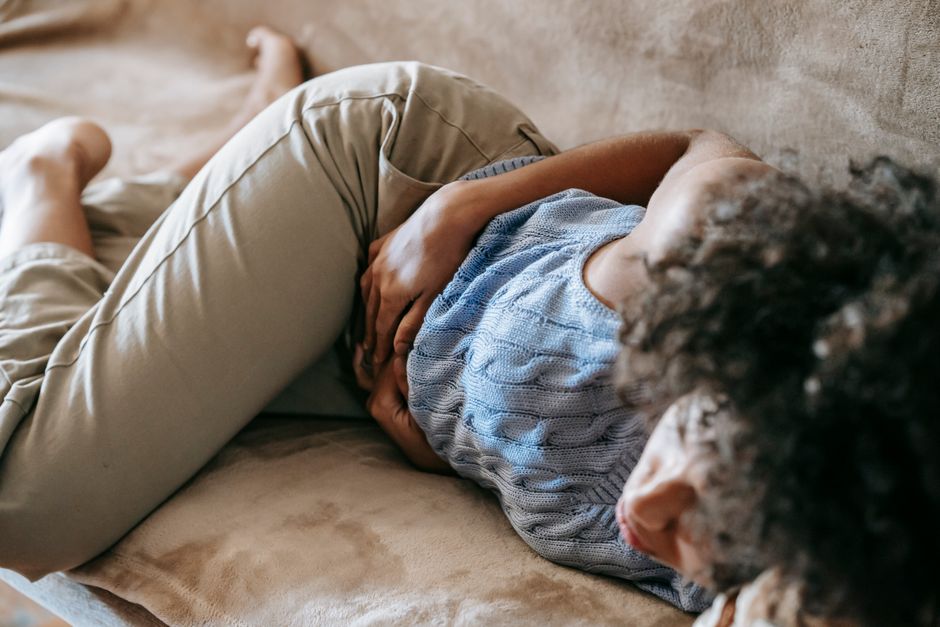
Labour pain is one of the most intense forms of pain a human body can produce. It is caused by strong contractions of the uterus, pressure on the cervix and pelvic floor, and the stretching of birth tissues. Most people describe it as severe cramping that builds and fades in waves, and its intensity varies widely from person to person.
How painful labour feels is not a single fixed experience. It changes through the stages of labour, from person to person, and depends on factors like the baby’s position, the length of labour, and how much support and pain relief are available. Some people manage with breathing and movement alone. Others need medication. Both are normal.
What Does Labour Pain Actually Feel Like?
Most people describe early labour as a dull, aching backache or period-like cramping that comes and goes. As labour progresses, the sensations usually become stronger and more regular.
In active labour, contractions are often described as a tightening band of pressure that starts in the lower back and wraps around to the front of the belly. The peak of each contraction is the most intense part. Between contractions, the pain usually fades almost completely at first, which gives the body a chance to rest.
There is no single way labour pain is felt. Some people feel it mostly in the lower back. Others feel it in the pelvis, the thighs, or as a deep internal pressure. The pushing stage often feels different from earlier contractions — more like an overwhelming urge to bear down combined with intense pressure and stretching.
A key point that is often missed: labour pain is not constant. It rises and falls in a pattern. That rhythm is one reason many people find it more manageable than they expected, even when the peaks are severe.
What Causes the Pain of Labour?
Labour pain comes from several distinct sources, and each one contributes something different.
- Uterine contractions. The muscle of the uterus tightens strongly and repeatedly. This is the main source of pain in the first stage of labour.
- Cervical stretching. The cervix thins and opens from closed to about 10 centimetres. That stretching stimulates pain fibres.
- Pressure on pelvic structures. The baby’s head presses on the pelvis, bladder, and nerves as it descends.
- Stretching of the birth canal. In the second stage, the vagina and perineum stretch, which produces a sharp, burning or tearing sensation for many people.
The pain signals travel along two different nerve pathways. Pain from the uterus and cervix travels through nerves that also carry signals from the lower back and upper legs — which is why so many people feel labour pain in the back and thighs. Pain from the lower birth canal and perineum travels along a different pathway. This matters because different pain relief methods work on different pathways.
How Painful Is Labour Pain Compared With Other Pain?
Labour pain is often rated among the most severe pain people experience. On standard pain scales, many people in active labour report scores at the high end.
But comparing labour to other pain is not straightforward. Labour pain is different in kind from most other pain. It is time-limited, it comes in waves, and it has a clear purpose. Many people find that the breaks between contractions make it more tolerable than constant pain of the same intensity would be.
It is also worth knowing that pain ratings vary enormously. Some people report that labour was less painful than they feared. Others describe it as the most intense experience of their lives. Both accounts are honest. Expectation, fear, fatigue, previous experience, and the amount of support in the room all appear to influence how pain is experienced.





How Does Labour Pain Change Through the Stages of Labour?
The experience of pain is not the same across the whole of labour. It shifts as labour moves through its stages.
Early labour. Contractions are usually mild to moderate and irregular. Many people can talk, walk, and rest through them. This phase can last many hours, especially in a first labour.
Active labour. Contractions become stronger, longer, and closer together. This is typically the most intense part. Pain is often felt in the back and lower belly.
Transition. The final part of the first stage, as the cervix reaches full dilation, is often described as the peak of intensity. Some people feel shaky, hot, or nauseated. This phase is usually short compared with the rest of labour.
Pushing and birth. The nature of the pain changes. It becomes pressure and stretching rather than cramping. Many people describe a strong urge to push along with a burning sensation as the baby’s head delivers.
After birth. The intense pain usually stops quickly once the baby is born. Afterpains — cramping as the uterus shrinks back down — can occur in the days that follow, and are often stronger after a second or later birth.
What Affects How Painful Labour Feels?
Labour pain is not determined by one factor alone. Several things appear to influence how intense it feels.
- Baby’s position. A baby facing the mother’s back is the most common and often the least painful position. Babies facing forward or in other positions can cause more back pain and slower progress.
- First labour versus later labours. First labours tend to be longer, and length is linked to more fatigue and more pain over time.
- Induction. Contractions from induced labour are sometimes described as more intense than those that start on their own, though experiences vary.
- Fear and anxiety. Tension and fear are associated with greater pain perception. This is a well-recognised pattern in labour care.
- Support and environment. Continuous support during labour has been linked in research to better experiences and less need for pain medication.
- Fatigue and hunger. Long labours without rest or food can make pain feel harder to manage.
None of these factors is fully within anyone’s control. They are useful for understanding why two people can have very different experiences with the same basic process.
What Pain Relief Options Are Available?
There is a range of options, and they work in different ways. What works well for one person may not suit another.
Non-medical methods. Breathing techniques, movement, warm water, massage, and continuous support are widely used. Evidence suggests these can help people cope with pain, though they generally do not remove it completely.
Epidural analgesia. An epidural delivers local anaesthetic near the nerves of the spine. It is the most effective form of pain relief for labour and is used widely. It does not always remove all sensation, and it can affect mobility and lengthen the pushing stage in some cases.
Other medications. Inhaled gas mixtures and injected opioid pain relief are used in some settings. These can take the edge off pain but usually do not eliminate it.
Nitrous oxide. Often called laughing gas, this is breathed through a mask during contractions. It tends to reduce anxiety and take the edge off pain rather than block it.
Which options are available depends on the birth setting and local practice. It is reasonable to ask about them before labour begins.
Can You Prepare for Labour Pain?
Preparation does not remove labour pain, but it can change how it is experienced. Childbirth education classes, birth planning, and practice with breathing and relaxation techniques are commonly used for this reason.
Knowing what to expect appears to help. People who understand the pattern of labour — that contractions peak and then ease, that the most intense phase is usually short — often report feeling more in control. Fear of the unknown tends to make pain feel worse, and understanding tends to reduce fear.
Having a plan for pain relief, including a backup plan, is also useful. Labour rarely follows a script. Being open to changing your mind about pain relief is not a failure of preparation. It is part of making decisions in the moment.
One practical point: rest and food in early labour matter more than many people realise. Labour is physically demanding, and arriving at the hospital exhausted tends to make pain harder to manage.
Frequently Asked Questions
Is labour pain the worst pain a person can feel?
It is often rated among the most severe pain people experience, but not everyone rates it that way. Pain scores in labour vary widely from person to person.
How long does labour pain usually last?
For a first labour, the painful active phase often lasts several hours, though this varies a lot. Once the baby is born, the intense pain usually stops quickly.
Can you have a baby without any pain relief?
Yes. Many people give birth without medication, often using breathing, movement, and support instead. Whether it is comfortable enough varies greatly from person to person.
Does an epidural remove all labour pain?
An epidural is the most effective form of labour pain relief, but it does not always remove all sensation. Some people still feel pressure or mild pain, especially during pushing.
