
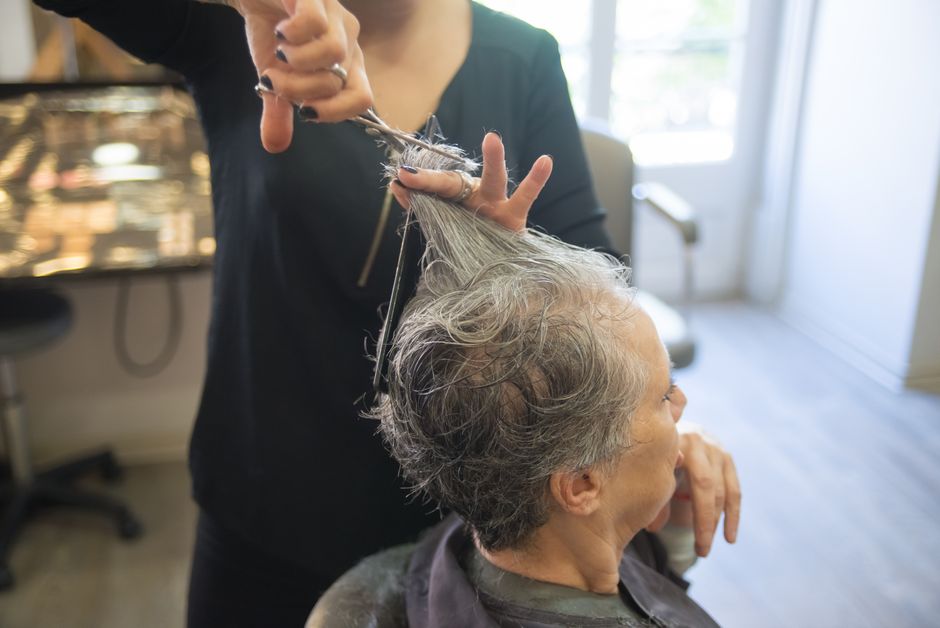
There is no single correct schedule for haircuts. Hair grows about half an inch per month on average, but how often you should sit in the chair depends on your hair type, the style you want, and how polished you need to look. Most people fall somewhere between every two weeks and every three months.
The question sounds simple. The answer isn’t, because a haircut isn’t one thing. A fade is not the same as a trim for split ends. A short, structured cut shows growth within weeks. Long layers can go months without looking shaggy.
How Fast Does Hair Actually Grow?
Scalp hair grows roughly half an inch per month, or about six inches per year. That figure is well established in dermatology and holds for most healthy adults. It sounds like a lot until you realize that half an inch of growth is often enough to change how a short cut looks.
Growth rate varies from person to person. Some people grow closer to a third of an inch per month. Others approach three-quarters of an inch. Genetics, age, and overall health all play a part. Hair growth also slows as we get older, and it tends to slow during illness or periods of poor nutrition.
Here’s the part most people miss. Every hair on your head is on its own schedule. At any given moment, most scalp hairs are in a growing phase, while a smaller share are in a resting phase before they shed. This is why you lose some hair every day without going bald. It’s normal. It’s also why a single haircut doesn’t reset anything — the growth clock keeps running on each follicle independently.
What this means for your appointment calendar is straightforward. The shorter your cut, the more visible that half-inch becomes. A buzz cut can look grown out in two weeks. Shoulder-length hair can go three months and still look intentional. The growth rate doesn’t change. The margin for error does.
How Often Should You Have Your Haircut Based on Hair Type?
Hair texture changes the math more than most people expect. Curly and coily hair hides length differently than straight hair. It also behaves differently when cut.
Straight hair shows every millimeter of new growth. A blunt bob that looked sharp on day one can look uneven in five or six weeks. If you wear a precise, straight cut, plan on more frequent visits.
Curly hair is more forgiving. Curls shrink up when dry, so a cut that’s slightly grown out may still hold its shape. Many people with curls can stretch appointments to every eight to twelve weeks. Some go longer. The trade-off is that curl patterns can shift as hair grows, which changes how the cut sits.
Coily and tightly textured hair often does well with even longer intervals. Shape matters more than length for many styles, and a skilled cut can hold its silhouette for three months or more. Trims to manage split ends and single-strand knots may still be worth doing in between.
Fine hair is its own case. It tends to look limp faster, so a shorter, more frequent cut often reads as fuller. Thick or coarse hair can carry more length before it looks heavy or shapeless.
Does Your Hairstyle Set the Schedule?
Yes, and this is usually the biggest factor. The style you want dictates how often you need to maintain it. Your growth rate just sets the clock.
Short, structured cuts need the most attention. A fade, a pixie, or a sharp men’s taper can look grown out in two to four weeks. If your look depends on clean lines, you’re looking at appointments every two to four weeks. That’s not vanity. It’s how short cuts work.
Medium-length styles — a layered cut that hits the shoulders, a classic bob, a men’s cut that’s long enough to move — usually hold their shape for six to eight weeks. This is the range most people land in.
Long hair is the most flexible. If you’re growing it out or wearing it past your shoulders, you can often go three months or longer between cuts. You may still want regular trims to control split ends, but the shape doesn’t demand frequent upkeep.
One clarification worth making. “Trimming” and “cutting” aren’t always the same visit. A trim removes a small amount of length to keep ends healthy. A cut changes the shape. If your goal is length, you may only need trims. If your goal is a specific silhouette, you need cuts. Knowing which one you’re booking helps you choose the right interval.





What About Growing Your Hair Out?
If you’re trying to grow your hair longer, the instinct is to skip haircuts entirely. That usually backfires.
Hair ends split over time. Once a split starts, it travels up the strand. A split end that isn’t trimmed can weaken the hair further up, and eventually the strand breaks. You can lose more length to breakage than you would have lost to a trim.
Most stylists suggest light trims every eight to twelve weeks while growing hair out. The trim removes only the damaged tips, not the length you’ve gained. This isn’t a hard rule, and the right interval depends on how much damage your hair has. Heat styling, chemical treatments, and friction all speed up splitting.
The honest position here is that trimming doesn’t make hair grow faster. Nothing topical does, despite what many products claim. Trimming protects the length you already have. That’s the real benefit, and it’s a meaningful one.
How Do You Know It’s Time for a Haircut?
Your hair will tell you before the calendar does. The signs are usually obvious once you know what to look for.
- The shape has collapsed. Layers fall flat. A bob loses its line. A fade has fuzzy edges.
- Ends look frayed, dry, or lighter in color than the rest of the strand.
- You’re relying on products or styling tricks to make it look the way it used to on its own.
- Split ends are visible when you hold a section up to the light.
- Your ponytail or bun has gotten noticeably thicker or harder to manage.
Any one of these is a reasonable cue. Two or more usually means it’s time.
There’s also a practical angle. If you have an event, a job interview, or a photo coming up, book your cut about a week ahead. Fresh cuts often look their sharpest after a few days, once the hair has settled. A cut the day before can look a little too crisp.
What Affects How Often You Need a Cut?
Several factors shift your ideal interval. None of them are dramatic on their own, but together they matter.
Hair growth rate. Faster growth means shorter intervals. If your hair grows three-quarters of an inch a month instead of half an inch, you’ll notice regrowth sooner.
Damage and texture. Color-treated, heat-styled, or chemically relaxed hair tends to split faster. That pushes trims closer together. Natural, low-manipulation hair can go longer.
Age. Hair growth slows with age for many people, and hair may thin. Thinning hair can look sparser faster when it grows out, which sometimes means more frequent cuts to keep it looking full.
Health and nutrition. Hair growth depends on adequate protein, iron, and other nutrients. Illness, major stress, and some medical conditions can slow growth or cause shedding. If you notice sudden changes in growth or shedding, that’s worth discussing with a doctor rather than adjusting your haircut schedule.
Budget and time. This is real. A two-week schedule isn’t practical for everyone. Many people stretch intervals and use styling to bridge the gap. That’s a legitimate choice, not a failure.
Is There a “Right” Answer?
No. The right answer is the one that matches your hair, your style, and your life. For most people, that means somewhere between every two weeks and every three months.
If you want a specific starting point, here’s a reasonable frame. Short structured cuts: every two to four weeks. Medium styles: every six to eight weeks. Long hair or growing out: every eight to twelve weeks or longer, with trims as needed.
Pay attention to how your hair looks and feels rather than the number on the calendar. Your hair is the better guide. And if you’re unsure, ask your stylist what interval they’d suggest for your specific cut. They can see your growth pattern and how the shape holds. That’s information no general guideline can replace.
Frequently Asked Questions
How often should you get a haircut if you want to keep your length?
If you’re keeping your length, light trims every eight to twelve weeks are usually enough to manage split ends without losing much length. The exact interval depends on how much damage your hair has.
Does cutting your hair make it grow faster?
No. Cutting hair does not change the rate at which it grows from the follicle. Trimming removes damaged ends, which can help protect the length you already have, but it does not speed up growth.
How often should men get a haircut?
Men with short, structured cuts often need appointments every two to four weeks to keep clean lines. Longer styles can go six to eight weeks or more between cuts.
Can you go too long between haircuts?
Yes. Going too long allows split ends to travel up the strand, which can lead to breakage and loss of length. It can also let a cut lose its shape entirely, requiring more length to be removed to fix it.
