
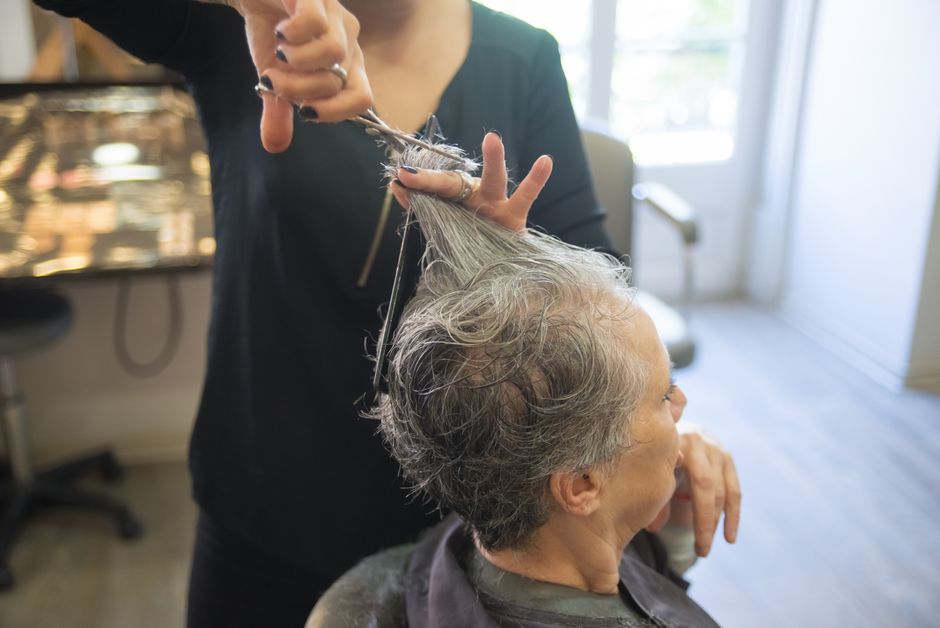
Most men need a haircut every 2 to 4 weeks to keep a style sharp. Most women can stretch it to 6 to 8 weeks for a trim. But these are just averages. The real answer depends on your hair type, your haircut style, and what you want your hair to do. Let’s go through what actually matters so you can stop guessing and start knowing.
What Determines How Often You Actually Need a Haircut?
Your hair type is the biggest factor. Straight hair shows growth quickly. A half-inch of new growth at the roots is obvious. Curly and coily hair hides new growth better because the curl pattern compresses it. Someone with tight coils can often go 8 to 10 weeks between cuts without anyone noticing.
Your haircut style matters just as much. A short fade or a buzz cut needs maintenance every 2 to 3 weeks. The contrast between shaved sides and longer top becomes obvious fast. A longer, layered cut for women can look fine for 10 to 12 weeks. A blunt bob shows uneven ends within 4 weeks.
Hair health is the third factor. If you have split ends, you cannot repair them. The only fix is cutting them off. Split ends travel up the hair shaft and cause more breakage. The American Academy of Dermatology recommends trimming every 6 to 8 weeks to prevent split ends from worsening.
How Often To Get a Haircut Based on Your Hair Length
Short hair needs frequent cuts. For men with a crew cut or a fade, 2 to 3 weeks is standard. The sides grow out and lose their shape quickly. For women with a pixie cut, 3 to 4 weeks keeps the shape intact. Letting a pixie go past 6 weeks usually means it looks shaggy rather than intentional.
Medium-length hair has more flexibility. Shoulder-length styles need a trim every 6 to 8 weeks. This keeps the ends healthy without losing length. If you are growing your hair out, you can push it to 10 to 12 weeks. Just know that the ends will look thinner and more damaged the longer you wait.
Long hair past your shoulders can go 3 to 4 months between cuts if you keep it healthy. The key is how you treat it between cuts. Heat styling, coloring, and harsh shampoos damage ends faster. If you do none of those, you can stretch it. If you use hot tools weekly, stick to 8 weeks max.
What the Research Actually Says About Haircut Frequency
There is surprisingly little clinical research on haircut timing. Most of what you hear comes from hairstylists’ experience, not controlled studies. The American Academy of Dermatology states that trimming hair does not make it grow faster. Hair grows from the scalp, not the ends. Cutting the ends does not change the growth rate at the root.
What research does show is that split ends travel. A study published in the International Journal of Trichology found that split ends can extend up the hair shaft by 1 to 2 millimeters per week in damaged hair. Regular trims stop this progression. So while a haircut does not speed growth, it prevents damage that makes hair look thinner and shorter than it actually is.
One common myth is that cutting hair makes it thicker. It does not. Each strand has a fixed thickness determined by genetics. Cutting the ends creates a blunt edge that feels thicker temporarily. But the actual strand diameter does not change. If your hair looks thin at the ends, it is usually breakage from lack of trims, not a problem cutting would fix permanently.





How Often To Get a Haircut for Different Hair Textures
| Hair Texture | Recommended Frequency | Why This Works |
|---|---|---|
| Straight fine hair | 4 to 6 weeks | Shows split ends and unevenness quickly |
| Straight thick hair | 6 to 8 weeks | Holds shape longer but needs end health |
| Wavy hair | 6 to 8 weeks | Balance between shape and damage control |
| Curly hair | 8 to 10 weeks | Growth hides well; over-cutting ruins curl pattern |
| Coily or kinky hair | 8 to 12 weeks | Least visible growth; focus on moisture not frequency |
Fine hair is the most vulnerable to damage. Each strand is thinner and breaks more easily. If you have fine straight hair, sticking to 4 to 6 weeks prevents the ends from looking stringy. Thick coarse hair can handle longer intervals because the strands are stronger and damage progresses slower.
Curly and coily hair requires a different approach. Over-cutting curly hair can ruin the natural curl pattern. Many stylists recommend cutting curly hair dry rather than wet to see where the curls actually fall. For coily hair, the main concern is moisture retention, not split ends. Trimming too often can remove healthy length unnecessarily.
Signs You Are Waiting Too Long Between Haircuts
- Your ends look see-through or wispy when held up to light
- You can see individual split ends when you look closely
- Your hair tangles more easily than it used to
- Your style does not hold its shape even after styling
- You notice more hair on your brush or in the shower drain
These signs mean the ends are damaged and need to go. Waiting longer will not fix them. The damage will only travel up the shaft and require cutting off more length later. A trim now saves you from a big chop later.
The opposite is also true. If your hair looks healthy, holds its style, and has no visible split ends, you do not need a haircut on a strict schedule. Many people cut their hair out of habit when they could wait another 2 to 4 weeks. Listen to your hair, not the calendar.
How Often To Get a Haircut When You Are Growing It Out
This is where most people get conflicting advice. Some stylists say every 8 weeks without fail. Others say trim only when you see damage. The truth is somewhere in the middle. You need to cut off damage to keep length, but you do not want to cut off all your progress.
The smart approach is to trim only the damaged ends. Ask your stylist for a dusting, not a full cut. A dusting removes an eighth to a quarter inch, just enough to clean up split ends without losing visible length. Do this every 10 to 12 weeks while growing your hair. Any more frequent and you are cutting off healthy hair that could have stayed.
One exception is if you are growing out a very short style like a pixie or a buzz cut. During the awkward in-between phase, shaping trims every 6 to 8 weeks actually help the grow-out process. A stylist can clean up the neckline and sideburns to keep it looking intentional while the top catches up.
What to Avoid When Deciding Your Haircut Schedule
Do not follow a one-size-fits-all recommendation from social media. Influencers and celebrities have stylists on retainer. They cut their hair more often because they have to. Their frequency has nothing to do with hair health and everything to do with looking camera-ready. You do not need that.
Do not cut your own hair to save money between professional cuts. Home haircuts for anything beyond simple trims usually create unevenness that requires more professional work to fix. A bad home cut can set you back 4 to 6 weeks of growth. The savings are not worth it.
Do not believe that more frequent haircuts make your hair grow faster. Hair grows from the scalp at a rate determined by genetics, nutrition, and hormones. Cutting the ends does not change that rate. The only thing frequent trims do is keep the ends healthy so the hair you have looks its best.
Do not ignore your stylist’s professional opinion entirely. They see your hair in person under good lighting. They can spot damage you cannot see in your bathroom mirror. If your stylist says you need a trim sooner than you think, ask why. A good stylist will explain what they see rather than just pushing for more appointments.
Frequently Asked Questions
How often should men get a haircut?
Men with short styles like fades or crew cuts need a haircut every 2 to 3 weeks. Men with longer styles can go 4 to 6 weeks.
How often should women get a haircut?
Women with short hair need trims every 4 to 6 weeks. Women with long hair can wait 8 to 12 weeks if the ends are healthy.
Does cutting your hair more often make it grow faster?
No. Hair growth happens at the scalp and cutting the ends does not change that rate. Regular trims prevent breakage which helps hair appear longer.
How often should I get a haircut if I have curly hair?
Every 8 to 10 weeks is ideal for curly hair. Curly hair hides growth well and over-cutting can disrupt the curl pattern.
