
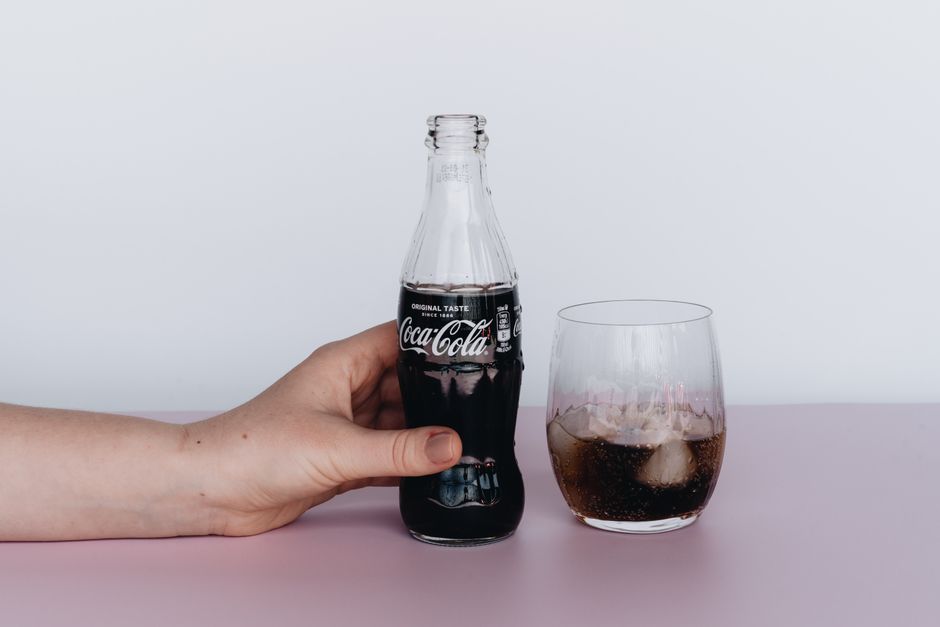
A standard 20-ounce bottle of Coca-Cola contains 65 grams of added sugar. That equals about 16 teaspoons. It is one of the most concentrated sources of liquid sugar most people consume in a single sitting.
How Much Sugar Is In A Bottle Of Coke?
A 20-ounce bottle of Coke contains 65 grams of sugar. The nutrition label lists 65 grams of added sugar per bottle. In teaspoons, that is roughly 16.25 teaspoons of sugar.
The amount changes with bottle size. A 12-ounce can has 39 grams, which is about 9.75 teaspoons. A 16.9-ounce bottle has 55 grams, about 13.75 teaspoons. A 2-liter bottle contains 216 grams, which is 54 teaspoons of sugar.
All of this sugar is added sugar. Coca-Cola does not contain naturally occurring sugars from fruit or dairy. Every gram of sugar in the drink is added during manufacturing.
What Does 65 Grams Of Sugar Actually Look Like?
Visualizing 65 grams helps make the number real. A single sugar cube weighs about 2.3 grams. A 20-ounce Coke equals roughly 28 sugar cubes. A teaspoon of granulated sugar weighs about 4 grams, so 65 grams is about 16 teaspoons.
Consider the daily limit. The American Heart Association recommends no more than 36 grams of added sugar per day for men and 25 grams for women. One 20-ounce Coke exceeds both limits before any other food or drink is consumed.
The Dietary Guidelines for Americans suggest keeping added sugar below 10 percent of daily calories. For a 2,000-calorie diet, that is 200 calories from added sugar, or 50 grams. A 20-ounce Coke provides 260 calories from sugar alone, which is 130 percent of that daily allowance.
Why Liquid Sugar Is Different From Sugar In Food
Sugar in liquid form affects the body differently than sugar in solid food. When you eat an apple, the fiber slows digestion and helps regulate blood sugar response. A bottle of Coke has no fiber, no protein, and no fat to slow absorption.
Liquid sugar enters the bloodstream quickly. Blood glucose rises rapidly, the pancreas releases insulin, and the body responds to the sudden spike. Over time, frequent large spikes in blood sugar contribute to insulin resistance.
Another difference is satiety. Studies show the body does not register calories from liquids the same way it registers calories from solid food. People who drink a 260-calorie soda do not reliably eat less at their next meal. The calories are added on top of normal intake.
High-fructose corn syrup and table sugar are nearly identical in composition. Both contain roughly equal parts glucose and fructose. The body processes them through the same pathways.





What Happens In Your Body Within An Hour
The metabolic response to a 20-ounce Coke follows a predictable sequence. Within about 20 minutes, blood glucose rises sharply. The pancreas releases insulin to move glucose into cells.
By about 40 minutes, caffeine absorption is complete. Pupils dilate, blood pressure rises slightly, and the liver releases more sugar into the bloodstream.
Around the 60-minute mark, the rapid rise in blood sugar triggers a large insulin response. This can cause blood sugar to drop below normal within a couple of hours, producing fatigue, hunger, and cravings for more sugar.
This cycle is not unique to Coke. Any drink with 65 grams of sugar and no other nutrients produces a similar response. The pattern matters more than the brand.
How Coke Compares To Other Drinks
Comparing sugar content across common drinks puts the numbers in context. All values below are for standard commercial serving sizes.
| Drink | Serving Size | Sugar (grams) | Teaspoons |
|---|---|---|---|
| Coca-Cola | 20 oz | 65 | 16 |
| Pepsi | 20 oz | 69 | 17 |
| Mountain Dew | 20 oz | 77 | 19 |
| Orange juice | 12 oz | 33 | 8 |
| Apple juice | 12 oz | 39 | 10 |
| Gatorade | 20 oz | 34 | 8.5 |
| Sweet tea | 16 oz | 32 | 8 |
| Energy drink | 16 oz | 52 | 13 |
Diet sodas contain zero sugar. However, they are not a health food. Research on artificial sweeteners and metabolic effects is mixed, and some studies suggest regular consumption may be associated with changes in gut bacteria or appetite regulation.
Does Coke Zero Or Diet Coke Count As Sugar-Free?
Coke Zero and Diet Coke contain no sugar. They use artificial sweeteners instead. A 20-ounce bottle of either contains 0 grams of sugar and 0 calories.
This does not mean they are risk-free. The sweeteners used are approved as safe by regulatory agencies. But long-term studies on artificial sweetener consumption and health outcomes show mixed results. Some observational research links regular diet soda intake with higher risk of metabolic conditions, but these studies cannot prove cause and effect.
If you are choosing between regular Coke and diet Coke strictly to reduce sugar intake, diet Coke clearly wins. If you are looking for a genuinely healthful beverage, water, unsweetened tea, or sparkling water are better options.
What The Sugar Labeling Laws Changed
In 2016, the U.S. Food and Drug Administration updated nutrition labeling rules. The new label requires a separate line for added sugars. It also requires the percent daily value for added sugar to be listed.
Before this change, a bottle of Coke simply listed “sugars” with no distinction between natural and added. Consumers had no way to know that all 65 grams were added. The updated label makes this clear.
The FDA also established that 50 grams of added sugar per day equals 100 percent of the daily value for a 2,000-calorie diet. This is not a recommendation to consume that amount. It is a reference point for comparing products.
Is Fructose Worse Than Glucose?
Both glucose and fructose are simple sugars. They are metabolized differently. Glucose is used by nearly every cell in the body for energy. Fructose is processed almost entirely by the liver.
When the liver receives a large amount of fructose at once, it converts some of it to fat. This process is called de novo lipogenesis. Over time, frequent large fructose loads contribute to fatty liver changes and elevated triglycerides.
This does not mean fructose is a toxin. Fruit contains fructose but also contains fiber, water, and micronutrients that change the metabolic picture. The issue is concentrated fructose in large amounts with no other nutrients.
High-fructose corn syrup and sucrose both contain about 50 percent fructose. A 20-ounce Coke delivers roughly 32 grams of fructose to the liver in one sitting.
How To Reduce Soda Intake Without Going Cold Turkey
Reducing soda consumption does not require quitting abruptly. Gradual reduction is more sustainable for most people.
One approach is to switch from a 20-ounce bottle to a 12-ounce can. That change alone cuts sugar from 65 grams to 39 grams. Another approach is to dilute soda with sparkling water. Mixing half soda and half sparkling water cuts sugar in half while keeping some flavor.
Another strategy is to treat soda as an occasional drink rather than a daily beverage. Reserve it for restaurants or social occasions. Keep water, unsweetened tea, or sparkling water at home and at work.
Cravings for sugary drinks often diminish after two to three weeks of reduced intake. The first week is the hardest. After that, many people find soda tastes overly sweet.
Frequently Asked Questions
How many teaspoons of sugar are in a 20-ounce bottle of Coke?
A 20-ounce bottle of Coke contains about 16 teaspoons of sugar. That equals 65 grams.
Is Coke Zero actually sugar-free?
Yes, Coke Zero contains 0 grams of sugar. It is sweetened with artificial sweeteners instead.
How much sugar is in a 12-ounce can of Coke?
A 12-ounce can of Coke contains 39 grams of sugar. That is about 9.75 teaspoons.
What is the daily recommended limit for added sugar?
The American Heart Association recommends no more than 36 grams for men and 25 grams for women per day. A 20-ounce Coke exceeds both limits.
