
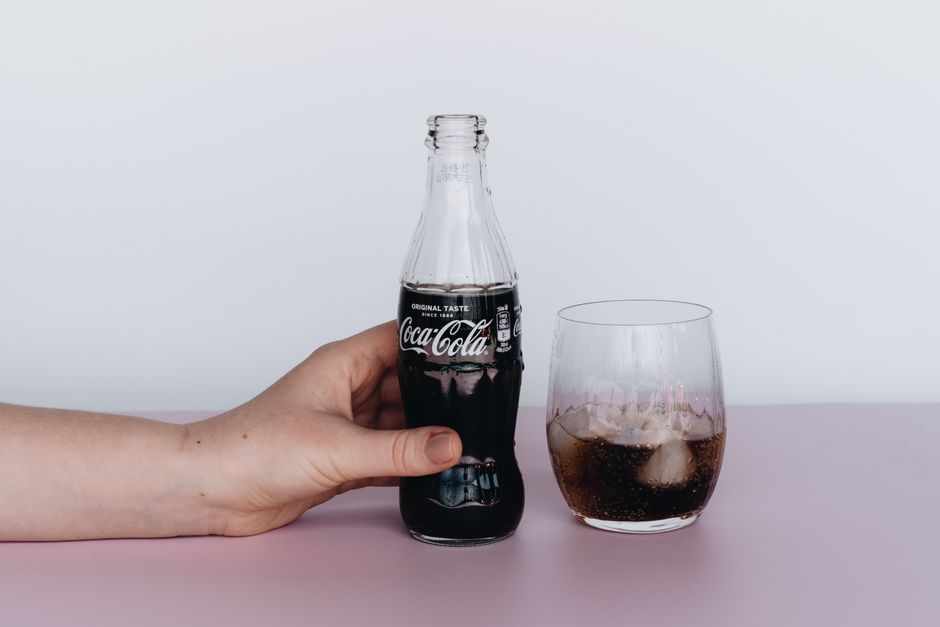
A 12-ounce can of Coca-Cola contains 39 grams of sugar. That is about 9.3 teaspoons. For reference, the American Heart Association recommends men consume no more than 36 grams of added sugar per day, and women no more than 25 grams. One can of Coke puts most people at or over their daily limit.
How Much Sugar Does A Coke Have in Different Sizes?
The 39 grams in a 12-ounce can is the standard serving most people think of. But Coke comes in many sizes. The sugar content scales directly with volume. A 7.5-ounce mini can has 25 grams of sugar. A 16-ounce bottle found at convenience stores has 52 grams. The 20-ounce plastic bottle, common in vending machines, contains 65 grams of sugar. That is over 15 teaspoons.
Many people do not realize that a 20-ounce Coke contains more sugar than two full-sized candy bars. The sugar is not hidden. It is listed on the nutrition label in plain sight. But the numbers are easy to overlook when you are thirsty and in a hurry.
What Type of Sugar Is in Coca-Cola?
The sugar in regular Coca-Cola is high-fructose corn syrup (HFCS) in the United States. In other countries, cane sugar is used. Both are chemically similar. HFCS is roughly 55 percent fructose and 45 percent glucose. Cane sugar is 50 percent fructose and 50 percent glucose. The difference is negligible for your body.
Some people believe HFCS is worse than table sugar. Research published in the American Journal of Clinical Nutrition found no significant difference in how the body processes the two. Both spike blood sugar. Both contribute to weight gain when consumed in excess. The real issue is the amount, not the source.
A common misconception is that “natural” cane sugar in Mexican Coke is healthier. It is not. A 12-ounce Mexican Coke has 39 grams of sugar, exactly the same as the U.S. version. The taste difference comes from the glass bottle and the use of cane sugar versus HFCS. Your liver does not care which one you drink.
How Does the Sugar in Coke Compare to Other Drinks?
To put 39 grams in perspective, here is a comparison of popular drinks. All values are for a standard 12-ounce serving unless noted.
| Drink | Sugar (grams) | Teaspoons |
|---|---|---|
| Coca-Cola (12 oz) | 39 | 9.3 |
| Pepsi (12 oz) | 41 | 9.8 |
| Mountain Dew (12 oz) | 46 | 11 |
| Orange Juice (12 oz) | 33 | 7.8 |
| Apple Juice (12 oz) | 39 | 9.3 |
| Gatorade (12 oz) | 21 | 5 |
| Red Bull (8.4 oz) | 27 | 6.4 |
| Starbucks Frappuccino (9.5 oz) | 29 | 6.9 |
Notice that fruit juices often contain as much sugar as soda. A 12-ounce glass of apple juice has the same 39 grams as a Coke. The difference is that juice provides some vitamins, but the sugar load is still high. The body processes liquid sugar rapidly regardless of the source.





What Happens to Your Body After Drinking a Coke?
The 39 grams of sugar in a Coke enter your bloodstream quickly. Within 20 minutes, your blood sugar spikes. Your pancreas releases insulin to move the glucose into your cells. The liver converts excess fructose into fat. This process is the same whether you drink soda, juice, or a sugary coffee drink.
Research from the University of California, San Francisco has shown that fructose from added sugars is processed almost entirely by the liver. Over time, high intake of added sugars contributes to fatty liver disease, insulin resistance, and increased triglycerides. One Coke will not cause these conditions. But drinking one or more daily for years adds up.
The body has no biological need for added sugar. The World Health Organization recommends that added sugars make up less than 10 percent of total daily calories. For a 2,000-calorie diet, that is 50 grams of added sugar per day. One 12-ounce Coke uses up nearly 80 percent of that allowance.
Does Diet Coke Solve the Sugar Problem?
Diet Coke contains zero sugar and zero calories. It uses artificial sweeteners like aspartame. For people trying to reduce sugar intake, switching to diet soda is a clear way to cut 39 grams per can. But diet soda is not a health drink.
Some studies suggest artificial sweeteners may alter gut bacteria or affect appetite regulation. A 2023 review in the journal Nutrients found that non-nutritive sweeteners do not cause weight loss on their own and may be linked to metabolic changes in some individuals. The evidence is not strong enough to say diet soda is dangerous, but it is also not strong enough to say it is harmless.
If your goal is to reduce sugar, diet soda is a step in the right direction. If your goal is overall health, water, sparkling water, or unsweetened tea are better options. The best choice depends on your specific situation.
How Can You Reduce Sugar From Soda?
If you drink soda regularly, cutting back is one of the most effective changes you can make for your health. Here are strategies that actually work:
- Switch to smaller sizes. A 7.5-ounce mini can has 25 grams instead of 39. That alone cuts sugar by 36 percent.
- Dilute it. Pour half a can and fill the rest with sparkling water. You still get the taste with half the sugar.
- Set a limit. Decide you will only drink soda on certain days. For example, weekends only.
- Try flavored sparkling water. Brands like LaCroix, Bubly, and Spindrift have zero or minimal sugar and provide the carbonation many people crave.
- Wait 10 minutes. When you crave a soda, drink a glass of water first. Then wait 10 minutes. Often the craving passes.
These approaches are not about perfection. They are about reducing total sugar intake over time. A single Coke occasionally is not a problem. The problem is daily consumption of multiple servings.
Common Misconceptions About Sugar in Coke
One persistent myth is that Coke contains “hidden” sugar. It does not. The nutrition label clearly lists 39 grams per 12 ounces. The sugar is not hidden. It is ignored. Many people simply do not check labels on familiar products.
Another myth is that the sugar in Coke is somehow worse than the sugar in a bowl of cereal or a granola bar. A bowl of Frosted Flakes has about 28 grams of sugar. A Nature Valley granola bar has about 12 grams. The sugar in Coke is not chemically different. The difference is that soda provides zero nutrients, while cereal or a bar may provide some fiber, vitamins, or protein. The sugar itself is the same.
Some people believe that drinking Coke through a straw or drinking it cold reduces the sugar impact. It does not. The temperature and delivery method do not change how your body metabolizes sugar. The 39 grams hit your bloodstream the same way.
Frequently Asked Questions
How many teaspoons of sugar are in a 12-ounce Coke?
There are about 9.3 teaspoons of sugar in a 12-ounce can of Coca-Cola. Each teaspoon equals roughly 4.2 grams.
Is the sugar in Coke different from sugar in fruit?
The sugar molecules are the same, but fruit contains fiber and water that slow absorption. Fruit also provides vitamins and antioxidants that soda does not.
Does Coke Zero have any sugar?
Coke Zero contains zero grams of sugar. It is sweetened with artificial sweeteners like aspartame and acesulfame potassium.
How much sugar is in a 2-liter bottle of Coke?
A 2-liter bottle of Coca-Cola contains about 216 grams of sugar. That is roughly 51 teaspoons.
