
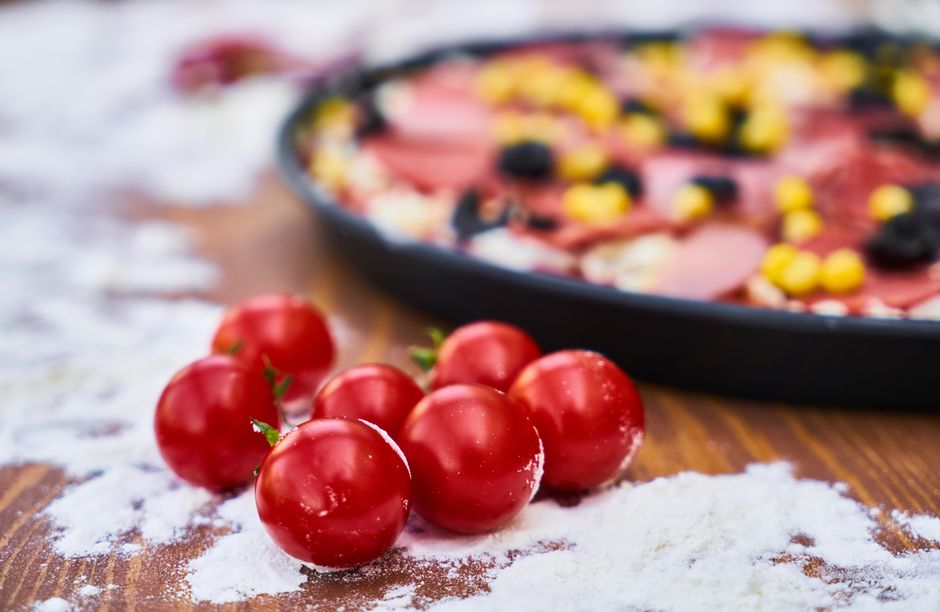
Pizza is one of the biggest single sources of sodium in the American diet. A typical slice of delivery or restaurant pizza contains roughly 600 to 700 milligrams of sodium, and some specialty pizzas push past 1,000 milligrams per slice. For context, federal dietary guidelines recommend keeping sodium under 2,300 milligrams per day for most adults — so two or three slices can account for most or all of a day’s limit.
The exact number depends on the crust, the cheese, the sauce, and the toppings. Frozen pizza, delivery pizza, and homemade pizza land in very different places. Here is what the numbers actually look like, and why pizza is so salty in the first place.
How Much Sodium Is in a Slice of Pizza?
A single slice of plain cheese pizza from a typical pizzeria generally falls in the range of 600 to 700 milligrams of sodium. That figure comes from the combination of dough, tomato sauce, mozzarella, and the salt added at nearly every step.
Chain restaurant pizzas tend to run higher. Many national chains publish nutrition data showing a plain cheese slice in the 600 to 800 milligram range, with meat-topped slices climbing above that. Frozen supermarket pizzas vary widely — a single serving of some brands contains 700 to 1,000 milligrams or more, and a “serving” is often just a fraction of the whole pie.
The important detail is that these numbers are per slice, not per pizza. A large pizza is commonly cut into eight slices. Eating three slices of a 650-milligram slice puts you at nearly 2,000 milligrams of sodium in one meal.
Why Is Pizza So High in Sodium?
Sodium enters pizza at almost every stage of its production, which is why the total adds up so quickly. It is not one salty ingredient — it is four or five of them stacking on top of each other.
Start with the dough. Commercial pizza dough is almost always salted, both for flavor and because salt affects how gluten develops and how the yeast ferments. Then there is the sauce. Canned and jarred tomato sauces are typically salted during processing, and pizza sauce often gets additional salt. Cheese is next: mozzarella is a brined, salted cheese, and it contributes a meaningful share of the total. Finally, cured meats like pepperoni, sausage, bacon, and ham are among the most sodium-dense foods in the grocery store.
There is also a less obvious factor. Many pizzas are finished with a shake of grated parmesan or a sprinkle of garlic salt, and some chains salt the crust or brush it with a seasoned butter blend. None of these are large on their own, but they add up.
How Much Sodium Is in Different Types of Pizza?
The range across pizza types is wide enough that the choice matters. The table below reflects typical values; actual numbers vary by brand, recipe, and portion size.
| Type of Pizza | Typical Sodium per Slice |
|---|---|
| Plain cheese, pizzeria | 600–700 mg |
| Pepperoni or sausage | 700–1,000 mg |
| Meat lovers / supreme | 800–1,200 mg |
| Frozen cheese pizza (per serving) | 600–1,000 mg |
| Thin crust, light cheese | 400–600 mg |
| Homemade, low-sodium recipe | 200–400 mg |
These are approximate ranges drawn from published nutrition data and manufacturer labels, not fixed values. A slice from one chain can differ substantially from a slice of the same description at another.


How Does Pizza Fit Into a Daily Sodium Limit?
Federal dietary guidelines advise most adults to keep sodium intake under 2,300 milligrams per day. That is the general recommendation for the healthy adult population. People with high blood pressure, kidney disease, or heart failure are often advised to aim lower, and individual targets should come from a clinician.
Against a 2,300-milligram daily limit, a single 650-milligram slice of cheese pizza uses about 28 percent of the day’s sodium. Two slices use more than half. Three slices of a meat-topped pizza can exceed the entire daily limit in one sitting.
What makes this worth paying attention to is not any single meal. It is the pattern. The CDC has noted that pizza is among the top contributors to sodium intake in the U.S. diet, not because it is the saltiest food per gram, but because Americans eat so much of it so often.
Does Sodium in Pizza Actually Affect Your Health?
Sodium is an essential mineral. The body needs it to regulate fluid balance, nerve signaling, and muscle function. The concern is not sodium itself — it is chronic excess.
High sodium intake is consistently associated with elevated blood pressure in a large body of research. High blood pressure, in turn, is a major risk factor for stroke, heart attack, and kidney disease. This relationship is well established and is the basis for population-level sodium guidance.
One nuance worth understanding: individual responses to sodium vary. Some people are more sodium-sensitive than others, meaning their blood pressure rises more when they eat salt. Older adults, Black adults, and people with existing hypertension tend to be more sensitive. This is why blanket advice does not fit everyone equally, and why a clinician’s input matters for anyone managing blood pressure.
It is also worth separating two ideas. Reducing sodium can help lower blood pressure — that part is well supported. But whether cutting sodium from pizza specifically changes long-term health outcomes has not been tested in large trials, and no single food determines health on its own.
Can You Make Pizza With Less Sodium?
Yes, and the difference can be substantial. Homemade pizza with a low-sodium dough and sauce can land in the 200 to 400 milligram range per slice — roughly a third of a typical delivery slice.
The biggest levers, in order of impact:
- Sauce. Use no-salt-added canned tomatoes or make sauce from fresh tomatoes. Jarred pizza sauce is often one of the saltiest components.
- Cheese. Reduce the amount, or use a lower-sodium mozzarella. Cheese contributes a large share of the total.
- Toppings. Skip cured meats. Fresh vegetables, chicken, or plain mushrooms add little sodium.
- Dough. You can reduce salt in homemade dough, though it will change the texture and rise somewhat.
At a restaurant, ordering thin crust with light cheese and vegetable toppings is a reasonable way to lower the number, though it will not bring it near a homemade version. Asking for less cheese and no added parmesan helps at the margin.
Is Frozen Pizza Higher in Sodium Than Delivery?
Not necessarily — the two overlap heavily. Some frozen pizzas are comparable to delivery slices, and some are higher. The main trap with frozen pizza is portion size.
Frozen pizza nutrition labels often list sodium per serving, and a serving may be a fraction of the pizza — sometimes a third or a half. A person eating the whole pizza may consume two or three times the number on the label without realizing it. Reading the serving size, not just the sodium number, is the practical step here.
Some brands now offer reduced-sodium frozen pizzas, and those can be meaningfully lower. The label is the only reliable way to know, since the range across products is too wide to generalize.
Does the Type of Crust or Cheese Change the Sodium?
Yes, but less than people expect. Crust contributes some sodium, and a thicker crust generally means more dough and therefore more salt. Thin crust tends to be lower for that reason.
The bigger variable is cheese quantity and type. Mozzarella is a brined cheese and is naturally salty. Using less of it, or choosing a part-skim or reduced-sodium variety, lowers the total more than switching crust styles does. The sauce and the toppings usually matter more than either.
Frequently Asked Questions
How much sodium is in one slice of pizza?
A typical slice of plain cheese pizza contains about 600 to 700 milligrams of sodium. Meat-topped or specialty slices often run higher, sometimes above 1,000 milligrams.
Is pizza high in sodium?
Yes. Pizza is one of the top contributors to sodium intake in the U.S. diet, largely because it is eaten often and combines several salty ingredients at once. A few slices can approach or exceed the recommended daily limit for most adults.
How much sodium is in a whole pizza?
A large eight-slice cheese pizza commonly contains roughly 4,800 to 5,600 milligrams of sodium in total. That is more than twice the 2,300-milligram daily limit recommended for most adults.
Can you make low-sodium pizza at home?
Yes. Using no-salt-added sauce, less cheese, and fresh vegetable toppings instead of cured meats can bring a slice down to roughly 200 to 400 milligrams. The sauce and cheese are the biggest factors.
