
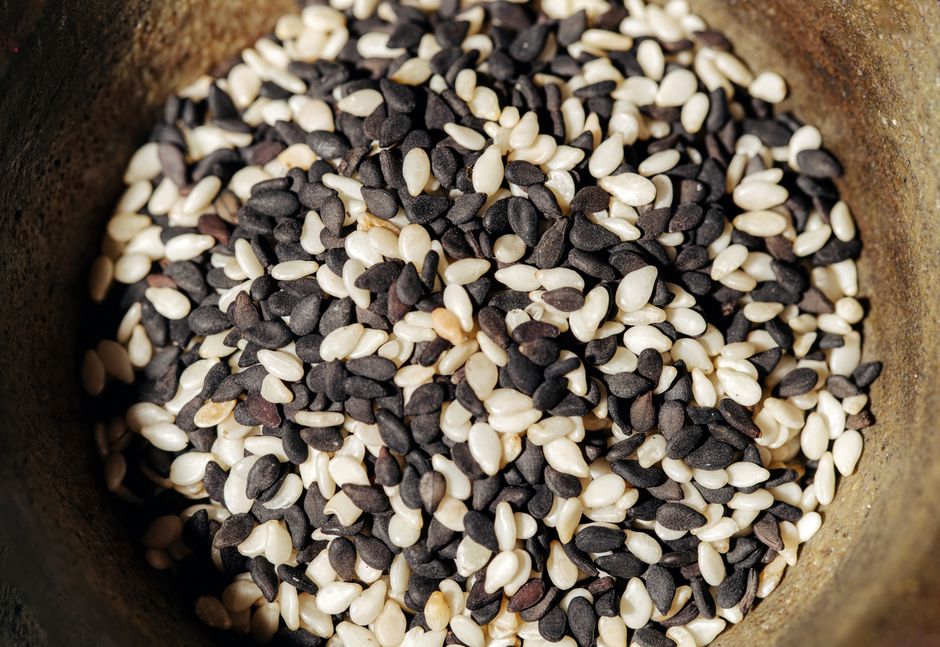
Sesame seeds are tiny, calorie-dense, and rich in calcium, healthy fats, and plant protein. There is no official daily requirement for sesame seeds, but most nutrition guidance places a reasonable daily serving at about 1 to 2 tablespoons (roughly 9 to 18 grams), which fits easily into a balanced diet. Eating more is not automatically better — sesame is calorie-dense, and very large amounts can cause digestive upset in some people.
How Much Sesame Seeds Should I Eat Daily?
A serving of 1 to 2 tablespoons per day is a practical target for most healthy adults. That amount adds meaningful nutrition without crowding out other foods or pushing calorie intake too high.
One tablespoon of whole sesame seeds weighs about 9 grams and provides roughly 52 calories. Two tablespoons land near 104 calories. Those numbers matter because sesame is easy to overeat — a handful tossed on a salad looks small but adds up fast.
There is no government-set recommended daily intake for sesame seeds specifically. The US Dietary Guidelines do not list sesame as its own food group. Instead, sesame falls under the broader category of nuts, seeds, and soy products, which the guidelines suggest eating in modest amounts as part of a varied diet. So the 1-to-2 tablespoon figure is a practical working range, not an official rule.
What sesame does deliver per tablespoon is worth knowing. According to USDA nutritional data, one tablespoon of whole, dried sesame seeds contains about:
- 1.6 grams of protein
- 4.5 grams of total fat, mostly unsaturated
- 1.2 grams of fiber
- About 88 milligrams of calcium
- Small amounts of iron, zinc, magnesium, and B vitamins
That calcium figure is the standout. Sesame seeds are among the better plant sources of calcium, though the form matters — more on that below.
Does the Type of Sesame Seed Change the Amount?
Yes, and this is where most people get tripped up. Hulled, unhulled, whole, ground, and toasted sesame all behave differently in the body.
Unhulled sesame seeds keep their outer shell, which is where much of the calcium sits. Hulled seeds have that shell removed, so they lose a large share of their calcium. If calcium is your reason for eating sesame, unhulled or whole seeds are the better choice.
Grinding matters just as much. Whole seeds can pass through the digestive tract largely intact because the outer layer resists breakdown. Ground sesame — like tahini or ground seed — exposes more of the seed to digestion, so your body absorbs more of the nutrients. This is the same reason ground flaxseed is often preferred over whole.
Toasted sesame is fine nutritionally. Toasting changes flavor more than it changes the basic nutrient profile, though very high heat over long periods can degrade some heat-sensitive compounds.
A simple way to think about it: if you want the calcium, choose unhulled. If you want easier absorption of fats and minerals, choose ground or tahini. You can also do both.
Can You Eat Too Many Sesame Seeds?
For most people, sesame seeds are safe in food amounts, but “more” is not the same as “better.” Three issues are worth understanding.
Calories add up quickly. Sesame is roughly 570 calories per 100 grams. Eating several tablespoons a day on top of a normal diet can quietly push you past your calorie needs. That is not dangerous, but it works against weight goals.
Fiber can cause digestive discomfort. Sesame is a decent fiber source. Jumping from none to several tablespoons a day can cause bloating, gas, or loose stools. Spreading the amount across meals usually helps.
Sesame is a recognized allergen. Sesame allergy is real and can be serious, including the risk of a severe reaction called anaphylaxis. Sesame is now required to be labeled as a major allergen on US packaged foods. If you have a sesame allergy, none of this applies to you — you should avoid sesame entirely and follow your clinician’s guidance.
There is also a less common concern about oxalates. Sesame contains oxalates, which can matter for people who form calcium oxalate kidney stones. If you have a history of kidney stones, talk to your doctor before adding large amounts of sesame to your diet. This is a genuine clinical consideration, not a reason for most people to worry.





Who Should Be Careful With Sesame Seeds?
Certain groups need more caution than the average healthy adult.
People with sesame allergy should avoid sesame in all forms, including tahini, sesame oil in some cases, and foods where sesame is a hidden ingredient. This is not a “moderation” situation.
People with a history of calcium oxalate kidney stones may want to limit high-oxalate foods, and sesame is one of them. Discuss your specific situation with a clinician rather than guessing.
People on blood-thinning medication should be aware that sesame seeds contain vitamin E and small amounts of compounds that may affect clotting in theory. The practical effect from food amounts is not well established, so this is a case where you should ask your doctor rather than assume either way.
Children and pregnant or breastfeeding women: there are no sesame-specific clinical guidelines setting a daily amount for these groups. Sesame is a common food and can be part of a varied diet, but no official recommended intake exists. If you have questions about sesame during pregnancy or breastfeeding, especially with any allergy history, ask your healthcare provider.
How Do You Actually Add Sesame Seeds to Your Day?
The easiest way to hit 1 to 2 tablespoons is to spread it across meals rather than eating it all at once.
- Sprinkle a tablespoon over a salad, grain bowl, or stir-fry.
- Stir tahini into a sauce, dressing, or hummus.
- Add ground sesame to oatmeal, yogurt, or smoothies.
- Use sesame as a topping on roasted vegetables or rice.
Tahini is worth calling out. It is essentially ground sesame in paste form, so it delivers the absorption benefits of grinding. Two tablespoons of tahini is roughly equivalent in sesame content to a similar amount of whole seeds, though it also adds calories from any oil in the paste.
Sesame oil is a different story. It carries flavor and some fat, but most of the calcium, protein, and fiber stay behind in the seed. If you are eating sesame for its minerals, oil is not a substitute.
Does Sesame Have Proven Health Benefits?
This is where honesty matters. Sesame is nutritious, and its nutrient content is well documented. What is less certain is whether eating sesame specifically produces measurable health outcomes like lower cholesterol or better blood sugar control.
Some studies suggest sesame and its compounds may have modest effects on cholesterol and oxidative stress markers. The evidence is not strong enough to call sesame a treatment for anything. It is a nutrient-dense food, not a therapy.
Biological plausibility is not the same as proven benefit. Sesame contains lignans, healthy fats, and minerals that sound promising in a lab. That does not mean eating a tablespoon a day will change your health outcomes in a measurable way. It might contribute to an overall good diet — that is a reasonable expectation — but no large human trial has confirmed sesame as a specific health intervention.
The most defensible position is simple: sesame is a good, nutrient-dense addition to a varied diet. It is not a cure, and it is not a substitute for other sources of calcium, protein, or healthy fats.
What About Black Sesame vs White Sesame?
Black and white sesame seeds come from different varieties of the same plant. Nutritionally, they are similar, with some differences in mineral content and antioxidant compounds. Black sesame tends to have slightly higher levels of certain minerals and pigments, but the difference is not large enough to change your daily target.
Choose based on taste and what you are cooking. Both count toward your 1-to-2 tablespoon goal. Neither is a meaningful upgrade over the other for general health.
Frequently Asked Questions
How many sesame seeds should I eat a day?
A practical target is about 1 to 2 tablespoons (roughly 9 to 18 grams) per day for most healthy adults. No official daily requirement exists, so this is a reasonable range rather than a rule.
Is 1 tablespoon of sesame seeds a day enough?
One tablespoon provides useful calcium, healthy fats, and a little protein and fiber. Whether it is “enough” depends on your overall diet, since sesame is a supplement to your meals, not a primary source of most nutrients.
Can eating too many sesame seeds be harmful?
Large amounts can add a lot of calories and may cause bloating or loose stools from fiber. For people with sesame allergy, any amount can be dangerous, and those with a history of kidney stones should ask a doctor.
Are unhulled sesame seeds better than hulled?
Unhulled seeds keep their outer shell and retain much more calcium than hulled seeds. If calcium is your goal, unhulled or whole seeds are the better choice.
