
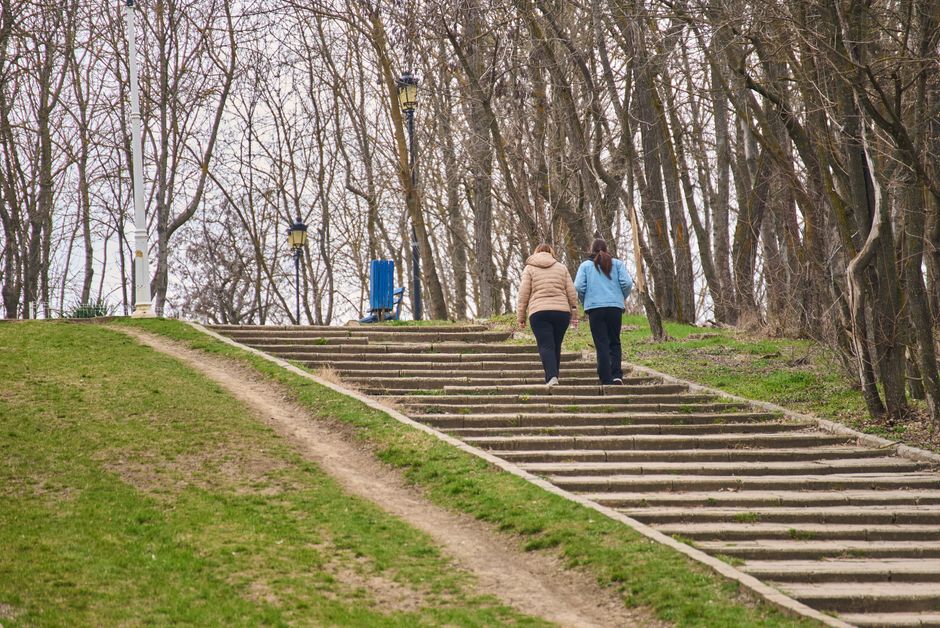
Getting more steps into your day does not require a gym membership or a two-hour workout. The easiest approach is to attach walking to things you already do — parking farther away, taking calls on your feet, using stairs instead of elevators, and adding a short walk after meals. These small habits stack up quietly. Most people find that three or four of them together add a meaningful number of steps without feeling like exercise at all.
Why Does Walking More Actually Matter?
Walking is the most studied form of physical activity in the world, and the findings are consistent. Regular walking is associated with lower rates of heart disease, type 2 diabetes, and premature death. It also supports mood, sleep quality, and joint health in ways that are well documented.
What makes walking unusual is how low the barrier is. You do not need equipment, a coach, or a specific skill. The main obstacle is time and habit, not ability.
One clarification worth making: step counts are a useful proxy for movement, but they are not a perfect measure of health. A person who cycles for an hour may take very few steps and still get excellent cardiovascular benefit. Steps are simply an easy way to track something that matters.
How Many Steps Should You Aim For Each Day?
The widely repeated “10,000 steps” figure did not come from medical research. It originated from a Japanese pedometer marketing campaign in the 1960s. That does not make it a bad target, but it is worth knowing where it came from.
What the research actually shows is more encouraging. Studies have found that health benefits begin to appear well below 10,000 steps and continue to increase with more movement. The relationship tends to level off at higher counts rather than continuing upward indefinitely.
For most adults, a reasonable framing looks like this:
- Under 5,000 steps: generally considered sedentary
- 7,000–8,000 steps: associated with meaningfully lower mortality risk in several large studies
- 10,000+ steps: beneficial, but the added gains over 8,000 are smaller than the gains from moving from 3,000 to 8,000
The honest summary is that going from very few steps to a moderate number delivers the biggest improvement. Adding more beyond that still helps, but the curve flattens.
What Are the Easiest Daily Habits To Add More Steps?
The habits that stick are the ones that require no extra planning. Here are the ones that tend to work best.
Attach walking to existing routines
Habit research consistently shows that new behaviors stick best when they are linked to something you already do. Walk while your coffee brews. Take one loop around the block after dinner. Pace while you brush your teeth. These micro-habits require no willpower because the trigger is already built in.
Take phone calls standing up
Most people sit for calls by default. Standing and pacing during a 20-minute call can add several hundred steps with zero scheduling effort. If you work from home, this is one of the highest-yield changes available.
Park at the far end of every lot
This adds steps automatically and costs nothing but a few seconds. The same logic applies to getting off the bus or train one stop early.
Use stairs whenever they are an option
Stairs also add a cardiovascular and strength component that flat walking does not. One flight up and down a few times a day adds up quickly.
Walk during waiting time
Waiting for an appointment, a child, or a meeting to start is dead time. Walking during it converts idle minutes into movement. This is the habit most people overlook.





Does Walking Need To Be Continuous To Count?
No. This is one of the most persistent myths about exercise. Short bouts of walking count toward your daily total and toward your health.
Current physical activity guidance for adults focuses on total weekly minutes of moderate activity rather than requiring long uninterrupted sessions. Walking in five- or ten-minute blocks throughout the day is a legitimate way to meet that target.
That said, there is some evidence that longer continuous walks may have slightly different cardiovascular effects than short bursts. The difference is not large enough to matter for most people. The bigger issue is whether you walk at all. If short walks fit your life better, do the short walks.
How Can You Track Steps Without Obsessing Over Them?
Tracking helps, but only up to a point. Step counters and phone apps give useful feedback and make progress visible. They can also turn a healthy habit into a source of anxiety.
A few practical rules:
- Check your step count once or twice a day, not constantly
- Use a weekly average rather than judging each individual day
- Ignore days when you are sick, injured, or traveling
- Treat the number as information, not a score
If tracking makes you feel worse rather than better, stop tracking and just walk. The movement matters more than the measurement.
What If You Have Joint Pain or Limited Mobility?
Walking is generally well tolerated, but joint pain and mobility limits are real barriers that deserve honest answers rather than blanket encouragement. If walking causes pain, the right move is to talk to a clinician or physical therapist rather than push through it.
For people with knee or hip osteoarthritis, some research supports walking as a way to maintain function, but individual tolerance varies widely. Water walking, stationary cycling, and seated movement can all contribute to daily activity when walking is difficult. Steps are one measure of movement, not the only one.
If you have a heart condition, have recently had surgery, or are pregnant, check with your doctor before significantly increasing your activity. No universal step target applies to every person or every medical situation.
How Long Does It Take To Build These Habits?
Habit formation timelines vary a lot between people and behaviors. The often-quoted “21 days” figure does not come from solid research. Some habits become automatic in a few weeks; others take months.
What matters more than speed is consistency. Walking the same route at the same time each day builds the habit faster than walking a different amount at random times. The brain learns the pattern, and eventually the walk happens without a decision.
Can You Get More Steps Without Setting Aside Extra Time?
Yes, and this is where most people find their biggest gains. The trick is to look for walking opportunities hiding inside things you already do.
Examples that require no extra time:
- Walk to a coworker’s desk instead of sending a message
- Take the long way to the restroom or kitchen
- Walk your dog a slightly longer route
- Do one lap around the house while waiting for food to cook
- Stand and move during TV commercials
None of these feel like exercise. Together, they can add a surprising number of steps over a week.
Does Walking Speed Matter?
Some evidence suggests that walking pace is linked to health outcomes, and that a faster pace may be more beneficial than a slower one for the same distance. This does not mean slow walking is useless. It means that if you can comfortably pick up the pace, there may be extra benefit in doing so.
A practical approach is to walk at a pace where you can still talk but not sing. That corresponds roughly to moderate intensity for most adults.
Frequently Asked Questions
How many steps a day is actually enough?
Health benefits appear well below 10,000 steps, with meaningful gains often seen in the 7,000–8,000 range for adults. Going from very few steps to a moderate number delivers the largest improvement.
Can short walks throughout the day count the same as one long walk?
Yes, short walks count toward your daily total and toward weekly physical activity goals. Current guidance for adults focuses on total weekly minutes of moderate activity rather than requiring long continuous sessions.
What is the easiest way to add steps without extra time?
Attach walking to things you already do, such as phone calls, waiting time, and daily routines. These micro-habits add up without requiring a scheduled workout.
Do I need a fitness tracker to increase my steps?
No, a tracker is optional and mainly useful for feedback. If tracking makes you anxious, walking without measuring works just as well for health purposes.
