
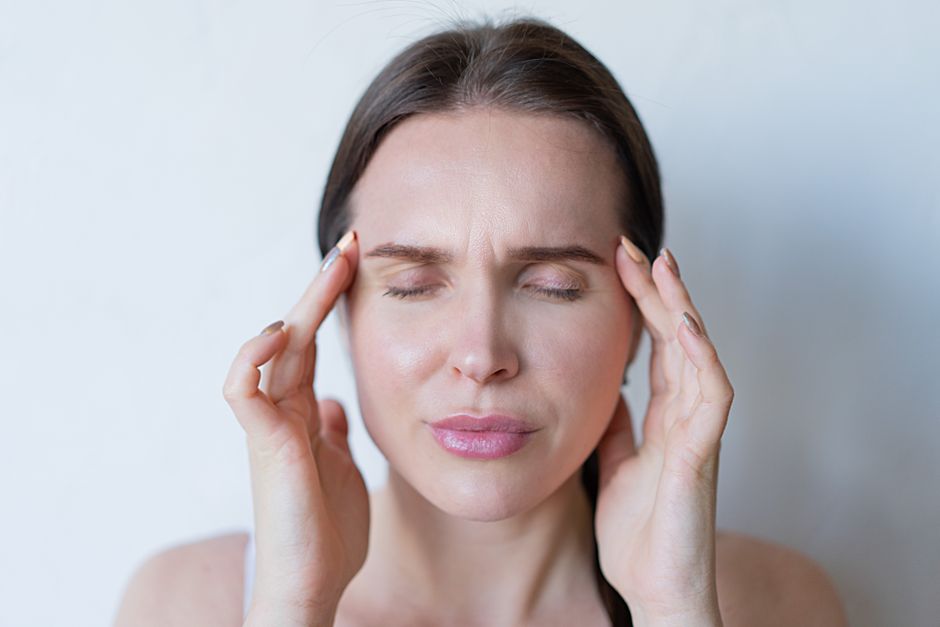
That heavy, full feeling in your head can come from many different places. The most common causes are tension-type headaches, sinus congestion, migraines, and neck muscle strain. Less often, it signals something that needs urgent medical care. The location, timing, and what makes it better or worse usually point to the source.
Why Do I Have So Much Pressure In My Head?
The sensation of pressure is not a disease itself. It is a symptom, and it usually reflects one of a few well-understood processes.
Your head contains blood vessels, muscles, nerves, and the tissues that cover your brain. These structures can register pain and pressure. The brain tissue itself cannot. That is why most head pressure traces back to something happening in or around those sensitive structures, not to the brain itself.
Three mechanisms explain the majority of cases:
- Muscle tension in the scalp, jaw, and neck. Sustained contraction of these muscles produces a band-like pressure.
- Blood vessel changes in the head and face, which are central to migraine.
- Inflammation or fluid buildup in the sinuses or middle ear.
When doctors evaluate head pressure, they look for which of these patterns fits. A dull, steady tightness that builds through the day points one way. A throbbing pain with nausea and light sensitivity points another. The pattern matters more than the intensity.
What Causes Pressure In The Head Most Often?
Tension-type headache is the most common cause of head pressure. It affects a large share of adults at some point and is the single most frequent reason people describe a squeezing or heavy sensation.
The pain is typically mild to moderate. It feels like a tight band around both sides of the head. It usually does not get worse with routine physical activity, and it rarely causes nausea or vomiting. Many people can keep working through it.
Migraine is the second major category. Migraine pain is often moderate to severe and frequently one-sided, though it can affect both sides. It tends to throb. It commonly comes with nausea, and sensitivity to light and sound. Physical activity usually makes a migraine worse. Some people get an aura before the pain starts.
Sinusitis causes pressure that feels concentrated in the forehead, cheeks, or behind the eyes. It usually comes with nasal congestion, thick discharge, and sometimes a reduced sense of smell. Facial pain that worsens when you bend forward is a common feature.
Neck problems can also refer pressure into the head. Tight or strained muscles at the base of the skull can produce a pressure sensation that radiates upward. This is sometimes called cervicogenic headache.
When Is Head Pressure A Sign Of Something Serious?
Most head pressure is not dangerous. A small number of cases are. Knowing the warning signs matters more than knowing every possible cause.
Seek emergency care if head pressure comes with any of the following:
- Sudden, severe onset — the worst headache of your life reaching peak intensity within seconds to a minute
- Fever and a stiff neck together
- Confusion, fainting, or trouble staying awake
- Weakness, numbness, or trouble speaking or seeing
- A seizure
- Head pressure that follows a head injury
- New head pressure after age 50
- Head pressure that keeps getting worse over days or weeks
These signs can point to bleeding in the brain, meningitis, a stroke, or a mass. Those conditions are uncommon, but they are time-sensitive. Do not wait to see if they pass.
One clarification worth making: a “sinus headache” is often not sinusitis at all. Research has shown that many people who believe they have sinus headaches actually have migraines. The two can feel similar in location. This is why persistent “sinus” pressure that does not respond to sinus treatment deserves a second look.





How Do Sinus Problems Cause Head Pressure?
Your sinuses are air-filled cavities in the bones around your nose, cheeks, and eyes. They connect to your nasal passages through small openings.
When those openings swell shut, mucus cannot drain. Pressure builds inside the cavity. That pressure is what you feel as fullness in your forehead, cheeks, or behind your eyes.
This usually happens with a viral infection like the common cold. It can also happen with allergies, which cause swelling without infection. Less often, bacteria cause a true bacterial sinus infection.
Signs that point more toward a bacterial cause include symptoms lasting beyond about ten days without improvement, or symptoms that improve and then get worse again. A doctor can tell the difference, and that distinction matters because viral sinusitis does not respond to antibiotics.
Flying or diving with a blocked sinus can make the pressure much worse. So can sudden changes in altitude.
Can Neck And Jaw Problems Cause Head Pressure?
Yes, and this cause is easy to overlook. The muscles at the back of your neck attach to the base of your skull. When they stay tight, they can produce a pressure sensation that spreads across the back and top of your head.
Poor posture plays a role. Holding your head forward for hours while looking at a screen keeps those muscles working. Over time they fatigue and tighten.
Jaw clenching and teeth grinding are related. The muscles that move your jaw connect to the sides of your skull. Clenching during sleep or during stressful periods can create pressure that feels like it sits in your temples or the side of your head.
You may notice this pattern: the pressure builds through the day, is worse in the afternoon or evening, and eases with rest, heat, or massage. That timing is a clue that muscle tension is involved.
How Is Head Pressure Evaluated?
Most head pressure is diagnosed by history and physical exam alone. Imaging is not routine for typical headaches.
A doctor will ask about location, timing, triggers, and what relieves it. They will check your neck, jaw, sinuses, and nervous system. They will look for the warning signs listed above.
Imaging such as CT or MRI is generally reserved for cases with red flags, an abnormal neurological exam, or a pattern that does not fit a common cause. Using imaging for every headache tends to find incidental findings that cause worry without explaining the symptom.
Keeping a simple log can help. Note when the pressure starts, how long it lasts, what you were doing, and what helped. Patterns often become clear within a few weeks.
What Can You Do About Everyday Head Pressure?
For common tension-type pressure, basic measures often help. These are widely used and generally low-risk, though individual results vary.
- Rest, and step away from screens for a while
- Apply heat to tight neck and shoulder muscles
- Stay hydrated
- Keep a regular sleep schedule
- Address jaw clenching if it applies to you
Over-the-counter pain relievers can ease occasional tension headaches. They are not meant for frequent use. Taking them on many days per month can lead to medication-overuse headache, where the medication itself starts driving the pain. If you find yourself reaching for them often, that is a reason to see a doctor rather than continue.
For migraine, treatment is different. Triggers vary by person, and what works for one may not work for another. A doctor can discuss options, including medications taken at the start of an attack and, for some people, preventive treatment.
For sinus-related pressure, treating the underlying congestion is the goal. Nasal saline rinses are commonly used and generally well tolerated. Decongestant sprays should not be used for more than a few days in a row, because longer use can cause rebound congestion.
Does Stress Cause Head Pressure?
Stress is strongly linked to tension-type headaches, though the exact mechanism is not fully mapped. Stress tends to increase muscle tension, disrupt sleep, and change how the body handles pain.
The relationship runs both ways. Pain causes stress, and stress worsens pain. Breaking that loop often involves more than treating the head alone.
This does not mean the pressure is “all in your head” in the dismissive sense. The muscle tension and pain signaling are real. It means the trigger is partly psychological and partly physical, and both can be addressed.
When Should You See A Doctor?
See a doctor if your head pressure is frequent, worsening, or disrupting your life. Also see one if the pattern changes, if it starts after age 50, or if over-the-counter treatment stops working.
See a doctor promptly if you have any red flag symptom. Those are listed earlier in this article and should not be ignored.
You do not need to figure out the cause yourself. The value of an evaluation is narrowing down which of the common patterns fits you, and ruling out the uncommon causes that need fast action.
Frequently Asked Questions
Why does my head feel full of pressure?
The most common reasons are tension-type headache, sinus congestion, migraine, and neck muscle strain. The pattern of symptoms usually points to which one is responsible.
When is head pressure an emergency?
It is an emergency if it comes on suddenly and severely, or if it comes with fever and a stiff neck, confusion, weakness, trouble speaking, or a seizure. These signs need immediate medical care.
Can stress cause pressure in the head?
Yes, stress is strongly linked to tension-type headaches, likely through muscle tension and disrupted sleep. The relationship runs both ways, since pain also increases stress.
How do I know if my head pressure is from my sinuses?
Sinus pressure usually comes with nasal congestion, thick discharge, and pain that worsens when you bend forward. Many people who think they have sinus headaches actually have migraines, so a doctor can help tell the difference.
