

The short answer: most women in their 40s need somewhere between 1.0 and 1.6 grams of protein per kilogram of body weight per day, depending on how active they are and whether they are trying to preserve or build muscle. For a 150-pound (68 kg) woman, that works out to roughly 68 to 109 grams daily. The current US Recommended Dietary Allowance is lower — 0.8 grams per kilogram per day — but that number was set to prevent deficiency in sedentary adults, not to support muscle, bone, or healthy aging.
Protein needs shift in the 40s for reasons that have nothing to do with willpower. Muscle mass begins declining gradually from around age 30 and accelerates after menopause. The body also becomes less efficient at using dietary protein to build muscle. Eating the same amount you did at 25 may no longer be enough to hold onto what you have.
Why Do Protein Needs Change In Your 40s?
Two things happen at once. Muscle mass slowly shrinks, and the muscle you have becomes less responsive to the protein you eat.
The first process is called sarcopenia — the age-related loss of muscle mass and strength. It starts earlier than most people realize, generally in the 30s, and picks up speed after menopause when estrogen declines. Estrogen appears to play a supportive role in muscle maintenance, and its drop is one reason women lose muscle faster than men in this decade.
The second process is sometimes called anabolic resistance. In younger adults, a moderate dose of protein triggers a strong muscle-building response. In older adults, that same dose produces a smaller response. The muscle needs a bigger push — more protein, and often more physical activity — to get the same result.
This does not mean you need to eat like a bodybuilder. It means the old advice to just “eat a balanced diet” may leave you short.
How Much Protein Should A Woman In Her 40S Eat?
For most healthy women in their 40s, a reasonable target is 1.0 to 1.6 grams of protein per kilogram of body weight per day. That range appears in position papers from sports nutrition and geriatric nutrition groups, and it reflects what the research shows about preserving muscle as we age.
Here is what that looks like at different body weights:
- 130 lbs (59 kg): about 59 to 94 grams per day
- 150 lbs (68 kg): about 68 to 109 grams per day
- 170 lbs (77 kg): about 77 to 123 grams per day
- 190 lbs (86 kg): about 86 to 138 grams per day
Where you land in that range depends on activity. A woman who walks for exercise and does no strength training sits near the lower end. A woman lifting weights three or more times a week, or trying to rebuild muscle, sits near the upper end.
If you have kidney disease, the picture is different. Protein restriction is sometimes recommended, and the amount should come from your doctor, not a general article.
Is 0.8 Grams Per Kilogram Still The Right Number?
No, not for most women in their 40s who want to protect muscle. The 0.8 g/kg figure is the RDA — the minimum needed to prevent deficiency in a sedentary adult. It was never designed as an optimal target for aging muscle.
This is one of the more misunderstood numbers in nutrition. The RDA is a floor, not a goal. Meeting it prevents outright protein deficiency, but it does not necessarily prevent the slow muscle loss that happens with age. Many researchers who study aging and muscle argue the RDA is too low for older adults, and some argue it is too low for midlife women generally.
The evidence here is not unanimous. Some studies show benefits from higher protein intakes in older adults; others show smaller effects. But the direction of the research leans toward more protein being helpful for muscle preservation, especially when paired with resistance training.


Does Timing Matter, Or Just Total Amount?
Total daily protein matters most. But timing is not irrelevant.
Muscle-building appears to respond best when protein is spread across the day rather than loaded into one meal. Many adults eat very little protein at breakfast and a large amount at dinner. That pattern may be less effective than distributing it more evenly.
A common suggestion in the research is roughly 25 to 40 grams of quality protein per meal. That is a general range from studies on muscle protein synthesis, not a strict rule. Hitting it at breakfast is often the hardest part for people who eat cereal or toast.
For practical purposes: if you get a solid protein source at each meal, you are probably fine. If you eat almost no protein until dinner, shifting some earlier in the day is a reasonable change.
Which Foods Actually Deliver Protein?
Both animal and plant foods can work. The difference is mainly in how much you need to eat to hit your target, and in the amino acid profile.
Animal sources tend to be more protein-dense and complete, meaning they contain all the essential amino acids in proportions the body uses efficiently. Plant sources are often lower in one or more essential amino acids, so you may need to eat more total protein or combine sources across the day.
Rough protein content per common serving:
- Chicken breast, 3 oz cooked: about 26 grams
- Salmon, 3 oz cooked: about 22 grams
- Greek yogurt, plain, 1 cup: about 20 grams
- Eggs, 2 large: about 12 grams
- Lentils, 1 cup cooked: about 18 grams
- Tofu, firm, 3 oz: about 8 grams
- Cottage cheese, 1 cup: about 24 grams
These values come from standard USDA nutrient data and are approximate. Brands and preparation methods vary.
Plant-based eaters can absolutely meet higher protein targets, but it usually takes more planning. Soy, lentils, beans, and seitan are the most protein-dense plant options. Nuts and seeds contribute protein but are also high in fat, so they are less efficient as a primary source.
Do You Need Protein Powder?
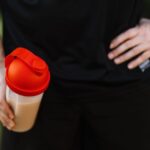
No. Protein powder is a convenience, not a requirement. If you can hit your target from food, there is no established advantage to adding powder.
That said, some women find it genuinely hard to eat 90 or more grams of protein from food alone, especially at breakfast. A scoop of whey or plant protein in a smoothie is an easy way to close the gap. Whey is well studied for muscle protein synthesis; soy and pea protein also have supporting evidence, though slightly less.
What protein powder is not: a shortcut around strength training. Protein without resistance exercise does little to build muscle. The two work together, and training is the bigger lever.
What Happens If You Eat Too Little?
Chronic low protein intake in your 40s contributes to gradual muscle loss that is easy to miss until it becomes a problem.
Early signs are subtle — feeling weaker on stairs, taking longer to recover from activity, or losing strength you used to have. Over years, low muscle mass is linked to falls, fractures, and loss of independence in later life. It also affects how well the body handles illness and recovery.
Protein also supports bone health, immune function, and skin. But muscle is where the midlife consequences show up most clearly.
The goal is not to eat enormous amounts. It is to consistently hit a target that supports what your body is doing at this stage. For most women in their 40s, that means more than they are currently eating — and pairing it with some form of resistance training.
Frequently Asked Questions
How many grams of protein does a 150-pound woman in her 40s need?
A 150-pound (68 kg) woman generally needs about 68 to 109 grams per day, depending on activity level. The lower end suits a sedentary lifestyle; the upper end suits regular strength training.
Is 100 grams of protein a day too much for a woman?
For most healthy women, 100 grams per day is not too much and falls within the range suggested for active midlife women. Women with kidney disease should follow their doctor’s guidance instead.
Can you build muscle in your 40s?
Yes. Muscle responds to resistance training at any age, though the response may be slower than in your 20s. Adequate protein supports that response but does not replace the training itself.
Should women in their 40s take protein powder?
No, it is not necessary if you can meet your target from food. Protein powder is simply a convenient option when food alone does not get you there.
