
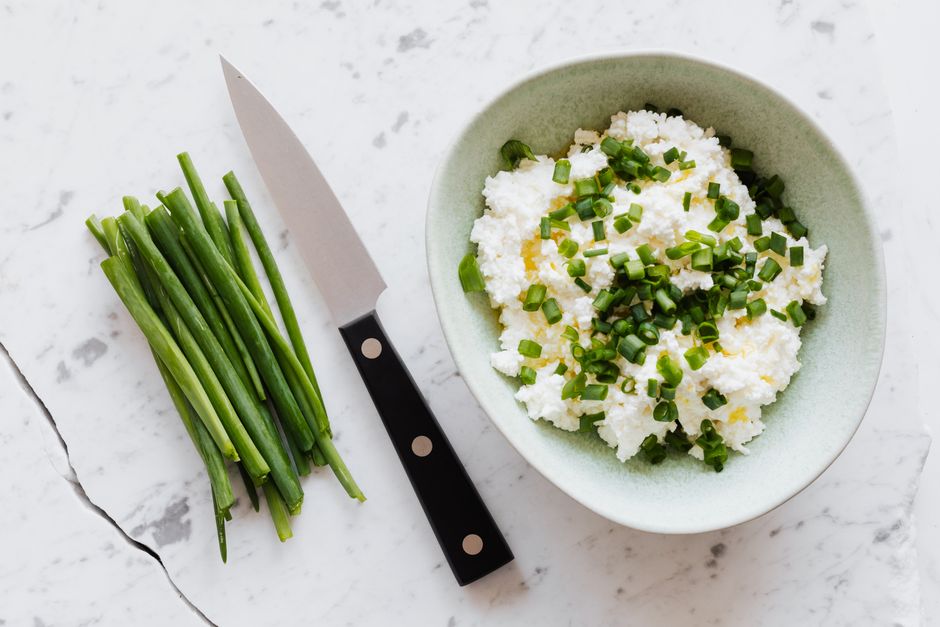
Cottage cheese has quietly become one of the most talked-about foods in American grocery carts. A half-cup serving of low-fat cottage cheese contains about 12 to 14 grams of protein, depending on the brand and fat content. That puts it in the same range as two large eggs, and it delivers that protein with relatively few calories. The exact number shifts a bit based on whether you buy full-fat, low-fat, or fat-free, and whether the curds are large or small.
How Much Protein Is in a Serving of Cottage Cheese?
A standard half-cup serving of cottage cheese provides roughly 11 to 15 grams of protein. The USDA’s FoodData Central database lists low-fat (2% milkfat) cottage cheese at about 12 grams per half cup. Full-fat versions land near 11 to 12 grams. Fat-free versions often come in slightly higher, around 13 to 15 grams, because manufacturers sometimes add extra milk protein to improve texture.
Serving size is where most people get tripped up. The nutrition label is based on half a cup, which is about 4 ounces by weight. Many people scoop closer to a full cup without realizing it, which doubles everything — protein, calories, sodium, and fat.
Here is a rough comparison of common types, per half-cup serving:
| Type | Protein (approx.) | Calories (approx.) |
|---|---|---|
| Fat-free (0%) | 13–15 g | 80–90 |
| Low-fat (1–2%) | 12–14 g | 90–100 |
| Full-fat (4%) | 11–12 g | 110–120 |
These numbers vary by brand. Some large-curd products use a different curd-setting process that changes moisture content, which in turn changes protein density by weight. Always check the specific label if you are tracking protein closely.
Why Cottage Cheese Has So Much Protein
Cottage cheese is a fresh cheese made by adding acid or bacterial cultures to milk, which causes the milk proteins to coagulate into curds. The curds are then drained and rinsed, leaving a concentrated protein mass. The liquid that drains off — whey — carries some protein with it, but the casein proteins stay behind in the curds.
Casein makes up about 80% of the protein in cow’s milk. It digests more slowly than whey, which is one reason cottage cheese keeps you feeling full for a while. That slow digestion is a well-established property of casein, not a marketing claim.
The protein in cottage cheese is a complete protein. That means it contains all nine essential amino acids your body cannot make on its own. This is true of most dairy proteins, and it is one reason cottage cheese shows up in discussions about muscle maintenance and healthy aging.
How Does Cottage Cheese Compare to Other High-Protein Foods?
Cottage cheese holds its own against most common protein sources. Greek yogurt is the closest comparison, and the two are often swapped for each other in recipes. The table below shows approximate protein per comparable serving.
| Food | Serving | Protein (approx.) |
|---|---|---|
| Cottage cheese (low-fat) | ½ cup | 12–14 g |
| Greek yogurt (plain, nonfat) | ½ cup | 12–15 g |
| Regular yogurt | ½ cup | 5–6 g |
| Large egg | 1 egg | 6 g |
| Chicken breast | 3 oz cooked | 26 g |
| Lentils | ½ cup cooked | 9 g |
The key difference is density. Cottage cheese delivers its protein in a soft, moist form that is easy to eat and does not require cooking. For people who struggle to hit protein targets — older adults, people recovering from illness, or anyone with a small appetite — that matters more than the raw number.
One thing worth knowing: regular yogurt is not a protein equivalent. It has roughly half the protein of cottage cheese or Greek yogurt per serving because it is not strained. If you are buying yogurt for protein, the strained kind is the one that counts.




Does the Fat Content Change the Protein?
Fat content changes the calories far more than it changes the protein. A half cup of full-fat cottage cheese has about 11 to 12 grams of protein and around 110 to 120 calories. The fat-free version has slightly more protein and roughly 80 to 90 calories.
The difference comes down to water and added milk solids. When fat is removed, manufacturers often add extra nonfat milk powder or milk protein concentrate to keep the texture from becoming watery. That can nudge protein up a gram or two. It is not a large difference, and choosing full-fat over fat-free is not going to meaningfully change your protein intake.
What does change is saturated fat. Full-fat cottage cheese contains more saturated fat than the low-fat or fat-free versions. Current dietary guidance in the United States recommends limiting saturated fat to less than 10% of daily calories. If you eat cottage cheese daily, the lower-fat versions make that target easier to hit. That is a general dietary pattern recommendation, not a statement about cottage cheese specifically.
How Much Protein Do You Actually Need?
The Recommended Dietary Allowance for protein is 0.8 grams per kilogram of body weight per day for most healthy adults. For a 150-pound person, that works out to about 54 grams of protein daily. This is the amount needed to prevent deficiency, not necessarily the amount that is optimal for muscle health, especially as you age.
Research on protein and aging suggests that older adults may benefit from more — often cited in the range of 1.0 to 1.2 grams per kilogram per day. Some studies in people doing resistance training point higher still. The evidence here is not fully settled, and recommendations vary by source. What is clear is that many older adults fall short of even the basic RDA.
Cottage cheese fits into this picture because it is a convenient way to add protein without cooking. A half cup at breakfast adds 12 to 14 grams. Pair it with eggs or a handful of nuts and you are well into a meaningful protein load for the morning.
Protein distribution across the day may matter too. Some research suggests that spreading protein more evenly across meals supports muscle maintenance better than loading most of it at dinner. This is an active area of study, and the findings are not uniform. Still, it is a reasonable argument for including protein at breakfast, where many Americans get very little.
Is Cottage Cheese a Good Protein Source for Everyone?
For most people, yes. Cottage cheese is widely tolerated and provides high-quality protein along with calcium and some B vitamins. But it is not the right choice for everyone.
- Lactose intolerance: Cottage cheese contains lactose, though less than milk. Some people tolerate it; others do not. Lactose-free versions exist.
- Milk allergy: This is different from lactose intolerance and involves an immune reaction to milk proteins. Cottage cheese is not safe for people with a milk allergy.
- Sodium sensitivity: Cottage cheese can be high in sodium. Some brands have 300 to 400 milligrams per half cup or more. If you are watching sodium for blood pressure, check labels and compare brands.
- Kidney disease: People with advanced kidney disease are often advised to limit protein and phosphorus. Cottage cheese is high in both. Anyone in this group should follow guidance from their kidney care team, not general nutrition advice.
Cottage cheese is also a common food in weight-loss discussions because it is filling relative to its calories. The protein and the slow-digesting casein both contribute to satiety. That said, no single food drives weight loss. The evidence supports overall dietary patterns, not individual foods.
Does Cooking or Blending Cottage Cheese Change the Protein?
No. Protein content stays the same whether you eat cottage cheese cold, blend it into a smoothie, or bake it into a dish. Heat can change the texture — it may separate or become grainy — but it does not destroy the protein or reduce the amount.
Blending is popular because it creates a smooth, creamy base that works in dips, sauces, and even desserts. The protein per serving does not change. What changes is how much you eat. Blended into a dip, it is easy to eat more than half a cup without noticing.
One practical note: if you are using cottage cheese as a protein source in a recipe, measure it before blending. Once it is mixed into something else, it is much harder to track how much you actually got.
Frequently Asked Questions
How much protein is in one cup of cottage cheese?
One cup of low-fat cottage cheese contains about 24 to 28 grams of protein, roughly double the half-cup serving. The exact amount depends on the brand and fat content.
Is cottage cheese higher in protein than Greek yogurt?
They are close, with both providing roughly 12 to 15 grams per half cup. Cottage cheese tends to be slightly higher in some brands, but the difference is small.
Can I eat cottage cheese every day for protein?
Yes, for most healthy adults, daily cottage cheese fits well into a balanced diet. If you have kidney disease, a milk allergy, or need to limit sodium, talk to your doctor first.
Does full-fat cottage cheese have less protein than fat-free?
Full-fat cottage cheese usually has about 11 to 12 grams per half cup, while fat-free has about 13 to 15 grams. The difference is small and mostly reflects added milk solids in lower-fat versions.
