
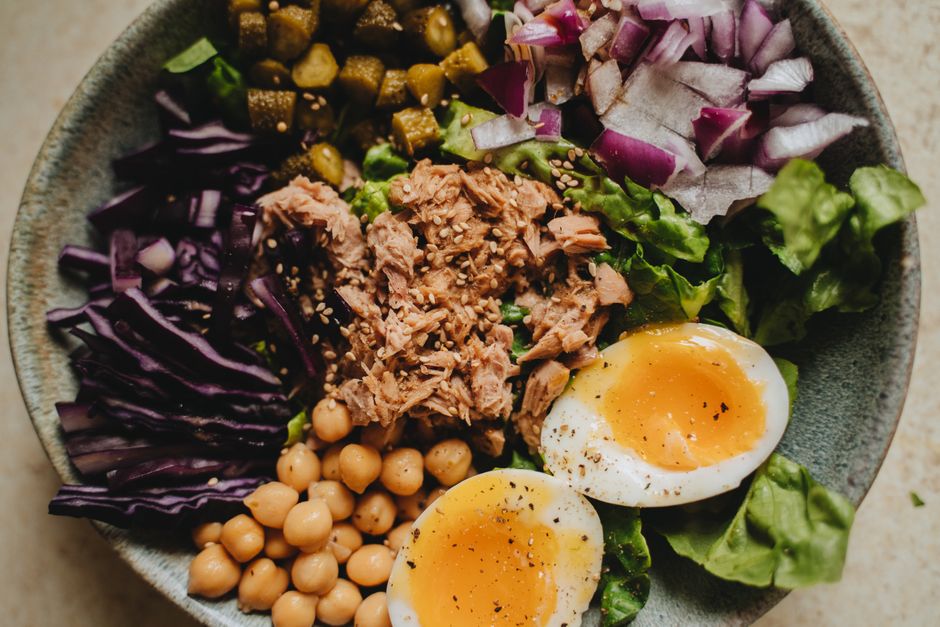
Canned tuna is one of the cheapest, easiest sources of protein you can keep in your kitchen. A standard 5-ounce can of tuna packed in water holds roughly 20 to 25 grams of protein once you drain the liquid. That is a real amount — close to what you would get from a 3-ounce chicken breast. The exact number shifts a little depending on the brand, the type of tuna, and how much water or oil gets drained off. But the range is reliable, and it is why canned tuna shows up in so many high-protein meal plans.
How Much Protein Is in a Can of Tuna?
Most cans sold in the US are 5 ounces by weight. After draining, you are left with about 3 to 4 ounces of actual fish. That drained portion delivers roughly 20 to 25 grams of protein.
The USDA keeps nutrient data on canned tuna, and the numbers are fairly consistent across light and white varieties. Light tuna (usually skipjack) tends to land near the lower end. White tuna (albacore) tends to land near the higher end, because it has slightly more protein per ounce and often less water in the can.
Here is a rough breakdown by drained weight:
- 3 ounces drained: about 20 to 22 grams of protein
- 4 ounces drained: about 25 to 27 grams of protein
- A whole 5-ounce can, drained: about 20 to 25 grams
Those figures come from standard USDA reference values and are close enough for everyday planning. If you are tracking protein precisely, check the label on your specific brand. Manufacturers can vary by a few grams.
Does the Type of Tuna Change the Protein Amount?
The type of tuna matters, but less than most people think. Albacore (white) tuna generally has a bit more protein and more fat than skipjack (light) tuna. The difference is small — a couple of grams per can at most.
The bigger variable is what the tuna is packed in. Tuna packed in water is drained before eating, so you get the fish and little else. Tuna packed in oil adds fat and calories. If you drain oil-packed tuna well, the protein is similar to water-packed. If you eat the oil, you add calories but not much protein.
Here is how the common types compare, using typical drained values per 3 ounces:
| Type | Protein (per 3 oz drained) | Notes |
|---|---|---|
| Light tuna in water | About 20 grams | Leanest option |
| White tuna in water | About 22 grams | Slightly more protein and fat |
| Light tuna in oil | About 20 grams | More calories if oil is eaten |
| White tuna in oil | About 22 grams | More calories if oil is eaten |
These are approximate. Different brands and different catch sizes shift the numbers a little. The label is always the final word.
How Does Canned Tuna Compare to Other Protein Sources?
Canned tuna holds its own against most everyday proteins. Per ounce, it is one of the densest protein foods you can buy. A 3-ounce drained portion gives you roughly the same protein as 3 ounces of chicken breast, and more than a large egg or a cup of milk.
What makes tuna stand out is convenience and shelf life. It needs no cooking, keeps for years unopened, and costs a fraction of fresh meat per gram of protein. For anyone building meals around protein, that combination is hard to beat.
It is also very lean. A 3-ounce portion of water-packed light tuna has well under 1 gram of fat and around 100 calories. That makes it useful for people watching calories who still want to hit a protein target.





Is Canned Tuna a Complete Protein?
Yes. Tuna is an animal protein, so it contains all nine essential amino acids your body cannot make on its own. That makes it a complete protein, the same category as eggs, meat, and dairy.
This matters if tuna is a main protein source in your diet. Plant proteins often fall short on one or more essential amino acids and need to be combined. Tuna does not have that problem. A can of tuna on a salad or mixed with beans gives you a complete amino acid profile in one sitting.
One clarification worth making: the old idea that you must combine certain plant foods at every meal to get “complete” protein is outdated. Your body pools amino acids across the day. But for tuna specifically, the point is simple — it is complete on its own, no combining needed.
How Much Protein Do You Actually Need?
The average adult needs about 0.8 grams of protein per kilogram of body weight per day. For a 150-pound person, that is roughly 55 grams. A single can of tuna covers close to half of that.
People who are physically active, older adults, and those recovering from illness often need more. Some research suggests higher intakes help preserve muscle with age and support training. The exact amount is debated, and needs vary by person.
What is not debated is that most Americans get enough protein overall. The question is usually about distribution — spreading protein across meals rather than loading it all at dinner. A can of tuna is an easy way to add 20-plus grams to a meal that might otherwise be light on protein.
Does Canned Tuna Have Any Downsides?
Canned tuna is nutritious, but it is not something to eat in unlimited amounts. The main concern is mercury.
Mercury builds up in large predatory fish, and tuna is one of them. Light tuna (skipjack) generally has less mercury than white tuna (albacore). The difference is significant enough that guidance treats them differently.
For most healthy adults, eating a few servings of light tuna per week is considered safe by US regulatory and health agencies. Albacore is typically limited to fewer servings because of its higher mercury levels. Pregnant women, women who may become pregnant, nursing mothers, and young children are advised to be more careful and to choose lower-mercury options.
If you are pregnant or feeding a young child, follow the current guidance from your doctor or a health agency rather than guessing. The recommendations for these groups are specific and have been updated over time.
There is also sodium to consider. Canned tuna is often packed in salt water or broth, which adds sodium. If you are watching your salt intake, look for low-sodium or no-salt-added versions and check the label.
How to Get the Most Protein From a Can
Getting the full protein value comes down to a few simple habits.
- Drain the liquid well. Water and oil add no protein.
- Use the whole can if you want the full 20 to 25 grams. Half a can gives you about half.
- Check the label for the drained weight and protein per serving, since brands vary.
- Pair it with other protein foods if you are aiming higher — beans, eggs, or Greek yogurt work well.
One practical note: the protein number on the label usually refers to the drained product, not the whole can with liquid. That is the number you want. If a label lists protein per serving and the can holds two servings after draining, multiply accordingly.
Frequently Asked Questions
How much protein is in a 5 oz can of tuna?
A standard 5-ounce can of tuna packed in water provides roughly 20 to 25 grams of protein after draining. The exact amount depends on the brand and whether it is light or white tuna.
Is canned tuna a good source of protein?
Yes. Canned tuna is one of the most protein-dense foods per ounce and is a complete protein, meaning it contains all nine essential amino acids. It is also low in fat and calories when packed in water.
Does albacore tuna have more protein than light tuna?
Albacore (white) tuna has slightly more protein than light tuna, usually a couple of grams more per can. The difference is small, and both are strong protein sources.
How much canned tuna is safe to eat each week?
For most healthy adults, a few servings of light tuna per week is considered safe by US health agencies, while albacore is typically limited to fewer servings due to higher mercury levels. Pregnant women and young children should follow specific guidance from their doctor.
