
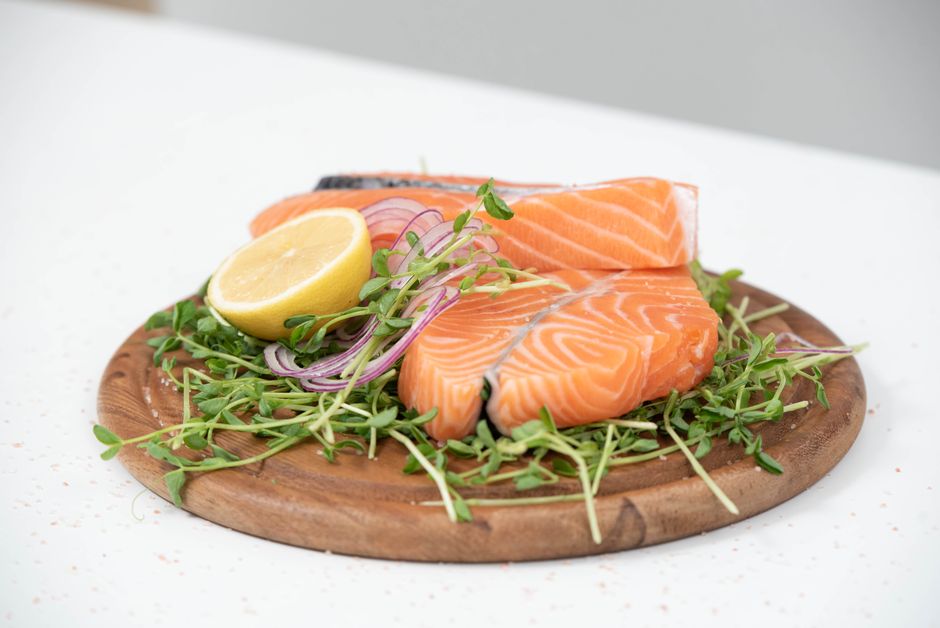
Salmon is one of the best food sources of omega-3 fatty acids, but the amount varies a lot depending on whether the fish is farmed or wild and whether it is fresh, frozen, or canned. Farmed Atlantic salmon generally contains more omega-3s than wild salmon — often roughly 1.5 to 2 grams per 3-ounce cooked serving, compared with about 0.5 to 1 gram in the same amount of wild salmon. Canned salmon can be a good source too, especially canned wild pink or sockeye, though the exact amount depends on the species and how the fish was packed.
How Much Omega 3 Is in Farmed vs Wild Salmon?
Farmed salmon usually wins on omega-3 content. That surprises people who assume wild is always better.
The reason comes down to diet. Farmed salmon are fed a controlled feed that includes fish oil and fish meal, which is rich in the two main omega-3s found in seafood: EPA (eicosapentaenoic acid) and DHA (docosahexaenoic acid). Because their diet is managed, their fat content — and their omega-3 content — tends to be higher and more consistent.
Wild salmon eat what they find in the ocean. Their diet varies, and they swim farther and burn more energy, so they carry less fat overall. Less fat means less stored omega-3.
Here is the general range for a 3-ounce cooked serving:
- Farmed Atlantic salmon: roughly 1.5 to 2 grams of combined EPA and DHA
- Wild Atlantic salmon: around 1 to 1.5 grams (this species is now rare in most markets)
- Wild coho and sockeye: roughly 0.5 to 1 gram
- Wild chum and pink: at the lower end, about 0.5 grams or less
These figures come from USDA nutrient data and are widely cited in nutrition references. Exact numbers shift a little based on the fish’s age, what it ate, and the season it was caught. Treat the ranges as a guide, not a fixed label.
One clarification worth knowing: “farmed” and “wild” describe how the fish lived, not how healthy it is. Both are nutritious. The omega-3 difference is real, but it is not the only thing that matters — more on that below.
Does Canned Salmon Have as Much Omega 3 as Fresh?
Canned salmon holds onto its omega-3s well. The canning process does not destroy these fats in any meaningful way.
What matters more is the species in the can. Most canned salmon sold in the US is wild-caught pink, sockeye, or chum. Pink and chum tend to be lower in fat, so they carry less omega-3 than a farmed Atlantic fillet. Sockeye is a bit richer.
As a rough guide, a 3-ounce serving of canned pink salmon provides around 0.7 to 1 gram of combined EPA and DHA. Canned sockeye tends to run a little higher. These are still solid amounts — a can of salmon can deliver a meaningful share of what most adults need in a day.
Two practical points about canned salmon:
- If the can includes skin and bones, you also get calcium from the softened bones. That is a genuine bonus, not a marketing claim.
- Canned salmon packed in water versus oil does not change the omega-3 content much. The fat that matters is inside the fish, not the liquid around it.
Frozen salmon is nutritionally similar to fresh. Freezing does not strip out omega-3s. So if fresh is expensive or hard to find, frozen is a reasonable substitute.
Why Does the Type of Salmon Change the Omega 3 Amount?
Fat content is the main driver. Omega-3s are stored in the fish’s fat, so a fattier fish carries more of them.
Farmed salmon are bred and fed to grow quickly and carry more fat. Their feed is formulated to be rich in the oils that become EPA and DHA. This is why farmed Atlantic salmon consistently lands at the top of the omega-3 range.
Wild salmon live a very different life. They migrate long distances, which burns fat. Their diet is whatever the ocean provides. As a result, their fat content — and their omega-3 content — is lower and varies more from fish to fish.
Species matters too. King (chinook) and sockeye tend to be fattier than pink and chum. So a wild king fillet may carry more omega-3 than a wild pink, even though both are “wild.”
There is a common mix-up here. People sometimes think “wild” automatically means more omega-3. For salmon, it usually means the opposite. The farmed fish is typically the richer source.




How Much Salmon Do You Need for Your Omega 3?
Most adults need somewhere around 250 to 500 milligrams of combined EPA and DHA per day, according to widely cited international guidance. That works out to roughly two servings of fatty fish per week.
A single 3-ounce serving of farmed salmon can cover a day’s target on its own. Wild salmon or canned pink salmon may cover about half to a full day’s target, depending on the species.
So the practical answer is simple: one to two servings of salmon per week puts most people in a good range. You do not need to eat it daily.
A few things to keep in mind:
- Serving size matters. Three ounces is about the size of a deck of cards.
- How you cook it matters little for omega-3s, as long as you do not overcook and drain away the fat. Baking, grilling, and poaching all work.
- If you rarely eat fish, salmon is one of the most efficient ways to get EPA and DHA from food.
This is general nutrition information, not a personal recommendation. Your needs can differ based on your health, diet, and any medical conditions. If you are unsure, a doctor or registered dietitian can help.
Is Farmed Salmon Safe to Eat?
Farmed salmon is widely considered safe to eat, and it is a regular part of many people’s diets. Regulatory agencies in the US and Europe set limits on contaminants in farmed fish, and farmed salmon sold commercially is required to meet those limits.
That said, there are honest open questions. Some research has raised concerns about contaminant levels in farmed salmon compared with wild, and about how salmon are raised. The evidence is mixed, and different studies have reached different conclusions. It is fair to say this is a debated area rather than a settled one.
What most nutrition guidance agrees on: the health benefits of eating fatty fish generally outweigh the concerns for most adults. That balance can shift for people who eat large amounts of the same type of fish very often.
If you are pregnant, breastfeeding, or feeding young children, follow the specific fish guidance from your country’s health agency. Those recommendations are set for those groups and are more careful than general adult advice. This article cannot substitute for that guidance.
Does Cooking or Canning Destroy Omega 3?
No. Cooking and canning do not meaningfully destroy the omega-3s in salmon.
EPA and DHA are fairly stable fats. Normal cooking methods — baking, grilling, poaching, pan-searing — leave the omega-3 content largely intact. Canning, which uses heat and pressure, also preserves these fats well.
The bigger risk is losing fat, not destroying it. If you cook salmon at very high heat and let the fat drip away, you lose some omega-3s along with it. That is a small effect, not a major one.
What you should avoid is letting salmon sit around and go rancid. Omega-3 fats can oxidize over time, which is why proper storage matters. Keep fresh salmon cold and use it within a couple of days, or freeze it. Keep canned salmon in a cool, dark place and use it by its date.
Which Salmon Should You Choose?
There is no single best answer, because it depends on what you want.
If your goal is the most omega-3 per serving, farmed Atlantic salmon is the strongest choice. It is also usually the most affordable and widely available.
If you prefer wild-caught fish, wild sockeye or king will give you more omega-3 than wild pink or chum. Canned wild sockeye is a good middle ground — convenient, shelf-stable, and reasonably rich in omega-3s.
If cost or convenience is the deciding factor, canned pink salmon is still a worthwhile source. It may not match a farmed fillet, but it delivers real omega-3s and is one of the cheapest ways to get them.
The best choice is often the one you will actually eat regularly. A salmon option you enjoy twice a week beats a “better” one you never cook.
Frequently Asked Questions
How much omega 3 is in a 3-ounce serving of farmed salmon?
Farmed Atlantic salmon typically provides roughly 1.5 to 2 grams of combined EPA and DHA per 3-ounce cooked serving. Exact amounts vary with the fish’s diet and fat content.
Is canned salmon as good a source of omega 3 as fresh salmon?
Canning preserves omega-3s well, so canned salmon is still a good source. The amount depends mainly on the species — canned sockeye tends to be higher than canned pink.
Does wild salmon have more omega 3 than farmed salmon?
No, farmed salmon usually has more. Farmed fish are fed a controlled diet rich in fish oil, which raises their fat and omega-3 content above most wild salmon.
How much salmon should I eat per week for omega 3?
Most adults are advised to eat about two servings of fatty fish per week, which is roughly 250 to 500 milligrams of combined EPA and DHA per day. One to two salmon servings weekly fits that range for most people.
