
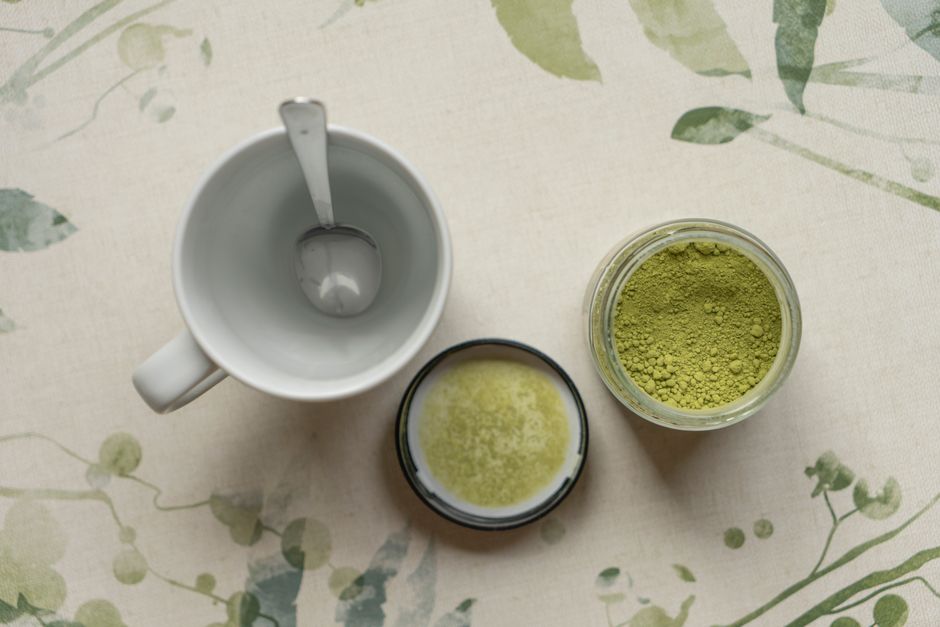
Matcha delivers roughly 30 to 70 milligrams of caffeine per half-teaspoon serving, depending on the grade of the powder and how it is prepared. That is less than a typical 8-ounce cup of brewed coffee, which usually contains about 95 milligrams, but more than a standard cup of green tea. The exact amount varies because matcha is a powder made from whole ground tea leaves, not an infusion, so you consume the entire leaf rather than steeping and discarding it.
How Much Caffeine Is In Matcha Compared to Coffee and Green Tea?
Matcha sits between brewed green tea and coffee on the caffeine scale. But the range is wide, and that surprises people who expect a fixed number.
Here is how the common sources compare per typical serving:
| Drink | Typical Serving | Caffeine (approximate) |
|---|---|---|
| Matcha (whisked powder) | 1/2 teaspoon (about 1 gram) | 30–70 mg |
| Brewed green tea | 8 oz | 25–30 mg |
| Brewed black tea | 8 oz | 40–50 mg |
| Brewed coffee | 8 oz | ~95 mg |
| Espresso | 1 shot (1 oz) | ~64 mg |
These figures come from established food composition data maintained by the USDA and similar reference sources. The matcha range is broad because leaf quality, growing conditions, and preparation method all shift the number.
One clarification worth making: matcha and green tea come from the same plant, Camellia sinensis. The difference is how they are grown and processed. Matcha leaves are shaded before harvest, which raises chlorophyll and certain compounds. After harvest, the stems and veins are removed, and the remaining leaf is stone-ground into a fine powder. You whisk that powder into water and drink the whole thing. With regular green tea, you steep the leaves and throw them away, so you extract only a fraction of what is inside.
Why Does Matcha Caffeine Content Vary So Much?
No two matcha powders are identical. Several factors push the caffeine number up or down.
- Leaf age and position. Younger leaves and buds tend to contain more caffeine than older, lower leaves.
- Shading. Matcha is grown under shade for part of its cycle. This affects the balance of compounds in the leaf.
- Grade. Ceremonial-grade matcha is made from the youngest, highest-quality leaves. Culinary-grade matcha may use older leaves and can differ in caffeine content.
- How much powder you use. A traditional serving is about 1 gram (roughly half a teaspoon). Many cafe drinks use more, sometimes 2 grams or more per serving.
- Added ingredients. A matcha latte made with a large scoop of powder and a small amount of milk will have more caffeine than a lightly whisked traditional bowl.
The practical takeaway: if you are tracking caffeine, the powder amount matters more than the label. A drink advertised as “matcha” could contain anywhere from a modest 30 milligrams to well over 100 milligrams depending on how it is made.
Does Matcha Caffeine Feel Different From Coffee Caffeine?
Many people report that matcha gives a calmer, more sustained alertness than coffee, even at similar caffeine doses. Whether that is a real pharmacological difference or partly expectation is genuinely debated.
The proposed explanation involves two things. First, matcha contains L-theanine, an amino acid found almost exclusively in tea. Some research suggests L-theanine can promote relaxation without drowsiness and may soften some of caffeine’s jittery effects. Second, because you consume the whole leaf, matcha delivers caffeine alongside a range of other compounds that are absorbed more slowly than the caffeine in coffee.
Here is where honesty matters. The interaction between L-theanine and caffeine has been studied, and some results are promising. But the studies are often small, use isolated supplements rather than actual matcha, and measure short-term outcomes. The evidence that matcha produces a distinctly “smoother” buzz in real-world drinking is not settled. It is a reasonable hypothesis with some supporting data, not a proven fact.
What is well established: caffeine itself is a stimulant that blocks adenosine, a molecule that promotes sleepiness. That mechanism is the same whether the caffeine comes from matcha, coffee, or a pill. Any difference in how it feels would come from the other compounds present, not the caffeine molecule itself.
How Much Caffeine Is Safe to Drink Per Day?
For most healthy adults, the FDA has cited 400 milligrams of caffeine per day as an amount not generally associated with dangerous negative effects. That is roughly four 8-ounce cups of brewed coffee.
At 30 to 70 milligrams per serving, matcha fits comfortably within that range for most people. Two or three servings a day would typically land between 60 and 210 milligrams, well under the 400-milligram mark.
But the 400-milligram figure is a general adult guideline, not a universal rule. Several groups need to be more careful:
- Pregnant women. Major health organizations generally advise limiting caffeine during pregnancy. The specific limit varies by organization, so it is worth checking current guidance from your own provider.
- People with anxiety or sleep disorders. Caffeine can worsen both. Individual sensitivity varies widely.
- People taking certain medications. Some drugs slow caffeine clearance, raising blood levels.
- People with heart conditions or high blood pressure. Caffeine can raise heart rate and blood pressure temporarily. Ask a clinician about your situation.
Caffeine affects people differently based on genetics, body weight, medications, and tolerance. A dose that feels fine for one person can cause palpitations or insomnia in another.
Can Matcha Cause Side Effects or Interact With Medications?
Matcha’s caffeine can produce the same side effects as any caffeinated drink: jitteriness, rapid heartbeat, upset stomach, headache, and trouble sleeping. Consumed late in the day, it can disrupt sleep even in people who feel fine at the time.
There is one interaction specific to matcha and other green teas worth knowing. Compounds in green tea called catechins can reduce the absorption of iron from plant foods. This matters most for people at risk of iron deficiency, particularly those who eat little or no meat. If that describes you, drinking matcha between meals rather than with iron-rich food may help. This is a recognized nutritional interaction, not a rare edge case.
Green tea extracts sold as high-dose supplements have been linked to liver injury in some cases, though this is associated with concentrated supplements rather than brewed or whisked matcha. Drinking matcha is not the same as taking a concentrated extract.
Matcha also contains vitamin K, which can interact with blood-thinning medications like warfarin. People on these medications are usually advised to keep vitamin K intake steady rather than avoid it. If you take a blood thinner, talk to your clinician before making matcha a daily habit.
Does the Caffeine in Matcha Depend on How You Make It?
Yes, and this is the part most people overlook. The caffeine in your cup is mostly determined by how much powder you scoop, not by the brand name on the tin.
A traditional Japanese preparation uses about 1 gram of matcha, roughly half a teaspoon, whisked into hot water. That yields the 30 to 70 milligram range. A large cafe latte or a smoothie recipe might call for 2 grams or more, which could double or triple the caffeine.
Water temperature matters less for caffeine than it does for flavor. Caffeine is water-soluble and extracts readily. The bigger variables are powder quantity and whether other caffeinated ingredients are added.
If you want a consistent number, measure your powder with a scale rather than a spoon. Spoonfuls vary, and matcha is light and fluffy, so volume is an unreliable measure.
Is Matcha Lower in Caffeine Than You Think?
Matcha is often marketed as a low-caffeine alternative to coffee. That is only partly true.
Per serving, traditional matcha does contain less caffeine than a standard cup of coffee. But matcha is frequently served in larger, more concentrated portions than the traditional half-teaspoon, and many commercial matcha drinks contain added caffeine or use generous scoops. A large matcha latte can easily match or exceed a cup of coffee.
The honest position: matcha is a moderate-caffeine drink. It is not caffeine-free, and it is not automatically gentler than coffee. How much you actually get depends on the powder, the portion, and the preparation. If caffeine intake matters to you, treat matcha like any other caffeinated beverage and pay attention to how much you are using.
Frequently Asked Questions
How much caffeine is in a teaspoon of matcha?
A level half-teaspoon of matcha powder, about 1 gram, typically contains 30 to 70 milligrams of caffeine. A full teaspoon would roughly double that range.
Is matcha higher in caffeine than coffee?
No, a traditional serving of matcha usually has less caffeine than an 8-ounce cup of brewed coffee, which contains about 95 milligrams. However, large cafe matcha drinks with extra powder can exceed that amount.
Does matcha have more caffeine than regular green tea?
Yes, matcha generally has more caffeine per serving than brewed green tea because you consume the entire ground leaf rather than steeping and discarding it. Brewed green tea typically provides about 25 to 30 milligrams per 8 ounces.
Can I drink matcha if I am pregnant?
Most health organizations advise limiting total caffeine during pregnancy, and matcha counts toward that limit. Because specific guidance varies, check with your own healthcare provider about what is appropriate for you.
