
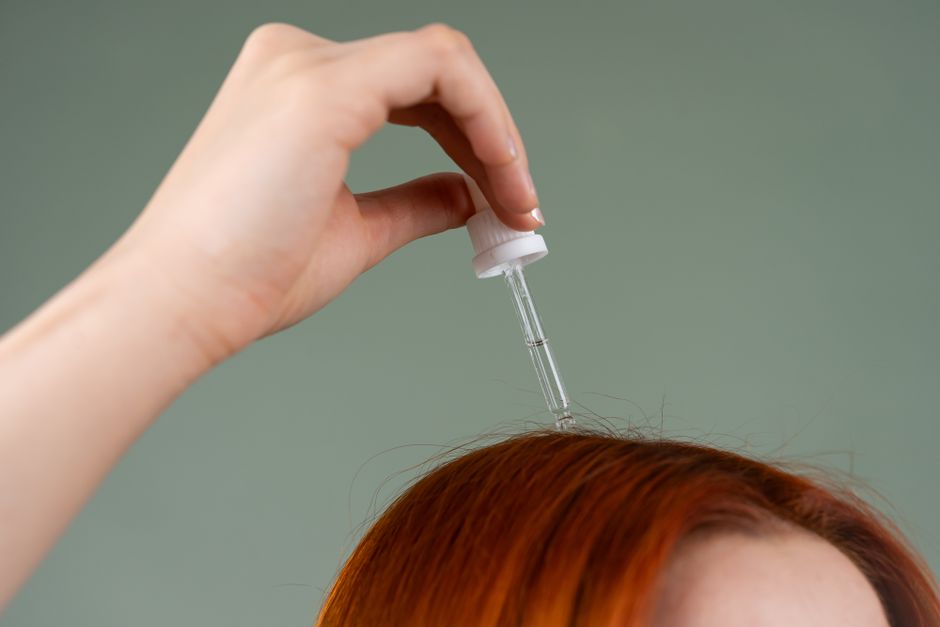
A hair follicle test needs very little hair. In most cases, a sample about the thickness of a pencil and roughly 1.5 inches (about 3.8 centimeters) long is enough. That amount usually comes from around 90 to 120 strands. For many labs, a sample the size of a cotton ball works fine.
If you have short hair, the collector can take more strands to make up for the shorter length. If you have very little hair on your head, body hair can sometimes be used instead. The exact amount depends on the lab doing the test and what it is looking for.
How Much Hair Is Needed For A Hair Follicle Test?
The standard sample is a pencil-thickness clump of hair cut close to the scalp. Length matters as much as thickness. Most labs want at least 1.5 inches of hair, because each half inch of hair represents roughly one month of growth.
That timing is the reason length matters. Hair grows at about half an inch per month on average. A 1.5-inch sample can cover roughly the past 90 days. A longer sample covers a longer window. A shorter sample covers less.
The collection itself is simple. The collector picks a small section of hair, usually from the back of the head near the crown, ties it together, and cuts it close to the scalp. The cut end is marked so the lab knows which end was closest to the scalp. That matters because the lab tests segments from the scalp end outward to build a timeline.
You will not notice a bald spot. The sample is small and spread across an area, not pulled from one single point.
Does Hair Length Or Thickness Matter More?
Length matters more than thickness for most tests. Thickness affects how much total sample the lab has to work with. Length affects how far back in time the test can look.
Here is the general relationship:
- A longer sample covers a longer time window.
- A thicker sample gives the lab more material to analyze.
- A short, thick sample may be enough for a test that only needs a recent window.
- A long, thin sample may be enough for a test that needs a longer window.
Most labs set a minimum. If the sample is too short or too thin, the lab may reject it and ask for a new collection. That is why collectors often take a bit more than the minimum when they can.
Hair texture also plays a role. Curly or coarse hair can be harder to lay flat and measure. Collectors account for this by taking a slightly larger sample. The goal is always the same: enough material to run the test reliably.
Can Body Hair Be Used Instead Of Head Hair?
Yes, in some cases. When head hair is too short or too sparse, a collector may use body hair. Common sites include the arms, legs, chest, or underarm area.
Body hair works differently. It grows more slowly than scalp hair. That means the same length of body hair covers a longer time window than the same length of scalp hair. Labs adjust their interpretation to account for this.
Not every lab accepts body hair, and not every test is validated for it. If you are being tested for a specific reason, the lab or the requesting party decides what is acceptable. This is worth asking about ahead of time if you know head hair may be an issue.


What Happens If There Is Not Enough Hair?
If the sample is too small, the lab has a few options. It may ask for a new collection. It may combine the sample with body hair if that is allowed. In some cases, the test simply cannot be completed.
This is more common than people expect. Very short haircuts, certain medical conditions, and some hair treatments can all reduce what is available. The collector usually checks the sample before it leaves the site to reduce the chance of a rejection later.
If you are worried about having enough hair, tell the collector before the appointment. They can plan where to take the sample and how much to take. Being upfront avoids a second visit.
Does Hair Treatment Affect The Sample?
Chemical treatments can affect a hair test. Bleaching, dyeing, relaxing, and perming all change the hair shaft. These changes can break down or remove some substances the test is looking for.
This does not mean a treated sample is useless. It means the results may be harder to interpret. A lab may report that a sample was chemically treated, which can affect how the results are read.
Some people assume that treating their hair will hide drug use. That is not reliable. Labs can often detect signs of treatment, and a treated sample may raise more questions than it answers. The honest position is that chemical treatment can alter results in ways that are not fully predictable, and no one should count on it to produce a specific outcome.
How Is The Sample Actually Analyzed?
The lab washes the hair sample first. This removes substances sitting on the outside of the hair, like sweat or environmental residue. What remains is what was incorporated into the hair as it grew.
Then the lab cuts the hair into segments. Each segment represents a period of growth. By testing each segment, the lab can estimate when a substance was present, not just whether it was present at all.
The hair is then broken down and analyzed with sensitive instruments. These instruments can detect very small amounts of a substance. That sensitivity is why such a small sample is enough.
One point worth knowing: a positive result shows that a substance was present in the hair. It does not by itself prove how it got there. External contamination, though uncommon after washing, is one reason labs and reviewers interpret results carefully. This is a limitation of the test, not a flaw in the sample size.
How Does Hair Testing Compare To Other Tests?
Hair testing is different from urine or blood testing in what it can show. A comparison helps make the differences clear.
| Test Type | Typical Detection Window | What It Generally Shows |
|---|---|---|
| Hair | Roughly 90 days, longer with longer hair | Use over time, based on hair growth |
| Urine | Usually a few days | Recent use |
| Blood | Usually hours to a few days | Very recent use |
| Saliva | Usually hours to a few days | Very recent use |
The detection windows above are general ranges. Exact timing varies by the substance, the person, and the lab. Hair’s long window is its main advantage. Its main limitation is that it cannot show exactly when within that window something happened, only roughly.
What Should You Expect At Collection?
The appointment is quick. It usually takes only a few minutes. You will be asked to sit still while the collector sections and cuts the hair.
You may feel a slight tug. There is no pain beyond that. The area is not shaved, so there is no visible bald patch afterward.
The collector handles chain of custody, which means the sample is documented and sealed so it can be traced. This is standard for any test used for legal, employment, or medical purposes.
If you have questions about how much hair will be taken or where, ask before the collection starts. Collectors deal with this every day and can usually answer on the spot.
Frequently Asked Questions
How much hair is needed for a hair follicle test?
About a pencil-thickness clump roughly 1.5 inches long, which is usually around 90 to 120 strands. Many labs accept a sample the size of a cotton ball.
Can I pass a hair follicle test with very short hair?
Short hair can still be tested if enough strands are collected to make up for the length. If head hair is too short or sparse, body hair may be used instead, depending on the lab.
Does bleaching or dyeing hair affect a hair follicle test?
Yes, chemical treatments can alter the hair shaft and affect results in ways that are not fully predictable. Labs can often detect that a sample was treated.
How far back does a hair follicle test go?
Roughly 90 days for a standard 1.5-inch sample, since hair grows about half an inch per month. Longer hair can cover a longer window.
