
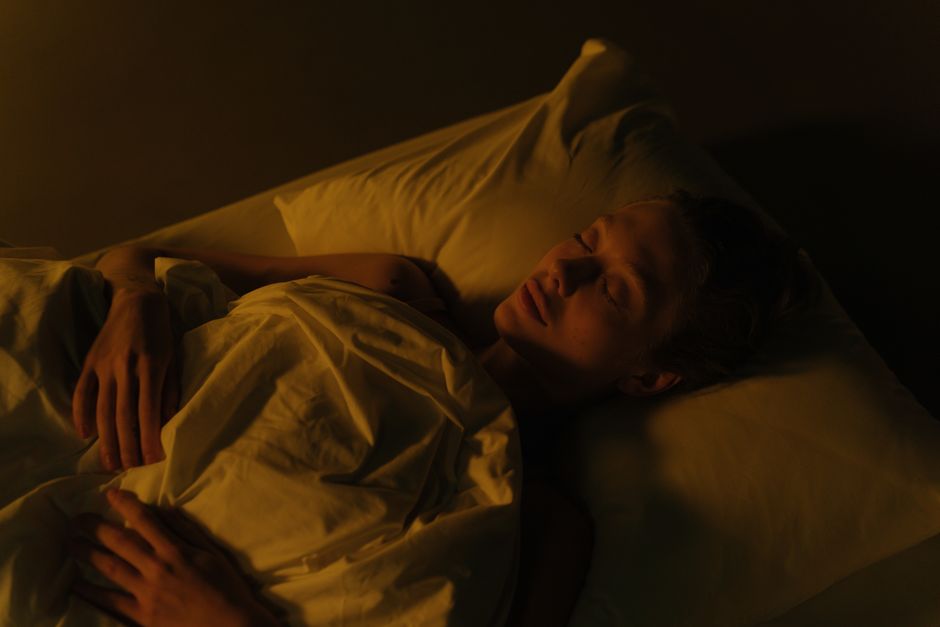
Most adults need about 1.5 to 2 hours of deep sleep each night. That is roughly 15 to 25 percent of your total sleep time. For an 8-hour night of sleep, you want around 90 minutes of deep sleep. This stage is when your body repairs tissue, builds bone and muscle, and strengthens your immune system. It is also when your brain clears out waste products. If you are not getting enough, you will feel it the next day.
What Exactly Is Deep Sleep?
Deep sleep is the third stage of non-rapid eye movement (NREM) sleep. It is also called slow-wave sleep or delta sleep. During this stage, your brain waves slow down to the lowest frequency. Your heart rate drops, breathing becomes slower, and your muscles relax.
This is the hardest stage to wake someone from. If you are woken during deep sleep, you will feel groggy and disoriented for a few minutes. That feeling is called sleep inertia. It happens because your brain was in a deep restorative state and did not have time to transition out of it.
Deep sleep is not the same as REM sleep. REM sleep is when you dream and your brain processes emotions and memories. Both are essential, but they serve different purposes. Deep sleep is about physical restoration. REM sleep is about mental restoration.
How Much Deep Sleep Should You Get Each Night?
Research published by the National Sleep Foundation shows that healthy adults spend 15 to 25 percent of their sleep time in deep sleep. For a person sleeping 7 to 9 hours, that works out to 1.5 to 2 hours of deep sleep. The exact number varies by age and individual health.
Children and teenagers need more deep sleep. Their bodies are growing and developing rapidly. A 10-year-old might spend 40 percent of sleep time in deep sleep. That percentage decreases with age. By age 60, deep sleep may drop to less than 10 percent of total sleep time.
There is no single number that works for everyone. But if you consistently get less than 1 hour of deep sleep per night, your body is not fully recovering. You might notice you get sick more often, feel tired during the day, or struggle to build muscle after exercise.
What Happens When You Do Not Get Enough Deep Sleep?
Your body pays a price when deep sleep is cut short. The CDC links insufficient sleep to chronic conditions like obesity, type 2 diabetes, cardiovascular disease, and depression. Deep sleep specifically plays a role in clearing beta-amyloid from the brain. That is a protein linked to Alzheimer’s disease.
Short-term effects are easier to notice. You may feel foggy-headed, irritable, or crave sugary foods. Your reaction time slows down. Studies in the journal Sleep found that people who miss deep sleep perform worse on memory tests the next day.
Long-term effects are more serious. Chronic deep sleep deprivation raises cortisol levels. High cortisol makes it harder to fall asleep the next night. It also increases inflammation throughout the body. Over years, this pattern raises the risk for heart disease and stroke.
Some people report that they do not feel rested even after 8 hours in bed. That can be a sign that their sleep quality is poor. Deep sleep may be disrupted without them knowing it. Sleep apnea, for example, can pull you out of deep sleep dozens of times per hour without fully waking you up.





What Actually Increases Deep Sleep?
Several strategies have evidence behind them. The strongest research points to temperature, timing, and exercise.
Cooler room temperature. Your body temperature naturally drops before deep sleep. If your room is too warm, your body struggles to cool down. The National Institutes of Health recommends a bedroom temperature between 60 and 67 degrees Fahrenheit for optimal sleep.
Consistent sleep schedule. Going to bed and waking up at the same time trains your body to cycle through sleep stages properly. Deep sleep tends to occur more in the first half of the night. If you shift your schedule drastically on weekends, you disrupt that pattern.
Exercise during the day. Research from the University of Georgia found that 30 minutes of moderate aerobic exercise increased deep sleep by 20 percent in older adults. The effect was strongest when exercise happened in the morning or early afternoon. Evening exercise close to bedtime can keep some people awake.
Limit alcohol before bed. Alcohol may help you fall asleep faster, but it suppresses deep sleep. A study in Alcoholism: Clinical and Experimental Research showed that even moderate drinking before bed reduces deep sleep time by 20 to 30 percent. Your body processes alcohol during the night, pulling you into lighter sleep stages.
There are no supplements proven to increase deep sleep in healthy people. Melatonin helps with falling asleep but does not reliably increase deep sleep. Magnesium glycinate is widely claimed to improve sleep quality, but the evidence is mixed. Some people report benefits, but strong clinical studies are limited.
| Factor | Effect on Deep Sleep | Strength of Evidence |
|---|---|---|
| Cool bedroom (60-67°F) | Increases duration | Strong |
| Consistent sleep schedule | Improves timing and quality | Strong |
| Daytime exercise | Increases duration | Strong |
| Alcohol before bed | Reduces duration | Strong |
| Melatonin supplements | Helps falling asleep only | Moderate |
| Magnesium glycinate | Mixed results | Weak |
Common Misconceptions About Deep Sleep
One of the biggest myths is that you can “catch up” on deep sleep over the weekend. That is not how it works. Your body does not bank deep sleep like savings. If you miss it during the week, you cannot fully recover it later. You might get a little extra on Saturday night, but it is not the same as consistent nightly deep sleep.
Another misconception is that sleep trackers give accurate deep sleep readings. Consumer devices like smartwatches and fitness bands estimate sleep stages using movement and heart rate. They are not as accurate as clinical polysomnography. A study in the Journal of Clinical Sleep Medicine found that popular trackers overestimated deep sleep by 20 to 30 percent. Use them as general guides, not medical tools.
Some people believe that eating before bed helps you sleep deeper. The opposite is often true. Large meals close to bedtime can cause acid reflux or indigestion, which pulls you out of deep sleep. A light snack like a banana or a small bowl of oatmeal is fine. Heavy meals are not.
There is also a widespread claim that you need exactly 2 hours of deep sleep every night. That number is an average, not a rule. Some healthy adults function well on 1 hour of deep sleep. Others need closer to 2.5 hours. What matters most is waking up feeling refreshed and staying alert during the day.
When Should You Talk to a Doctor?
If you consistently feel tired after 7 to 9 hours of sleep, talk to your doctor. That is a sign that your sleep quality may be poor, even if you think you are sleeping through the night. A sleep study can measure your deep sleep time accurately.
Certain conditions can steal deep sleep without you knowing. Sleep apnea is the most common. It causes brief pauses in breathing that pull you out of deep sleep. Other conditions include restless legs syndrome, chronic pain, and nocturia (frequent urination at night).
Medications can also affect deep sleep. Some antidepressants, beta-blockers, and corticosteroids reduce deep sleep time. If you take any of these and feel unrested, ask your doctor about alternatives. Do not stop taking prescribed medication without medical guidance.
Your doctor can also check for underlying issues like thyroid problems or vitamin deficiencies. Low iron, for example, can cause restless legs and disrupt deep sleep. A simple blood test can identify these problems.
What to Avoid for Better Deep Sleep
- Caffeine after 2 PM. Caffeine blocks adenosine, a chemical that promotes deep sleep. Its half-life is about 5 hours. A 4 PM coffee can still be affecting your brain at 10 PM.
- Blue light from screens. Phones, tablets, and computers emit blue light that suppresses melatonin. Your brain reads it as daylight. Stop screen use 1 hour before bed, or use blue-light blocking glasses.
- Irregular sleep times. Going to bed at 10 PM one night and 2 AM the next throws off your circadian rhythm. Your body does not know when to enter deep sleep.
- Late heavy meals. Digestion takes energy. Your body diverts resources away from sleep to process food. Eat your last meal at least 3 hours before bed.
- Stress before bed. High stress levels keep cortisol elevated. Cortisol is a wakefulness hormone. It directly opposes the relaxation needed for deep sleep.
How to Know If You Are Getting Enough Deep Sleep
The simplest test is how you feel during the day. If you wake up without an alarm, feel alert by mid-morning, and do not need caffeine to function, you are likely getting enough deep sleep. If you rely on multiple cups of coffee to stay awake, your sleep quality may be lacking.
Another sign is your ability to fall asleep at night. If you fall asleep within 15 to 20 minutes of lying down, that is a good sign. If you fall asleep instantly, you may be sleep-deprived. If you lie awake for more than 30 minutes, you may have insomnia.
Sleep trackers can give you a rough estimate. But do not obsess over the numbers. The clinical standard for deep sleep measurement is an EEG, which records brain waves directly. Consumer devices are improving but are not there yet.
If you are concerned, a sleep study is the gold standard. It can tell you exactly how much deep sleep you get and whether there are disruptions you cannot feel. Most insurance covers sleep studies if a doctor orders one for suspected sleep apnea or other disorders.
Frequently Asked Questions
How much deep sleep do I need per night?
Most adults need 1.5 to 2 hours of deep sleep per night, which is 15 to 25 percent of total sleep time. The exact amount varies by age and individual health.
Can I increase my deep sleep naturally?
Yes, by keeping your bedroom cool, exercising during the day, and avoiding alcohol and caffeine before bed. A consistent sleep schedule also helps.
Is deep sleep more important than REM sleep?
No, both are essential. Deep sleep restores your body, while REM sleep processes emotions and memories. You need both for full recovery.
Do sleep trackers measure deep sleep accurately?
No, consumer sleep trackers overestimate deep sleep by 20 to 30 percent compared to clinical EEG tests. They are useful as general guides but not medical tools.
