
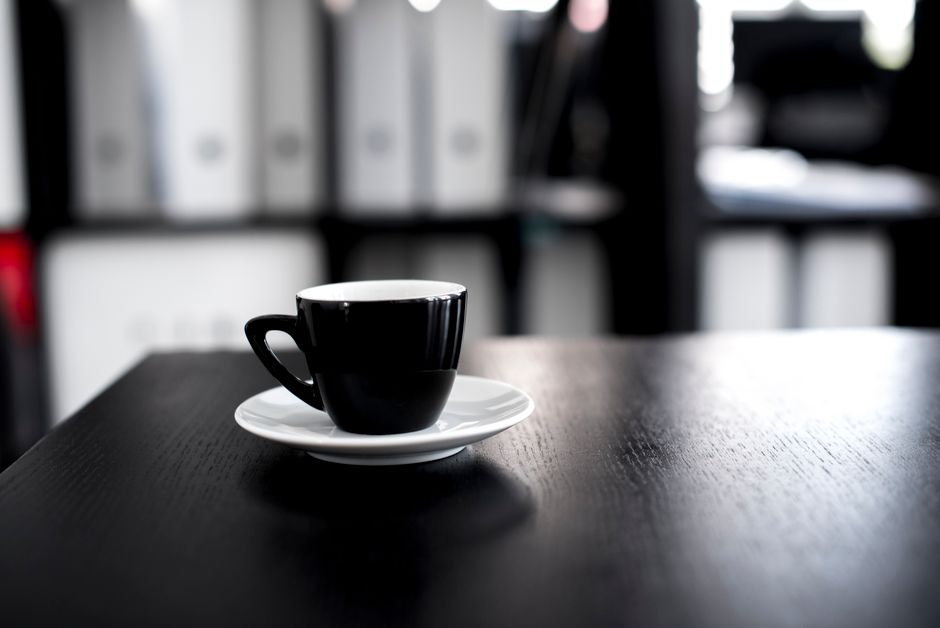
Decaf coffee is not caffeine-free. A standard 8-ounce cup of decaf coffee contains about 2 to 5 milligrams of caffeine, compared to roughly 95 milligrams in a regular cup. The exact amount varies by brand, bean type, and brewing method, but it is almost always a small fraction of the original caffeine content.
How Much Caffeine Does Decaf Coffee Have Compared to Regular Coffee
Regular coffee delivers a noticeable stimulant effect. Decaf delivers almost none. The difference is substantial: a typical cup of regular brewed coffee contains 80 to 100 milligrams of caffeine, while a cup of decaf contains 2 to 5 milligrams.
That means decaf has roughly 97% of its caffeine removed. The remaining amount is small enough that most people do not feel any stimulant effects. However, it is not zero, and that matters for certain people.
People who are highly sensitive to caffeine, or who have been told to avoid it entirely for medical reasons, should know that decaf still contains a measurable amount. For most people, the trace amount is irrelevant. For a small number of people, it can cause symptoms.
Why Decaf Coffee Still Contains Some Caffeine
The decaffeination process removes most of the caffeine from the coffee bean, but it does not remove all of it. No commercially available process extracts 100% of the caffeine.
There are several common decaffeination methods. The most widely used approaches involve water, organic solvents, or carbon dioxide. In each case, green coffee beans are soaked or steamed to open their pores, and then the caffeine is drawn out.
After processing, the beans still retain a small amount of caffeine. The beans are then dried, roasted, and packaged. The roasting process does not eliminate the remaining caffeine either. It may reduce it slightly, but the effect is minor.
The key point is that “decaf” means “mostly caffeine-free,” not “completely caffeine-free.” This is a legal and industry standard, not a marketing trick. The United States requires decaf coffee to have at least 97% of its caffeine removed. The European Union has a similar standard.
How Much Caffeine Is in Different Types of Decaf Coffee
The caffeine content in decaf varies more than most people expect. The type of bean, the roast level, and the brewing method all play a role.
Here is a general comparison of decaf caffeine levels:
- Decaf brewed coffee (8 oz): 2 to 5 mg
- Decaf espresso (1 oz shot): 0 to 3 mg
- Decaf instant coffee (8 oz): 2 to 3 mg
- Decaf cold brew (8 oz): 3 to 6 mg
These are approximate ranges, not exact figures. A specific brand could fall outside these numbers. For example, some decaf espresso shots have been measured at nearly 7 milligrams. Some instant decaf brands are closer to 1 milligram.
Dark roasts and light roasts do not differ meaningfully in caffeine content. The roasting process changes flavor, not caffeine levels in any significant way. The larger factor is the bean variety and the brewing time. Longer steeping, as in cold brew or French press, extracts more caffeine than a quick pour-over.




Who Should Be Careful With Decaf Coffee
Most people can drink decaf without any concern. The 2 to 5 milligrams of caffeine is negligible for the average adult. But certain groups should be more careful.
People with severe caffeine sensitivity may still notice effects from decaf. Symptoms like jitteriness, rapid heart rate, or insomnia can occur even at very low doses in sensitive individuals. If you know you react strongly to caffeine, decaf may still cause problems.
People with certain heart conditions, particularly arrhythmias, are sometimes advised to avoid all caffeine. For these individuals, even the small amount in decaf could be a concern. This is a conversation to have with a cardiologist, not a decision to make based on general advice.
Pregnant women are often told to limit caffeine. Most obstetric guidelines recommend keeping total caffeine intake under 200 milligrams per day during pregnancy. Decaf coffee fits comfortably within that limit for most women. However, if a pregnant woman is consuming multiple cups of decaf throughout the day, the caffeine can add up. Two to three cups of decaf still stays well under the 200 milligram threshold, but it is not zero.
People taking certain medications should also be aware. Some antibiotics and bronchodilators can interact with caffeine, even in small amounts. Again, this is a question for a doctor or pharmacist, not a reason to panic.
Is Decaf Coffee Healthier Than Regular Coffee
No. Decaf is not healthier than regular coffee. It is simply coffee with less caffeine.
The health benefits associated with coffee come largely from its antioxidants and other plant compounds, not from caffeine. These compounds are largely preserved during the decaffeination process. That means decaf drinkers get most of the same antioxidants as regular coffee drinkers.
Some research suggests that both regular and decaf coffee are associated with lower risks of certain conditions, including type 2 diabetes and liver disease. The evidence for these associations is observational, meaning it shows a link but does not prove cause and effect. Still, the pattern is consistent across multiple studies.
The choice between regular and decaf should be based on your caffeine tolerance, not on which one is “healthier.” If caffeine keeps you awake at night or makes you anxious, decaf is a reasonable choice. If you handle caffeine fine, regular coffee offers no disadvantage for most people.
How to Know Exactly How Much Caffeine Is in Your Decaf
There is no reliable way to know the exact caffeine content of your decaf coffee without lab testing. The ranges provided by manufacturers are estimates, and actual content can vary from batch to batch.
If you need to know precisely, your best option is to contact the manufacturer directly. Many large coffee companies will provide caffeine data for their products upon request. Some publish this information on their websites.
For most people, precise numbers are unnecessary. The practical takeaway is simple: decaf coffee contains a small amount of caffeine, usually between 2 and 5 milligrams per cup. If you are trying to eliminate caffeine entirely, decaf is not a perfect choice. You would need to switch to herbal tea or another caffeine-free beverage.
One common misconception deserves correction: the idea that a specific brand or type of decaf is completely caffeine-free. No commercially available decaf coffee meets that standard. If a product claims to be “100% caffeine-free,” that claim is not accurate for coffee. It may be accurate for a coffee-flavored beverage that never contained caffeine in the first place, but not for actual decaf coffee.
Does the Decaffeination Process Affect Flavor
Yes, but the effect is subtle and varies by method. Some people can taste a difference between decaf and regular coffee. Others cannot.
The Swiss Water Process, which uses only water to remove caffeine, is often described as producing a cleaner, more flavorful cup. The direct-solvent method, which uses methylene chloride or ethyl acetate, can sometimes leave a slightly different taste. However, both methods produce coffee that most people find acceptable.
In blind taste tests, many people cannot reliably distinguish decaf from regular coffee, especially when milk and sugar are added. For black coffee drinkers, the difference is more noticeable. Decaf beans often taste slightly different because the decaffeination process alters some of the bean’s chemical structure.
If flavor is your main concern, try a few different decaf brands. The quality range is wide, and some specialty roasters produce decaf that rivals their regular offerings.
Should You Switch to Decaf
That depends on why you are considering it. If you want to reduce your caffeine intake for sleep, anxiety, or general health reasons, decaf is an excellent option. It allows you to keep the ritual and taste of coffee while cutting your caffeine intake by roughly 95%.
If you are trying to eliminate caffeine completely, decaf is not the answer. The residual caffeine, while small, is still present. You would need to switch to caffeine-free beverages entirely.
If you are using decaf to manage a medical condition, talk to your doctor first. Some conditions require complete caffeine avoidance. Others tolerate small amounts. Your doctor can give you specific guidance based on your situation.
The decision is ultimately personal. Decaf is a legitimate coffee choice, not a compromise. It provides most of the taste and nearly all of the antioxidants of regular coffee, with a fraction of the caffeine.
Frequently Asked Questions
Can decaf coffee keep you awake at night?
It is unlikely for most people. The 2 to 5 milligrams of caffeine in a cup of decaf is far below the amount needed to cause sleep disruption in the average adult. However, people who are highly sensitive to caffeine may notice effects.
Is decaf coffee safe during pregnancy?
Yes, within normal limits. A cup of decaf contains about 2 to 5 milligrams of caffeine, which is well below the 200 milligram daily limit commonly recommended during pregnancy. As with any dietary question during pregnancy, discuss it with your obstetrician.
Does decaf coffee count toward your daily water intake?
Yes. Coffee, including decaf, is mostly water and contributes to daily fluid needs. The caffeine in decaf is too low to have a meaningful diuretic effect.
How much caffeine is in a decaf espresso shot?
Typically 0 to 3 milligrams per single shot. This is slightly lower than brewed decaf because the serving size is much smaller. The exact amount varies by brand and extraction time.
