
How Much Pollution Does China Produce Each Year?
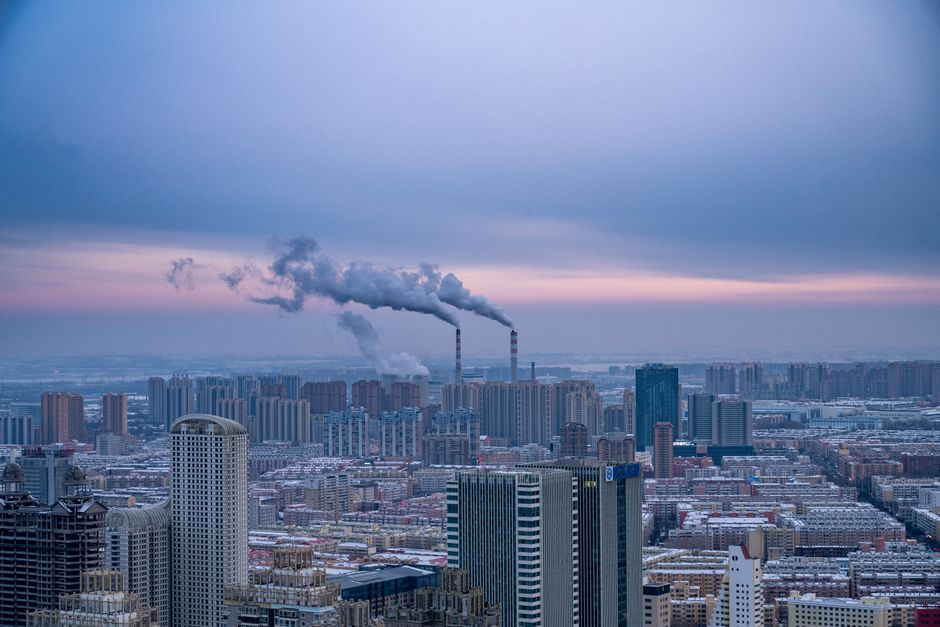
China produces more pollution than any other country in the world. In terms of carbon dioxide, the primary greenhouse gas driving climate change, China emits over 11 billion metric tons annually. This represents about 30% of global CO₂ emissions. For comparison, the United States emits roughly 5 billion metric tons per year, and India emits around 2.7 billion metric tons.
The scale is difficult to grasp. China emits more CO₂ each year than the entire European Union plus the United States combined. These figures come from the Global Carbon Project, an international research group that tracks national emissions. The data is updated annually and is considered the standard reference for national carbon budgets.
What Types of Pollution Does China Produce?
Carbon dioxide is only part of the picture. China also leads the world in several other categories of pollution that directly affect human health.
Air pollutants include sulfur dioxide, nitrogen oxides, and fine particulate matter known as PM2.5. These particles are small enough to enter the lungs and bloodstream. China has reduced its emissions of these pollutants significantly since 2013, when the government launched its “war on pollution.” Still, air quality in many Chinese cities remains worse than World Health Organization guidelines recommend.
Water pollution is another major issue. Industrial discharge, agricultural runoff, and untreated sewage have contaminated major river systems. The Yangtze and Yellow Rivers have both experienced serious pollution episodes. The government has invested heavily in wastewater treatment, but the challenge remains large due to the scale of industrial activity.
Solid waste is a growing concern. China generates over 200 million metric tons of municipal solid waste per year. It also imports and processes a significant share of the world’s plastic waste, though it banned most plastic waste imports in 2018.
Why Does China Produce So Much Pollution?
Several structural factors explain China’s pollution levels.
Coal is the dominant energy source. Coal supplies about 55-60% of China’s energy needs. It powers steel mills, cement plants, and electricity generation. Burning coal releases large amounts of CO₂, sulfur dioxide, and particulate matter. China burns more coal than every other country in the world combined.
Manufacturing scale. China is the world’s factory. It produces most of the world’s steel, cement, aluminum, and electronics. Manufacturing is energy-intensive, and much of that energy comes from coal. When you buy a product made in China, part of its environmental cost was paid in Chinese emissions.
Rapid urbanization. In the past four decades, hundreds of millions of people moved from rural areas to cities. This required massive construction of buildings, roads, and infrastructure. Cement production alone accounts for a significant share of China’s CO₂ emissions because making cement requires intense heat, usually from coal.
Population size. China has 1.4 billion people. Even with lower per-person emissions than the United States, the sheer number of people drives total emissions higher. China’s per-capita emissions are about 8 metric tons of CO₂ per year, compared to about 15 in the United States.



Is China’s Pollution Getting Better or Worse?
The answer depends on which pollutant you measure.
Carbon dioxide emissions have continued to rise, though the growth has slowed. China’s CO₂ emissions peaked around 2023 or 2024, according to several research groups, though this peak has not been officially confirmed. Some analysts believe emissions have plateaued. The rapid expansion of solar, wind, and nuclear power has helped slow the growth of emissions.
Conventional air pollutants have declined significantly. Since 2013, concentrations of PM2.5 in Beijing have fallen by more than half. Sulfur dioxide emissions dropped by over 60% nationwide. These improvements came from stricter emission standards, closing old coal plants, and switching to cleaner fuels. The visible smog that once shrouded Chinese cities is much less common than a decade ago.
Water quality has improved in some regions but remains poor in others. The government has built thousands of new wastewater treatment plants. Still, agricultural runoff and industrial discharge continue to contaminate groundwater and rivers in many areas.
How Does China’s Pollution Compare to Other Countries?
China is the clear leader in total emissions. But the comparison changes when you look at per-person emissions or historical contributions.
| Country | Annual CO₂ Emissions | Share of Global Total |
|---|---|---|
| China | Over 11 billion metric tons | ~30% |
| United States | ~5 billion metric tons | ~13% |
| India | ~2.7 billion metric tons | ~7% |
| European Union | ~2.8 billion metric tons | ~7% |
These figures reflect annual emissions, not historical totals. The United States and European nations have emitted far more CO₂ over the past 150 years since the Industrial Revolution. China’s cumulative historical emissions are lower than those of the United States, even though China now emits more each year.
Per person, China’s emissions are roughly half of the United States’ and similar to the European average. This matters because some of the goods produced in China are consumed by people in other countries. Research on “consumption-based emissions” shows that when you account for the carbon embedded in traded goods, China’s emissions are about 10-15% lower, while the United States’ and Europe’s are higher.
What Is China Doing to Reduce Pollution?
China has taken significant steps to address pollution, particularly in the last decade.
The government has invested more in renewable energy than any other country. China now leads the world in solar panel production, wind turbine manufacturing, and battery production. It also builds more solar and wind capacity each year than the rest of the world combined. In 2023, China added more new solar capacity than the United States has installed in its entire history.
Electric vehicles are another focus. China is the world’s largest market for electric cars, with over half of global EV sales. The government offers subsidies, mandates automakers to produce EVs, and has built extensive charging infrastructure. This shift reduces oil consumption and urban air pollution.
Coal remains central, but the government is trying to manage its decline. New coal plants are being built, but many are designed to be flexible, backing up intermittent renewable power rather than running constantly. Some analysts argue this is a bridge strategy. Others say it locks in emissions for decades.
The national emissions trading system, launched in 2021, now covers the power sector. It is the largest carbon market in the world by volume. However, the initial carbon price has been low, and the system currently covers only a fraction of total emissions.
Frequently Asked Questions
What percentage of global pollution comes from China?
China produces about 30% of the world’s carbon dioxide emissions each year. For other pollutants like sulfur dioxide and particulate matter, China’s share is also the largest of any country, though precise percentages vary by pollutant.
Is China the biggest polluter in the world?
Yes, China is the largest emitter of carbon dioxide and most other major pollutants. The United States is the second-largest emitter of CO₂, followed by India.
Has China’s pollution decreased in recent years?
Air pollution from particulate matter and sulfur dioxide has decreased significantly since 2013. Carbon dioxide emissions have continued to rise, though growth has slowed and may have recently plateaued.
Why does China produce more pollution than the United States?
China has a larger population, relies more heavily on coal, and hosts a massive manufacturing sector that produces goods for global consumption. These factors combine to make China the world’s largest annual emitter.
