
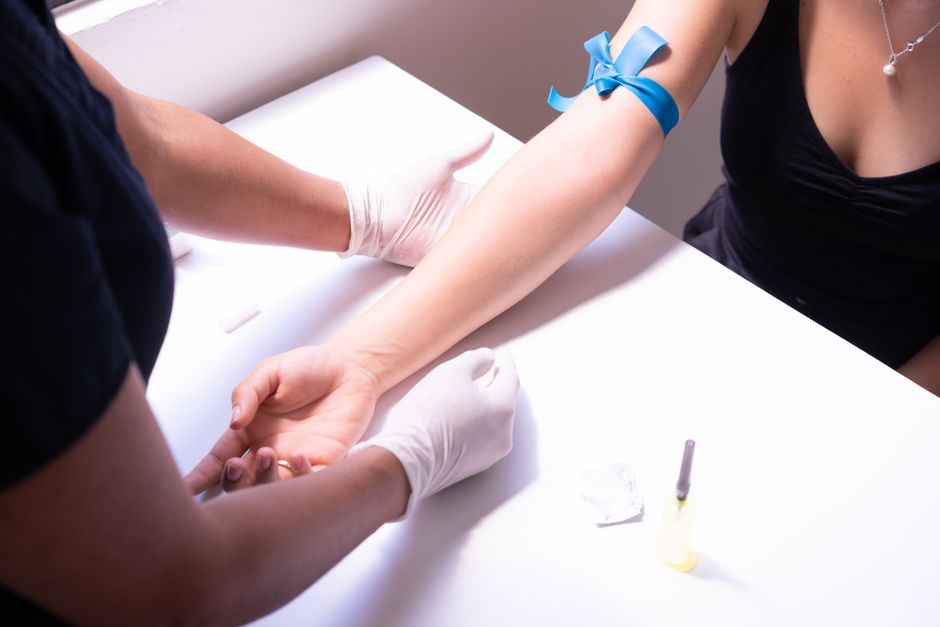
When a nurse fills a small vial from your arm, it can feel like a lot more blood than it really is. In reality, most routine blood draws remove only a few milliliters per tube — roughly one to two teaspoons each. A standard donation is a different story: a whole blood donation in the United States is about 1 pint, or roughly 450 to 500 milliliters.
So the short answer depends on which one you mean. A typical lab test takes somewhere between a teaspoon and a few tablespoons of blood. A whole blood donation takes close to a pint. Both are far less than most people assume, and your body replaces the volume fairly quickly.
How Much Blood Is Taken for a Routine Blood Test?
A single blood draw for lab work usually removes between 5 and 30 milliliters of blood, depending on how many tubes are filled. Each standard tube holds about 5 to 10 milliliters.
To put that in everyday terms, 5 milliliters is about one teaspoon. So a draw that fills two or three tubes is roughly two to three teaspoons — a tablespoon or less. Even a larger panel that fills five or six tubes rarely exceeds a few tablespoons total.
The number of tubes depends on what your doctor ordered. A basic metabolic panel might need one tube. A full workup — blood count, cholesterol, thyroid, liver and kidney function — can need several, because different tests require different tube types and additives.
Here is a detail that surprises many people: the tubes are not filled to the top with your blood alone. They contain small amounts of preservatives or clot activators, and the fill line is calibrated for the test. The actual blood volume is modest.
How Much Blood Is Taken During a Donation?
A standard whole blood donation in the United States removes about 1 pint, which is roughly 450 to 500 milliliters. That is close to 8 percent of the blood volume in an average adult.
Other types of donation take different amounts:
- Whole blood: about 450 to 500 milliliters (roughly 1 pint)
- Power red (double red cells): red cells from about twice a standard donation, with most plasma and platelets returned to you
- Platelet donation: the platelets are kept and the rest of the blood is returned, so the net fluid loss is smaller
- Plasma donation: plasma is collected and red cells are returned, with the volume depending on the machine and your body size
With apheresis donations — the ones where parts of your blood are returned — you lose less total volume even though the process takes longer. That is why some people feel fine after a platelet donation but tired after whole blood.
Why Does a Blood Draw Feel Like More Than It Is?
A few teaspoons can look like a lot when it is sitting in tubes in front of you. The visual is misleading, and so is the sensation.
Watching a tube fill triggers a natural stress response in some people. The body registers the sight and the pinch, not the actual volume. Anxiety can make a small draw feel significant.
There is also a practical reason a draw can feel draining: it is often done on an empty stomach, early in the morning, in a cold room, sometimes after you have been sitting still. Those conditions can cause lightheadedness on their own, independent of how much blood was taken.
If you tend to feel faint during draws, tell the person doing it. Lying down, drinking water beforehand, and slow breathing help. This is a well-recognized response, not a sign that too much blood was removed.



How Much Blood Can Be Drawn Safely?
For healthy adults, the body handles routine draws and donations well because it replaces blood volume and cells continuously. The limits that exist are set by blood banks and clinical guidelines, not by a fixed universal number for all testing.
Blood centers follow eligibility rules to protect donors. These include minimum weight, hemoglobin level, and a required interval between donations. In the United States, whole blood donors generally must wait about 8 weeks between whole blood donations. That gap exists because it takes time to rebuild red blood cells and iron stores.
For lab testing, there is no single official cap on how much can be drawn, because it depends on the clinical need. However, drawing very large volumes over a short period — which happens mainly in hospital settings with frequent monitoring — is tracked by clinicians. In those cases, staff may check for anemia or replace fluids.
If you are having many tests done close together, it is reasonable to ask how much is being drawn and whether all of it is necessary. That is a fair question, and clinicians can usually explain the reasoning.
How Fast Does Your Body Replace the Blood?
Plasma — the liquid part of blood — is replaced within about 24 to 48 hours after a donation. That is why you are usually told to drink extra fluids afterward.
Red blood cells take longer. Rebuilding them can take several weeks, which is why donation intervals are spaced out. Iron is needed for that process, and repeated donations can lower iron stores over time.
This is why blood centers check hemoglobin before every donation. If your level is too low, you are deferred — not because you did something wrong, but because your body needs its iron and red cells for your own health first.
Routine lab draws are a different scale entirely. A few teaspoons does not meaningfully affect your blood counts or iron stores in a healthy person. The body replaces that volume without you noticing.
Does Giving Blood or Getting Tested Make You Anemic?
A single blood test does not cause anemia. The volume is too small to affect red blood cell counts in a healthy adult.
Frequent blood donation can lower iron stores, and in some donors this can lead to iron deficiency over time. This is a recognized concern, and blood centers have policies to reduce the risk — including donation intervals and hemoglobin screening.
Anemia is usually caused by something else: low iron intake, blood loss elsewhere, chronic disease, or a medical condition. If you are told you are anemic, the cause matters more than any recent donation or blood draw.
If you donate regularly and feel unusually tired, short of breath, or run down, mention it to a doctor. Iron levels can be checked with a simple blood test. Do not assume it is just from donating — get it looked at.
How Much Blood Do They Take for Tests and Donation Compared to Total Blood Volume?
An average adult has roughly 5 liters of blood, or about 10 pints, though this varies with body size. That context makes the numbers easier to picture.
| Type | Approximate volume | Share of total blood |
|---|---|---|
| Single lab tube | 5–10 mL (1–2 teaspoons) | About 0.1–0.2% |
| Typical multi-tube draw | 10–30 mL (2–6 teaspoons) | Under 1% |
| Whole blood donation | 450–500 mL (about 1 pint) | Roughly 8–10% |
The takeaway is simple. Testing removes a tiny fraction of your blood. Donation removes a meaningful but safe fraction for most healthy adults, and it is spaced out to allow recovery.
What Should You Do Before and After?
For a routine blood test, follow whatever instructions your clinician gives you. Some tests require fasting; many do not. Drinking water beforehand can make the draw easier and reduce lightheadedness.
For a donation, eat a normal meal beforehand, drink extra water, and avoid heavy exercise for the rest of the day. These steps are standard advice from blood centers and are based on how the body responds to volume loss.
If you feel dizzy or faint after either one, sit or lie down and let someone know. That reaction is common and usually passes quickly. Persistent symptoms, or feeling unwell for more than a day, are worth a call to a doctor.
None of this is meant as personal medical advice. If you have a condition that affects your blood counts, bleeding, or iron levels, ask your own clinician what is appropriate for you.
Frequently Asked Questions
How many tubes of blood is normal for a blood test?
Most routine draws use one to six tubes, and each tube holds about 5 to 10 milliliters. The number depends on which tests your doctor ordered.
Is 1 pint of blood a lot to lose?
A whole blood donation of about 1 pint is roughly 8 to 10 percent of an average adult’s blood volume. For most healthy adults this is safe, which is why donation intervals are spaced out to allow recovery.
How long does it take to replace blood after a donation?
The fluid portion of blood is replaced within about 24 to 48 hours, while red blood cells take several weeks to fully rebuild. This is why whole blood donors generally wait about 8 weeks between donations.
Can getting blood tests make you anemic?
No, routine blood tests remove too little blood to cause anemia in a healthy adult. Frequent blood donation can lower iron stores over time, but anemia usually has another cause.
