
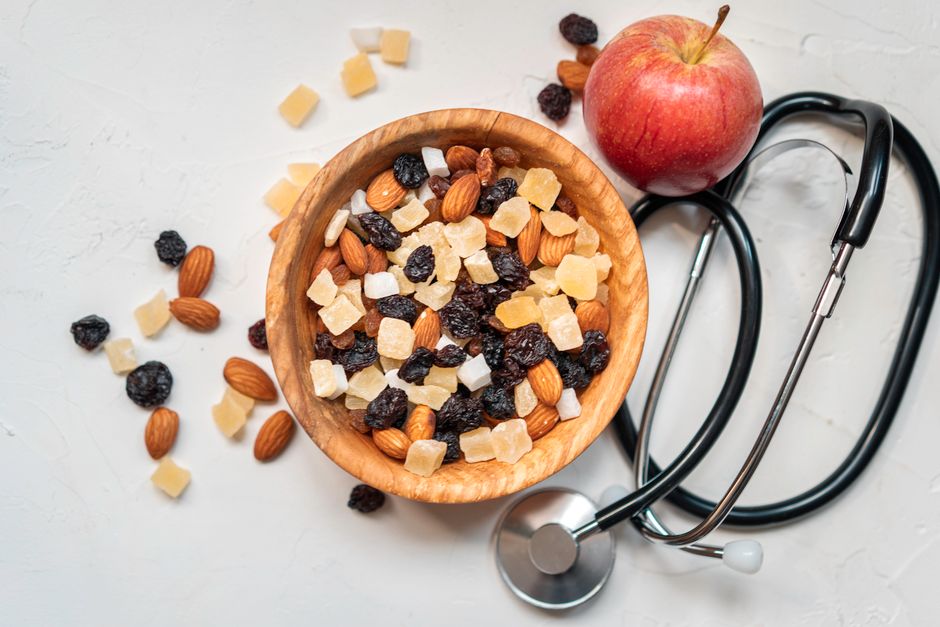
There is no official recommended number of raisins to eat per day. Raisins are a concentrated source of sugar and calories, so most healthy adults do well treating them as a small addition to meals rather than a snack to eat by the handful. A reasonable daily amount for many adults is about one small box, roughly 40 to 50 grams, or a quarter cup. That is a general guide, not a rule. People with diabetes, or anyone watching their weight or blood sugar, may need less.
How Many Raisins Should You Eat Per Day?
No health agency sets a daily target for raisins. The USDA does publish standard serving data, and that is the closest thing to an official reference point. A quarter cup of raisins weighs about 40 to 45 grams and provides roughly 120 to 130 calories and about 25 to 30 grams of sugar, most of it naturally occurring.
That sugar figure surprises people. Raisins are dried grapes, and drying removes water while leaving the sugar behind. A quarter cup of raisins holds roughly the sugar of a full cup of grapes in a much smaller, easier-to-eat package. This is why portion size matters more with raisins than with the fresh fruit they came from.
For most healthy adults, a quarter cup per day fits comfortably within a balanced diet. Some people eat less and feel fine. Others eat a bit more. The number itself is less important than where raisins fit in your overall eating pattern.
One non-obvious point: raisins are often grouped with added-sugar snacks, but their sugar is not added. It occurs naturally in the grape. That distinction matters for how nutrition labels classify them, though it does not change how your body handles the sugar.
What Happens If You Eat Too Many Raisins?
Eating a large amount of raisins in one sitting can cause digestive discomfort and a rapid rise in blood sugar. The most common short-term effect is gas, bloating, or loose stools. Raisins contain fiber and a type of sugar alcohol called sorbitol, both of which can draw water into the gut and speed things along when eaten in volume.
Blood sugar is the bigger concern for some people. Because raisins are dense in sugar and low in water, they can raise blood glucose faster than the same amount of fresh grapes. For someone with diabetes or prediabetes, a large handful eaten alone may push glucose higher than expected.
Calories add up quickly too. It is easy to eat several hundred calories of raisins without noticing, because they are small, sweet, and not very filling compared with fresh fruit. Over time, that can work against weight goals.
There is also a dental angle. Raisins are sticky and cling to teeth. Frequent snacking on them throughout the day keeps sugar in contact with tooth surfaces for longer stretches, which is not ideal for cavity prevention.
Are Raisins Healthy or Just Sugar?
Raisins are more than sugar. They provide fiber, potassium, iron, and small amounts of antioxidants. They are also fat-free and contain no added sugar when you buy plain raisins with nothing else in the package.
That said, it is easy to overstate their health benefits. Raisins are not a “superfood,” and no strong evidence shows they prevent disease on their own. The iron and potassium they contain are real, but the amounts per serving are modest. You would get more iron and potassium from many other foods without the sugar load.
A useful way to think about it: raisins are a decent source of quick energy and a few nutrients, best used as a small part of a meal or snack that also contains protein, fat, or fiber. Eaten alone in large amounts, they behave mostly like candy.
Some marketing suggests raisins support digestion or heart health. The evidence for these specific claims is limited and mixed. Fiber supports digestion in general, and raisins contain some fiber, but no large human trials confirm that raisins themselves deliver meaningful digestive or heart benefits beyond what any fiber-containing food would.





How Many Raisins Should a Person With Diabetes Eat?
There is no fixed number that works for everyone with diabetes. Raisins raise blood glucose, and how much depends on the person, the portion, and what else is eaten at the same time. A quarter cup may be fine for one person and too much for another.
Because raisins are a concentrated carbohydrate, many clinicians suggest keeping portions small and pairing them with protein or fat to slow the rise in blood sugar. For example, raisins with nuts or yogurt affect glucose differently than raisins eaten alone.
Checking blood glucose after eating raisins is the most reliable way to know your own response. Two people can eat the same amount and see very different numbers. If you take insulin or diabetes medication, talk with your care team before making raisins a regular part of your routine, since the carbohydrate they add can affect dosing.
Do Raisins Help With Constipation or Iron Levels?
Raisins contain fiber, and fiber can help with constipation, but raisins are not a reliable treatment on their own. The fiber content per serving is modest, and eating enough raisins to make a real difference would also mean a large dose of sugar. Other foods, like beans, whole grains, and fresh fruit, deliver more fiber with less sugar.
On iron, raisins do contain some, but it is non-heme iron, the form found in plants, which the body absorbs less efficiently than the iron in meat. Raisins are not a meaningful treatment for iron-deficiency anemia. Anyone with low iron needs a proper evaluation and, usually, more substantial iron sources or supplements guided by a clinician.
So raisins can be a small supporting player in a diet that already includes fiber and iron from other foods. They are not a fix for either problem by themselves.
How Should You Fit Raisins Into Your Day?
Treat raisins as a topping or a small snack, not a main event. A spoonful over oatmeal, a few mixed into yogurt, or a small handful with nuts are ways to get their sweetness and a little nutrition without overdoing the sugar.
- Keep portions to about a quarter cup or one small box for most adults.
- Pair raisins with protein or fat, such as nuts or yogurt, to slow the blood sugar rise.
- Choose plain raisins with no added sugar or coatings when possible.
- Rinse or brush teeth after eating them, since they are sticky.
- If you have diabetes, test your blood sugar response and check with your care team.
The bigger picture matters more than the exact count. A diet built around vegetables, whole grains, lean protein, and fresh fruit does not hinge on how many raisins you eat. Raisins are a small piece, and a small portion keeps them in that role.
Frequently Asked Questions
How many raisins should I eat a day?
There is no official daily number. For most healthy adults, about a quarter cup, or one small box of roughly 40 to 50 grams, is a reasonable guide.
People with diabetes or weight concerns may need a smaller portion.
Is it OK to eat raisins every day?
Yes, for most people, a small portion of raisins daily fits within a balanced diet. The key is keeping the amount modest because raisins are high in sugar and calories.
Do raisins raise blood sugar?
Yes, raisins can raise blood sugar, and they may do so faster than fresh grapes because they are concentrated and low in water. Pairing them with protein or fat can slow the rise.
Are raisins good for constipation?
Raisins contain some fiber, which can help with constipation, but the amount per serving is modest. Other high-fiber foods usually work better without the added sugar.
