
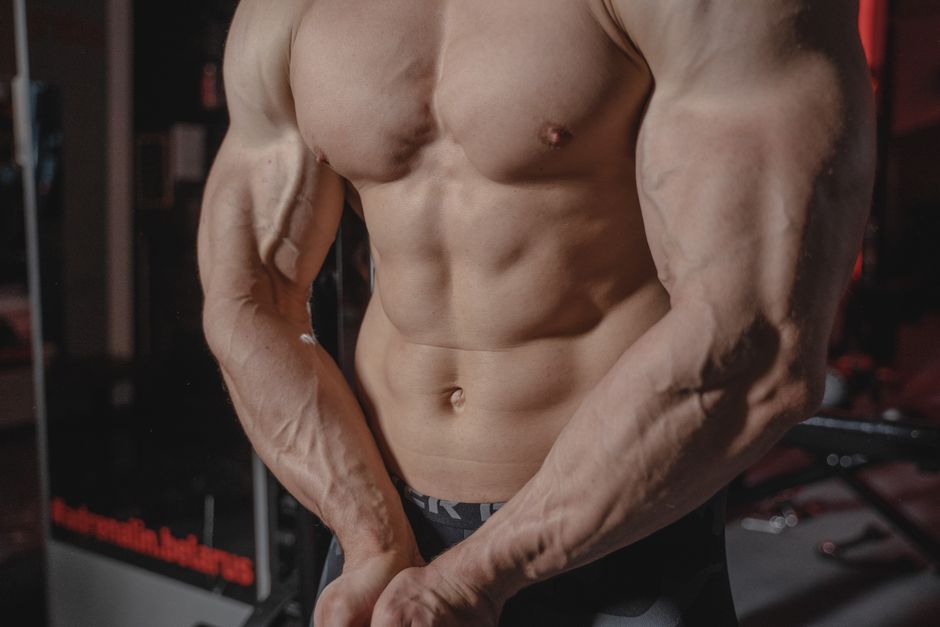
Your body contains more than 600 muscles. Most sources put the number between 600 and 650, depending on how you count them. They make up roughly 40% of your total body weight, and they do everything from pumping blood to lifting a fork to your mouth.
How Many Muscles Human Body Actually Has?
The most commonly cited figure is around 640 skeletal muscles. That number comes from anatomy textbooks that count each distinct muscle that can be named and identified.
But the exact count varies because anatomists do not always agree on what counts as one muscle. Some muscles are small and variable. Some people have muscles that others do not. Some muscles are counted as one unit in one textbook and split into two or three in another.
Here is where the number gets tricky. When people ask how many muscles are in the human body, they usually mean skeletal muscles. These are the ones you can consciously control. But your body also has two other types of muscle that you do not think about at all.
Cardiac muscle makes up your heart. Smooth muscle lines your blood vessels, digestive tract, bladder, and other organs. These involuntary muscles are not counted in the 600-plus figure because they are not individually named the way skeletal muscles are.
So the honest answer is this: there is no single exact number. The range of 600 to 650 is accurate. Any source claiming a precise figure like 639 is choosing one counting method among several.
What Are the Three Types of Muscles?
Your body has three distinct muscle types, and they differ in structure, function, and how much control you have over them.
- Skeletal muscle — attached to bones by tendons. You control these voluntarily. They move your body, maintain posture, and generate heat when you shiver.
- Cardiac muscle — found only in your heart. It contracts rhythmically without conscious input. It does not fatigue the way skeletal muscle does because it must work continuously for your entire life.
- Smooth muscle — found in the walls of hollow organs and blood vessels. It moves food through your digestive system, regulates blood flow, and helps your bladder release urine.
Each type has a different cellular structure suited to its job. Skeletal muscle fibers are long and striped, which is why they are called striated. Cardiac muscle is also striated but branches and connects to neighboring cells so the heart can beat as a coordinated unit. Smooth muscle lacks stripes and contracts more slowly but can sustain contraction for long periods.
One detail worth knowing: only skeletal muscle is under voluntary control. You cannot consciously make your heart beat faster or push food through your intestines. Those systems run on their own.
Where Are the Largest and Smallest Muscles?
The largest muscle in your body is the gluteus maximus, the main muscle of your buttocks. It powers hip extension — the motion you use to stand up, climb stairs, and run.
The smallest muscle is the stapedius, located deep inside your ear. It is less than a millimeter long. Its job is to dampen vibrations from loud sounds. Without it, your own voice would sound painfully loud inside your head.
The strongest muscle by force is often debated. The masseter, which closes your jaw, can generate significant force relative to its size. The quadriceps and glutes produce more total force but are much larger. The heart is sometimes called the hardest-working muscle because it beats roughly 100,000 times per day, though it is not a skeletal muscle.
Some muscles work in ways most people never think about. The muscles in your iris control how much light enters your eye. Tiny muscles in your middle ear adjust to sound levels. Muscles in your throat help you swallow and speak.





What Do Muscles Actually Do?
Movement is the obvious answer, but it is only part of the story. Muscles serve several critical functions.
Movement and posture. Skeletal muscles pull on bones to create motion. They also hold your body upright against gravity all day. Your postural muscles are working right now, even if you are sitting still.
Joint stability. Muscles surround joints and help keep them aligned. Weak muscles around a joint can increase injury risk and contribute to instability.
Heat production. When you get cold, your muscles shiver. Shivering generates heat by rapidly contracting and relaxing. This is one way your body maintains its core temperature.
Breathing. The diaphragm is a skeletal muscle that separates your chest cavity from your abdomen. It does most of the work of breathing. When it contracts, it moves downward and creates space for your lungs to expand.
Circulation support. Skeletal muscles help push blood back to your heart through your veins. When you walk or move your legs, the muscles squeeze veins and help blood flow upward against gravity. This is one reason prolonged sitting can cause blood to pool in the legs.
Organ function. Smooth muscles move food through your digestive tract, regulate blood vessel width, and control bladder function. Cardiac muscle keeps blood circulating to every cell in your body.
Do Muscle Numbers Change With Age or Activity?
The number of muscles does not change. You are born with the muscles you will have. What changes is muscle size, strength, and quality.
Starting around age 30, adults begin to lose muscle mass gradually. This process is called sarcopenia. It accelerates after age 60. The rate of loss varies widely between individuals and depends on activity level, nutrition, and overall health.
Resistance training can slow or partially reverse age-related muscle loss. Research consistently shows that older adults who do strength training maintain more muscle mass and function than those who do not. This does not mean muscle loss is fully preventable. It means the trajectory can be changed.
Muscles can also change in response to use and disuse at any age. If you immobilize a limb in a cast, the muscles shrink within weeks. If you train a muscle consistently, it grows. This adaptability is one of the most studied properties of skeletal muscle.
Some muscles change with age in ways that affect daily life. Muscles involved in swallowing can weaken, which can affect eating. Muscles that control the bladder can change, which can affect continence. These changes are common but not inevitable for everyone.
Can You Increase Muscle Count?
No. You cannot grow new muscles. The number of skeletal muscles is fixed at birth.
What you can do is increase muscle size, strength, and endurance. This is called hypertrophy. When you train a muscle, individual muscle fibers get thicker. The muscle as a whole gets larger and stronger.
Some people have a genetic advantage in how their muscles respond to training. But everyone who trains consistently sees some adaptation. The degree varies based on genetics, age, nutrition, hormones, and training program.
Muscle growth requires three things: mechanical tension from resistance training, adequate protein intake, and enough calories to support tissue repair. Without all three, growth is limited.
No supplement, device, or technique has been shown to increase the number of muscles a person has. Claims suggesting otherwise are not supported by evidence.
Why Do Some Sources Give Different Numbers?
Counting muscles is harder than it sounds. Anatomists have debated the total for centuries, and the disagreements are not trivial.
Some muscles vary between people. The palmaris longus, a muscle in the forearm, is absent in a significant portion of the population. Some people have it, some do not. Whether it is counted depends on whose anatomy you are describing.
Some muscles are grouped differently. The quadriceps is one name for a group of four muscles. Do you count it as one or four? The answer changes the total.
Some muscles are tiny and inconsistently present. Muscles in the ear, hand, and foot can be difficult to classify. Some anatomists count them, some do not.
This is why you will see numbers ranging from 600 to over 650. No single number is wrong. They reflect different counting conventions.
What matters is not the exact figure. What matters is understanding that your muscular system is complex, adaptable, and essential to nearly every function your body performs.
Frequently Asked Questions
How many muscles are in the human body?
The commonly cited number is around 640 skeletal muscles, with a range of 600 to 650 depending on counting methods. This figure does not include cardiac muscle or smooth muscle found in organs and blood vessels.
What is the largest muscle in the human body?
The gluteus maximus is the largest muscle by mass. It powers hip extension and is heavily involved in standing, walking, and running.
Do humans have more muscles than bones?
Yes. Adults have 206 bones and roughly 600 or more skeletal muscles. The exact muscle count varies because anatomists do not always agree on what counts as a single muscle.
Can you increase the number of muscles you have?
No. The number of skeletal muscles is fixed at birth. Training can increase muscle size and strength, but it cannot create new muscles.
