
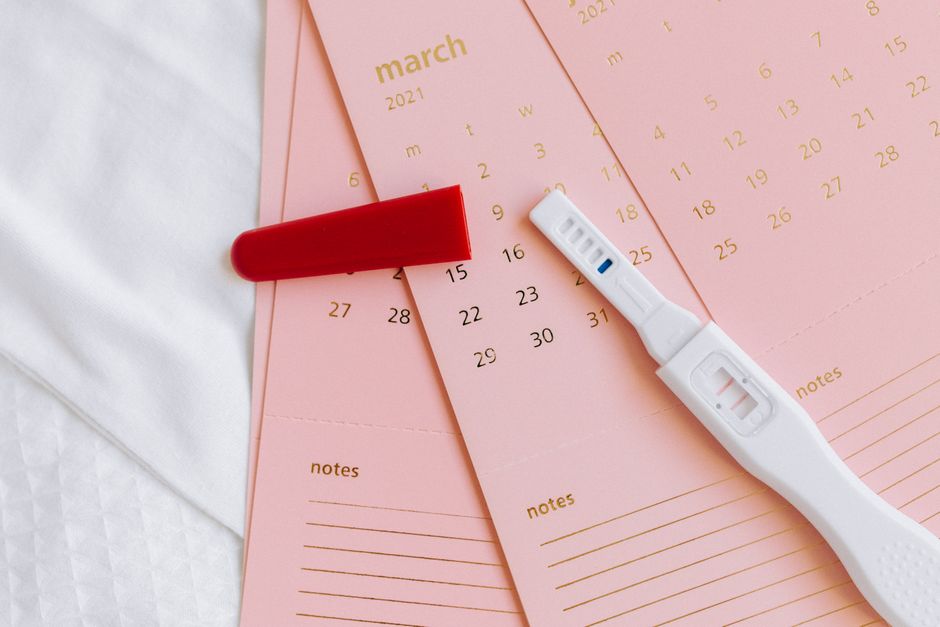
“DPO” stands for days past ovulation, and it is the single most useful number for anyone trying to time a pregnancy test. Most home pregnancy tests can detect a pregnancy starting around 12 to 14 days past ovulation, which is roughly the day of a missed period. Testing earlier than that raises the odds of a false negative, because the hormone the test looks for may not have built up enough yet to register.
If you want the short version: wait until 12 DPO at the earliest, and 14 DPO or the first day of a missed period for the most reliable result. A negative test before 12 DPO does not mean you are not pregnant. It usually means you tested too soon.
What Does DPO Mean and Why Does It Matter for Testing?
DPO counts the days since your ovary released an egg. Ovulation is the anchor point. Everything about early pregnancy testing hangs off that single event.
The reason DPO matters is that pregnancy tests do not detect pregnancy directly. They detect hCG (human chorionic gonadotropin), a hormone the developing embryo produces after it implants in the uterine lining.
That sequence takes time. Ovulation happens first. Then, if fertilization occurs, the resulting embryo travels down the fallopian tube and implants in the uterus. Implantation typically happens about 6 to 12 days after ovulation, with most implantations occurring around 8 to 10 DPO. Only after implantation does the body begin producing hCG in measurable amounts.
This is the key point that trips people up. You cannot get a positive test on the day of ovulation or even a few days after, no matter how sensitive the test is. There is no hCG to detect yet. The hormone simply does not exist in the body until implantation occurs.
Once implantation happens, hCG levels roughly double every 48 to 72 hours in early pregnancy. That doubling is why a test that reads negative at 9 DPO can read clearly positive at 13 DPO. The difference is not the test. It is the hormone catching up.
How Many Days DPO Should You Test?
The most reliable time to take a home pregnancy test is 14 DPO, or the first day of a missed period. Testing at 12 DPO is reasonable and will catch many pregnancies. Testing before 12 DPO is where false negatives become common.
Here is how the timing generally plays out for a person with a regular cycle:
- Before 8 DPO: Implantation has usually not occurred. A positive result is very unlikely because hCG production has not started.
- 8 to 11 DPO: Implantation may have just happened. hCG is rising but often too low for a home test to detect. Early testing here produces frequent false negatives.
- 12 to 13 DPO: Many home tests can detect pregnancy by this point. Results are more reliable but still not guaranteed.
- 14 DPO or later: This is the most dependable window. For most people, this aligns with the first day of a missed period.
Home pregnancy tests are generally designed to detect hCG at a concentration of about 25 milli-international units per milliliter (mIU/mL) in urine, though some tests claim sensitivity at 10 mIU/mL. The “early result” tests are more sensitive, but sensitivity on the label does not guarantee a positive at an early DPO. What matters is whether your hCG has actually reached that threshold yet.
No clinical guidelines set a single “best” DPO for testing. The 12-to-14-day window reflects the biology of implantation and hCG production, and it lines up with the standard advice to test on or after the day of a missed period.
Why Do You Get a Negative Test Before Your Period Is Due?
A negative test before your missed period usually means one of two things: you are not pregnant, or you tested before hCG rose high enough to be detected. The test cannot tell you which.
This is the central limitation of early testing. A negative result at 9 DPO carries very little information. A negative result at 14 DPO carries much more. The same test, the same urine, two different days, two very different meanings.
There is also a timing problem with the tests themselves. Implantation does not happen on the same day for everyone. In a group of people who conceive in the same cycle, implantation can occur anywhere from about 6 to 12 days after ovulation. Someone who implants at 6 DPO may have detectable hCG by 10 DPO. Someone who implants at 12 DPO may not test positive until 16 DPO. Same biology, different clock.
This is why two people can test on the same DPO and get different answers, and why comparing your test line to someone else’s online is not useful.




Does Testing With First Morning Urine Matter?
First morning urine is the most concentrated of the day, which is why test instructions often recommend it for early testing. If you are testing before your missed period, using the first urine after you wake up gives you the best chance of detecting low levels of hCG.
Once you have missed your period, hCG levels are usually high enough that the time of day matters less. But for testing at 10, 11, or 12 DPO, first morning urine is the safer choice.
Drinking a lot of water before testing can dilute your urine and lower the hCG concentration. If you are testing early, that dilution can turn a borderline positive into a negative.
Can You Test Too Early and Get a False Positive?
False positives are rare but they do happen, and they are not caused by testing too early. Testing early causes false negatives, not false positives.
A false positive can come from a few sources. Some fertility medications contain hCG and can trigger a positive test if taken too close to testing. A very early pregnancy loss, sometimes called a chemical pregnancy, can also produce a brief positive followed by a negative. In that case, the test was accurate. The pregnancy simply did not continue.
Rarely, certain medical conditions or medications can interfere with test results. If you get a positive result you did not expect, or a result that does not match your situation, a healthcare provider can confirm with a blood test, which measures hCG more precisely than a urine test.
What If You Get a Negative Test but Still Feel Pregnant?
Early pregnancy symptoms and premenstrual symptoms overlap heavily, which makes “feeling pregnant” an unreliable guide. Sore breasts, fatigue, mild cramping, and mood changes can come from rising progesterone in the second half of any cycle, whether or not pregnancy occurred.
If you tested negative before 12 DPO, wait a few days and test again. If your period is late and you are still testing negative, that is worth a conversation with a healthcare provider. A late period with repeated negative tests can have many causes, including stress, illness, changes in weight, thyroid issues, and other conditions that affect ovulation and cycle length.
If you are tracking ovulation and are confident about your DPO, a negative test at 14 DPO or later is meaningful. If you are not sure when you ovulated, your DPO estimate may be off, and the test result is harder to interpret.
How Accurate Are Pregnancy Tests by DPO?
Home pregnancy tests are highly accurate when used correctly and when taken at the right time. The accuracy depends far more on when you test than on which brand you buy.
When taken on or after the first day of a missed period, home urine tests are generally considered reliable for detecting pregnancy. The challenge is almost entirely about testing before that point, when hCG may still be below the detection threshold.
Blood tests measure hCG directly and can detect pregnancy earlier than urine tests, sometimes within a week of ovulation. These are done in a clinical setting and are more sensitive than any home test. If you need an early answer, a healthcare provider can order a blood test.
One clarification worth knowing: a faint line on a home test is still a line. Modern tests are not usually ambiguous about whether a line is present, though very faint lines can be hard to read. If you see a faint positive, testing again in 48 hours should show a darker line if hCG is rising as expected in a progressing pregnancy.
The Bottom Line on DPO and Testing
Twelve to fourteen days past ovulation is the practical window for reliable home pregnancy testing. Testing earlier is possible but often produces a negative that does not mean much. If you get a negative result before 12 DPO, wait a few days and test again with first morning urine.
If you are unsure of your ovulation date, or if your cycles are irregular, the DPO count becomes harder to pin down. In that case, the first day of a missed period is the simplest and most dependable cue to test.
Frequently Asked Questions
How many days DPO should I test for pregnancy?
Wait until at least 12 DPO, and ideally 14 DPO or the first day of your missed period, for the most reliable result. Testing before 12 DPO often gives a false negative because hCG may not be high enough to detect.
Can I get a positive pregnancy test at 8 DPO?
It is possible but uncommon, because implantation usually happens around 8 to 10 DPO and hCG production only starts afterward. A negative test at 8 DPO does not mean you are not pregnant.
Is a negative test at 12 DPO reliable?
A negative test at 12 DPO is more meaningful than an earlier one, but it is not final. If your period does not arrive, test again at 14 DPO or later, since hCG levels can still be rising.
Why do I feel pregnant but keep testing negative?
Early pregnancy symptoms and premenstrual symptoms overlap closely, so how you feel is not a reliable sign of pregnancy. If your period is late and tests stay negative, see a healthcare provider to check for other causes.
