
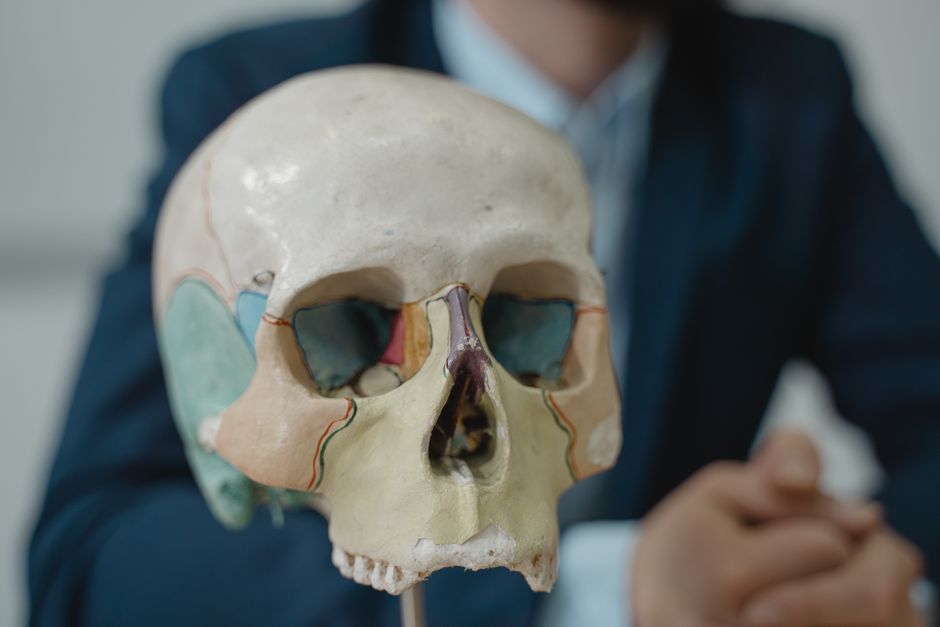
Adults have exactly 206 bones in their bodies. Babies are born with around 300 bones, but many of these fuse together as a child grows. This number is the same for all healthy adults, regardless of height, weight, or gender.
Why Do Babies Have More Bones Than Adults?
Newborns enter the world with roughly 300 bones. This higher number exists because many of their bones are not yet fully formed. Instead, large parts of the skeleton are made of soft, flexible cartilage.
Cartilage is the same firm but bendable tissue that shapes your nose and ears. As a baby grows, this cartilage gradually hardens into bone through a process called ossification. This hardening allows the skeleton to support the increasing weight and demands of a growing body.
Simultaneously, separate bone centers fuse together. For example, the three parts of the hip bone join into one solid structure. The skull also has soft spots, called fontanelles, which allow the head to pass through the birth canal and give the brain room to grow. These gaps close and the separate skull plates fuse over time.
This process continues through childhood and adolescence. The final count of 206 is typically reached by the mid-20s, when the last of the bones, such as the collarbones and tailbone, complete their fusion.
How Many Bones Of The Human Body Are in Each Section?
The 206 bones are divided into two main groups. The axial skeleton forms the central core of the body, and the appendicular skeleton forms the limbs and their attachments.
The axial skeleton contains 80 bones. This includes the skull, the spine, and the rib cage. These bones protect the brain, spinal cord, and vital organs in the chest.
The appendicular skeleton contains 126 bones. This includes the bones of the arms, legs, shoulders, and pelvis. These bones are built for movement and interaction with the environment.
Here is the exact breakdown of the 206 bones by region:
- Skull: 22 bones (including the lower jaw)
- Spine: 26 bones (24 vertebrae, the sacrum, and the coccyx)
- Rib cage: 25 bones (24 ribs and the sternum)
- Middle ears: 6 tiny bones (3 in each ear)
- Arms and hands: 60 bones total (30 in each arm and hand)
- Legs and feet: 60 bones total (30 in each leg and foot)
- Pelvis: 2 bones (the right and left hip bones)
These numbers add up precisely to 80 axial and 126 appendicular bones, totaling 206.
Do Men and Women Have the Same Number of Bones?
Men and women both have 206 bones. The number does not differ between sexes. What differs is the size, shape, and density of certain bones.
The most notable difference is in the pelvis. The female pelvis is generally wider and shallower to accommodate childbirth. The male pelvis is typically narrower and heavier. These are structural differences, not differences in bone count.
Bone density also varies. Before menopause, women often have lower bone mass than men. After menopause, the drop in estrogen can accelerate bone loss, increasing the risk of osteoporosis and fractures. Men also lose bone density with age, but typically later and at a slower rate.





Can Adults Have More or Fewer Than 206 Bones?
Yes, some adults naturally have a different number of bones. These are normal variations, not medical problems.
Some people are born with extra bones. The most common examples are sesamoid bones, which are small bones embedded in tendons. The kneecap is the largest sesamoid bone. Some people have extra ones in their hands or feet that never cause issues.
Other variations involve missing bones. Some people are born without certain bones, such as the twelfth pair of ribs or the tailbone. This is usually harmless and often goes unnoticed.
In contrast, some people lose a bone count due to surgery. For example, removing a rib for a medical procedure or during certain spinal surgeries changes the total. The number 206 is the standard anatomical count, but individual reality can vary.
What Are the Main Functions of the Skeleton?
The skeleton is not just a frame. It is an active organ system with five critical jobs.
Support: Bones give the body its shape and hold tissues and organs in place. Without a skeleton, the body would collapse into a soft mass.
Protection: Hard bone shields delicate internal organs. The skull protects the brain. The rib cage protects the heart and lungs. The spine protects the spinal cord.
Movement: Bones act as levers. Muscles attach to bones via tendons. When muscles contract, they pull on bones, creating movement at the joints.
Blood cell production: The soft inner part of certain bones, called bone marrow, produces red blood cells, white blood cells, and platelets. This process is called hematopoiesis. Red marrow is found in the ribs, spine, breastbone, and pelvis.
Mineral storage: Bones store essential minerals, primarily calcium and phosphorus. When the body needs these minerals elsewhere, it can release them from bone into the bloodstream. This is why bone health is closely tied to overall metabolic health.
How Does Bone Health Change With Age?
Bone is living tissue that constantly breaks down and rebuilds. This process is called remodeling. In youth, the body builds bone faster than it breaks it down. Peak bone mass is usually reached around age 30.
After age 30, bone breakdown slowly outpaces bone building. This natural loss is a normal part of aging. However, the rate of loss can accelerate significantly in women after menopause due to the drop in estrogen, a hormone that protects bone.
Losing too much bone leads to osteoporosis. This condition makes bones weak and porous, dramatically increasing the risk of fractures from minor falls or even routine movements. Osteoporosis is often called a silent disease because bone loss happens without symptoms until a bone breaks.
The good news is that bone loss is not entirely unavoidable. Weight-bearing exercises like walking, jogging, and strength training signal the body to build bone. Adequate intake of calcium and vitamin D is also essential. Vitamin D is necessary because the body cannot absorb calcium from food without it.
What Keeps Bones Strong?
Bone strength depends on a combination of genetics, nutrition, and physical activity. You cannot change your genetics, but you can influence the other two factors.
Calcium is the primary building block of bone. Adults need a steady supply of calcium from diet or supplements. Dairy products, leafy green vegetables, and fortified foods are common sources.
Vitamin D is equally important. It regulates calcium absorption and bone growth. The body produces vitamin D when skin is exposed to sunlight, but many people have low levels, especially in winter months or with limited sun exposure.
Protein also matters. About half of bone volume is protein. Low protein intake is associated with lower bone density and higher fracture risk, particularly in older adults.
Physical activity is the mechanical stimulus bones need to stay dense. Bones respond to stress by becoming stronger. This is why astronauts, who live in zero gravity, lose bone mass rapidly. The same principle applies on Earth — if you do not stress your bones, they weaken.
Smoking and heavy alcohol consumption are harmful to bone health. Smoking reduces blood flow to the bones and impairs calcium absorption. Excessive alcohol interferes with the balance of calcium and the production of hormones that protect bone.
When Should You See a Doctor About Bone Health?
Routine screening for bone density is not recommended for everyone. The decision depends on risk factors.
The general clinical direction is that women should have a bone density test starting at age 65. Men are typically screened starting at age 70. Earlier screening is recommended if you have risk factors such as a family history of osteoporosis, a prior fracture from a minor injury, or long-term use of certain medications like corticosteroids.
Bone density testing uses a specialized X-ray called a DEXA scan. The results compare your bone density to that of a healthy young adult. This comparison produces a T-score. A T-score of -1.0 or above is normal. A score between -1.0 and -2.5 indicates low bone mass, called osteopenia. A score of -2.5 or lower indicates osteoporosis.
If you have concerns about your bone health, discuss them with your doctor. They can assess your personal risk factors and determine if testing or preventive treatment is appropriate for you.
Frequently Asked Questions
Are there 206 or 213 bones in the human body?
The standard adult human body has 206 bones. Some individuals are born with extra small bones, such as sesamoid bones, which can bring the total to 213 or more, but 206 is the standard anatomical count.
How many bones does a newborn baby have?
A newborn baby has about 300 bones. Many of these bones are made of cartilage and fuse together during childhood and adolescence to reach the adult count of 206.
Why does the adult skeleton have fewer bones than a child’s skeleton?
Many bones that are separate in childhood fuse together as a person grows. For example, the three bones of the hip fuse into one, and the skull plates fuse into a solid structure.
What is the smallest bone in the human body?
The smallest bone is the stapes, located in the middle ear. It is one of three tiny bones in the ear that transmit sound vibrations to the inner ear.
