
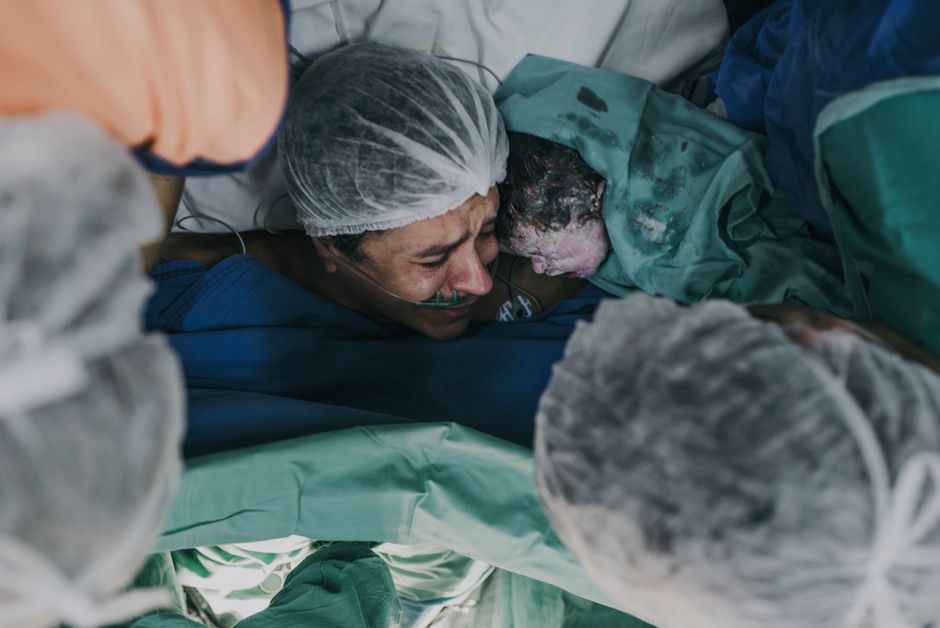
There is no fixed number of cesarean births a woman can have. The limit is not a count — it is the balance between the risks that build with each surgery and the risks of the alternatives. Many women safely have three or four cesareans. Some have more. A smaller number face serious complications that make further pregnancy dangerous.
That answer frustrates people looking for a clean number. But it reflects how doctors actually think about repeat cesareans. The uterus, the placenta, and the abdominal wall all carry scar tissue after each surgery, and that tissue behaves differently in the next pregnancy.
Why There Is No Official Maximum Number of C-sections
No major medical organization publishes a hard cap on repeat cesareans. The American College of Obstetricians and Gynecologists has not established a set limit. That is deliberate.
What matters more than the number on a chart is the condition of the uterus and placenta, the woman’s age and general health, and whether complications appeared in earlier surgeries. Two women with the same number of prior cesareans can face very different levels of risk.
This is a case where the medical field genuinely disagrees on specifics. Some clinicians counsel against a fourth cesarean. Others support a fifth or sixth when the pregnancy is otherwise healthy and the prior surgeries went well. That range of opinion exists because the evidence does not point to one clear threshold.
What Happens to the Uterus After Each Cesarean
Every cesarean leaves a scar in the lower part of the uterus where the surgeon made the incision. That scar does not contain the same full-thickness muscle as the surrounding uterine wall. It is fibrous tissue, and it does not contract the way normal uterine muscle does.
This matters most during labor. The uterus contracts strongly to push a baby out. A weaker scarred section can tear under that pressure — a rare but serious event called uterine rupture. The risk of rupture is one reason many women with prior cesareans are advised against labor and offered a repeat cesarean instead.
Scar tissue also builds in the abdominal wall and between the uterus and nearby organs. Adhesions — bands of scar tissue that stick tissues together — become more common and more extensive with each surgery. Adhesions can make later operations longer and more difficult. They can also, in some cases, cause ongoing pelvic pain.
How Placental Problems Change the Risk With Each Pregnancy
The most serious concern with repeat cesareans is not the uterine scar itself. It is how the placenta behaves in later pregnancies.
Placenta accreta spectrum is a condition where the placenta attaches too deeply into the uterine wall — sometimes growing into the scar tissue from a prior cesarean. In severe cases it can grow through the uterus and attach to nearby organs like the bladder. This is a life-threatening condition. It can cause severe bleeding during delivery and often requires hysterectomy to control it.
The risk of placenta accreta rises with each prior cesarean, and it rises sharply when a woman also has placenta previa — a placenta positioned low in the uterus, covering the cervix. The combination of prior cesareans and placenta previa is the situation doctors watch most closely.
This is why the number of prior cesareans is not the only factor. A woman with two prior cesareans and placenta previa may face higher risk than a woman with four prior cesareans and a normally positioned placenta.




What the Research Suggests About Higher Numbers
Some studies suggest that serious complications become more likely after the third or fourth cesarean. These include dense adhesions, longer surgery times, higher rates of blood transfusion, and bladder or bowel injury during the operation.
The evidence here is not uniform. Many women have a fourth or fifth cesarean without major complications. The problem is that individual outcomes are hard to predict in advance, and the risks that do exist are serious when they occur.
What the research does not support is a specific number at which every woman should stop. A woman’s personal risk depends on factors that a simple count cannot capture.
Can You Have a Vaginal Birth After Multiple Cesareans?
Vaginal birth after cesarean, often called VBAC, is possible after one prior cesarean for many women. The chance of success is generally higher when the prior cesarean was for a reason that will not repeat — such as a breech baby — and when labor starts on its own.
After two prior cesareans, the picture is less clear. Some clinicians support a trial of labor in carefully selected women. Others advise against it because the evidence on safety is more limited and the risk of uterine rupture, while still low, is higher than after a single prior cesarean.
After three or more prior cesareans, most clinicians do not recommend a trial of labor. The evidence base is thin, and the potential consequences of rupture are severe. This is not a universal rule, and practices vary.
Anyone considering VBAC should have a detailed conversation with their obstetrician about their individual history, the reason for prior cesareans, and the resources available at their hospital. Not every hospital offers VBAC, and some lack the immediate surgical team needed if a rupture occurs.
What Factors Matter More Than the Number
A woman’s individual situation carries more weight than the count of prior surgeries. Several factors shift the balance:
- Placenta position. Placenta previa or accreta raises risk substantially.
- Scar thickness and healing. How well the uterine scar healed affects rupture risk.
- Adhesions from prior surgeries. Dense adhesions make later operations riskier.
- Age and general health. Other conditions like high blood pressure or diabetes add risk.
- Reason for prior cesareans. Some reasons repeat; others do not.
- Hospital resources. Access to blood products and a surgical team matters if complications arise.
None of these factors alone decides the answer. They combine, and the combination is what a doctor weighs.
What to Discuss With Your Doctor Before Another Pregnancy
If you are considering another pregnancy after multiple cesareans, the conversation should happen before conception, not after. That timing gives you the most options.
Ask about your specific scar history, whether imaging has been done to check the uterine wall, and how your hospital handles high-risk deliveries. Ask what signs of complications you should watch for and when to seek care. Ask whether a trial of labor is an option at your hospital and what the backup plan is if it is not.
There is no universal right answer here. The decision depends on your health, your history, and what you and your doctor judge to be an acceptable level of risk. That is a personal calculation, not a number on a chart.
Frequently Asked Questions
How many cesarean births can a woman have safely?
There is no fixed safe number. Many women have three or four cesareans without major problems, while others face serious risks after fewer. The safe number depends on the individual’s scar tissue, placenta position, and overall health.
Is it dangerous to have four or more C-sections?
Risk of complications like dense adhesions and placenta accreta rises with each cesarean, and some studies suggest the increase becomes more noticeable after the third or fourth. Many women still have a fourth cesarean without serious issues, so the individual picture matters more than the count.
Can you have a natural birth after two C-sections?
It is possible for some women, but the evidence on safety is more limited than after a single prior cesarean. Most clinicians do not recommend a trial of labor after three or more cesareans.
What is the main risk of having many C-sections?
The most serious risk is placenta accreta spectrum, where the placenta grows too deeply into the uterine scar. This can cause life-threatening bleeding during delivery and often requires hysterectomy.
