
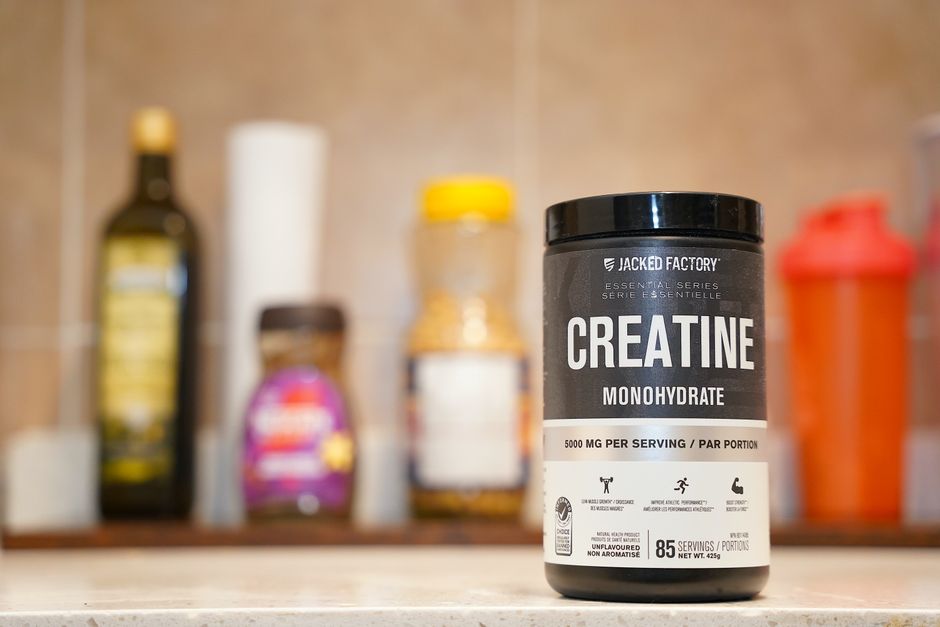
Creatine starts working in your muscles within days, but the effects you can feel and measure take longer. Most people notice changes in strength and workout performance somewhere between one and four weeks after starting. Muscle saturation — the point where your muscles hold as much creatine as they can — typically happens within that same window.
That range is wide because “taking effect” means different things. Some changes are chemical and fast. Others show up in the gym, on the scale, or in how you feel during a set. Here is what actually happens, week by week.
How Long Until Creatine Takes Effect 1 4 Weeks?
Most people see meaningful effects within one to four weeks of consistent use. The exact timing depends on your dose, your muscle size, what you eat, and how hard you train.
Creatine works by increasing the amount of phosphocreatine stored in your muscles. Phosphocreatine helps regenerate ATP, the basic energy currency your cells use. During short, intense efforts — a heavy set of squats, a sprint, a max lift — ATP gets used up fast. More stored phosphocreatine means your muscles can keep producing energy for a few extra seconds of hard work.
That is the whole mechanism. It is not a stimulant. It does not act on your nervous system. It does not burn fat. It gives your muscles a slightly bigger fuel tank for short bursts of effort.
Here is roughly how the timeline tends to look:
- Days 1 to 7: Muscles begin loading with creatine. You may not feel anything yet.
- Week 1 to 2: Many people notice they can squeeze out an extra rep or two on hard sets.
- Week 2 to 4: Strength gains and better recovery between sets become more obvious. Some people see a small increase on the scale from water drawn into muscle.
- Week 4 and beyond: Training adaptations build on each other. Gains in muscle and strength from training continue if you keep lifting.
If you use a loading phase — a higher dose for the first several days — saturation happens faster, often within about a week. If you take a smaller daily dose, it takes longer to reach the same level. Both routes get you to the same place eventually.
What Does “Taking Effect” Actually Mean?
Creatine does two separate things, and they happen on different timelines. Confusing them is where most frustration comes from.
The first is a chemical change inside the muscle. Your phosphocreatine stores rise. This starts within days of your first dose and reaches a plateau once your muscles are saturated. You cannot feel this directly. It shows up only when you test your performance.
The second is the performance change. More phosphocreatine means you can do slightly more work in short, intense efforts. Over weeks, that extra work adds up. More reps at a given weight, or the same reps at a slightly higher weight, is the kind of change that builds strength and muscle over time.
This is why two people can take the same product and report different experiences. One person tracks their lifts and notices a difference in two weeks. Another person does not track anything and assumes nothing happened.
There is also a widely repeated claim worth addressing directly. Creatine is often described as a muscle builder on its own. The evidence does not support that framing. Creatine supports training. The training builds the muscle. Without resistance training, creatine does not add meaningful muscle mass.
What Affects How Fast You Notice Results?
Several factors push your timeline earlier or later. None of them change the basic mechanism.
Your starting creatine level. People who eat a lot of meat and fish already have higher muscle creatine. They have less room to gain, so the effect may feel smaller. Vegetarians and vegans tend to start lower and often notice a larger response.
Your dose and consistency. Daily use matters more than timing. Missing days slows saturation. Taking it with a meal, especially one containing carbohydrates, appears to improve uptake in some studies, though the practical difference is modest.
Your muscle mass. A larger person has more muscle to saturate and may need more total creatine to reach the same level. This is one reason body weight is sometimes factored into dosing.
Your training. If your program does not include short, intense efforts, you have less opportunity to notice a performance change. Creatine helps most with efforts lasting roughly a few seconds to about a minute.
Your expectations. Creatine is not dramatic for most people. A realistic effect is a small but real improvement in strength and work capacity over weeks. Anyone promising fast, large changes is overselling.




Does Creatine Cause Weight Gain, and When Does It Show?
Yes, and it usually shows up early. Within the first one to two weeks, many people gain a small amount of weight. This is water drawn into muscle cells along with the stored creatine.
This is intracellular water — inside the muscle cell — not bloating under the skin. It is a normal part of how creatine is stored. The scale may move up by a couple of pounds, and it tends to stabilize once your muscles are saturated.
Some people mistake this for fat gain. It is not fat. It is also not the same as the puffiness some people describe from other supplements. If the weight bothers you, tracking waist measurements alongside the scale gives a clearer picture than weight alone.
Over months, any further weight change comes from training and diet, not from creatine itself.
When Should You Stop Waiting and Reconsider?
If you have taken creatine daily for four to six weeks and noticed nothing at all, a few explanations are more likely than the product simply not working.
- You may not be training in a way that creatine supports. It helps short, hard efforts, not long steady-state cardio.
- You may be missing doses often enough that your muscles never fully saturate.
- You may be expecting a feeling rather than a measurement. Creatine rarely produces a noticeable sensation.
- Your baseline creatine level may already be high from diet, leaving less room for change.
It is also worth being honest about the evidence here. The research on creatine and short-duration, high-intensity performance is extensive and consistent. The research on creatine for endurance performance, fat loss, or general energy is far weaker. If your goal is one of those, the timeline question is somewhat beside the point — the effect may be minimal regardless of how long you take it.
Creatine is one of the most studied sports supplements in existence. That does not mean it does everything. It means we have a reasonably clear picture of what it does and does not do.
How Should You Take Creatine to See Effects Sooner?
Consistency beats cleverness. Taking a similar amount every day is the main thing that determines how quickly you saturate.
Two common approaches exist. One is a loading phase, where you take a higher dose split across the day for about a week, then drop to a maintenance dose. The other is to skip loading and take a maintenance dose daily from the start. Loading reaches saturation faster. Skipping it is simpler and gets you to the same place in a few weeks.
Established guidance on creatine dosing for healthy adults generally centers on a maintenance amount in the range of a few grams per day, with loading phases using higher amounts for a short period. If you have kidney disease, liver disease, or take medications that affect your kidneys, talk to your doctor before starting. Creatine is generally well tolerated in healthy people, but that does not automatically extend to every medical situation.
There are no established dosing guidelines for creatine in children, and it is not recommended for people under 18 outside of specific medical supervision. For pregnancy and breastfeeding, no clinical guidelines currently exist. That is a real gap, not a formality.
One practical note: creatine monohydrate is the form with the most research behind it. Other forms are marketed with claims that are not backed by comparable evidence. If you want the effects the research describes, the plain version is the one studied.
Frequently Asked Questions
How long does creatine take to work?
Most people notice performance effects within one to four weeks of daily use. Muscle saturation typically happens in that same window, faster if you use a loading phase.
Can you feel creatine working right away?
No, creatine does not produce a noticeable sensation the way a stimulant does. Any effect shows up as slightly better performance in short, intense efforts, not as a feeling.
Does creatine make you gain weight in the first week?
Many people gain a small amount of weight in the first one to two weeks from water drawn into muscle cells. This is normal and usually stabilizes once muscles are saturated.
What happens if you take creatine and see no results after a month?
Check whether your training includes short, hard efforts and whether you are taking it consistently. If both are true and nothing changes, your baseline levels may already be high from diet.
